In the far north of Sweden during the deep, cold winter, when all the lakes are frozen, you would probably not expect to find swans. But on the rivers, where ice crusts only form along the banks, I was able to find them. As someone from further south in Europe, you probably think straight away of mute swans (Cygnus olor). But in fact these are the slightly smaller whooper swans (Cygnus cygnus), which can also be found in Central Europe in winter. As their German name (Höckerschwan, “knob swan”) suggests, mute swans have a black knob in addition to their orange bill. Whooper swans, on the other hand, lack this knob, and their bill is yellow with a black tip. What both have in common, however, is that they are not quick to shy away from people. And that is exactly why swans were perfect subjects for getting started in professional photography.
Two months earlier, in December 2022, I had bought my first professional equipment. But it took me at least eight attempts before I managed to take successful photos of these fascinating waterbirds. At the time I was on my year-long exchange, so I had enough time to return to the same observation spot several times. The river I kept returning to was just a 20-minute ride by public transport from my home in Sweden. I usually went there early in the morning or late in the afternoon to make use of the golden light. However, the whooper swans were not always in the same place, and because the river was so extensive, I needed a lot of luck to see any at all.
First successful morning
One morning in January I was out with Max Remesch (also a Swiss exchange student), and we were lucky enough to watch whooper swans in the most beautiful golden light. But let’s start from the beginning.
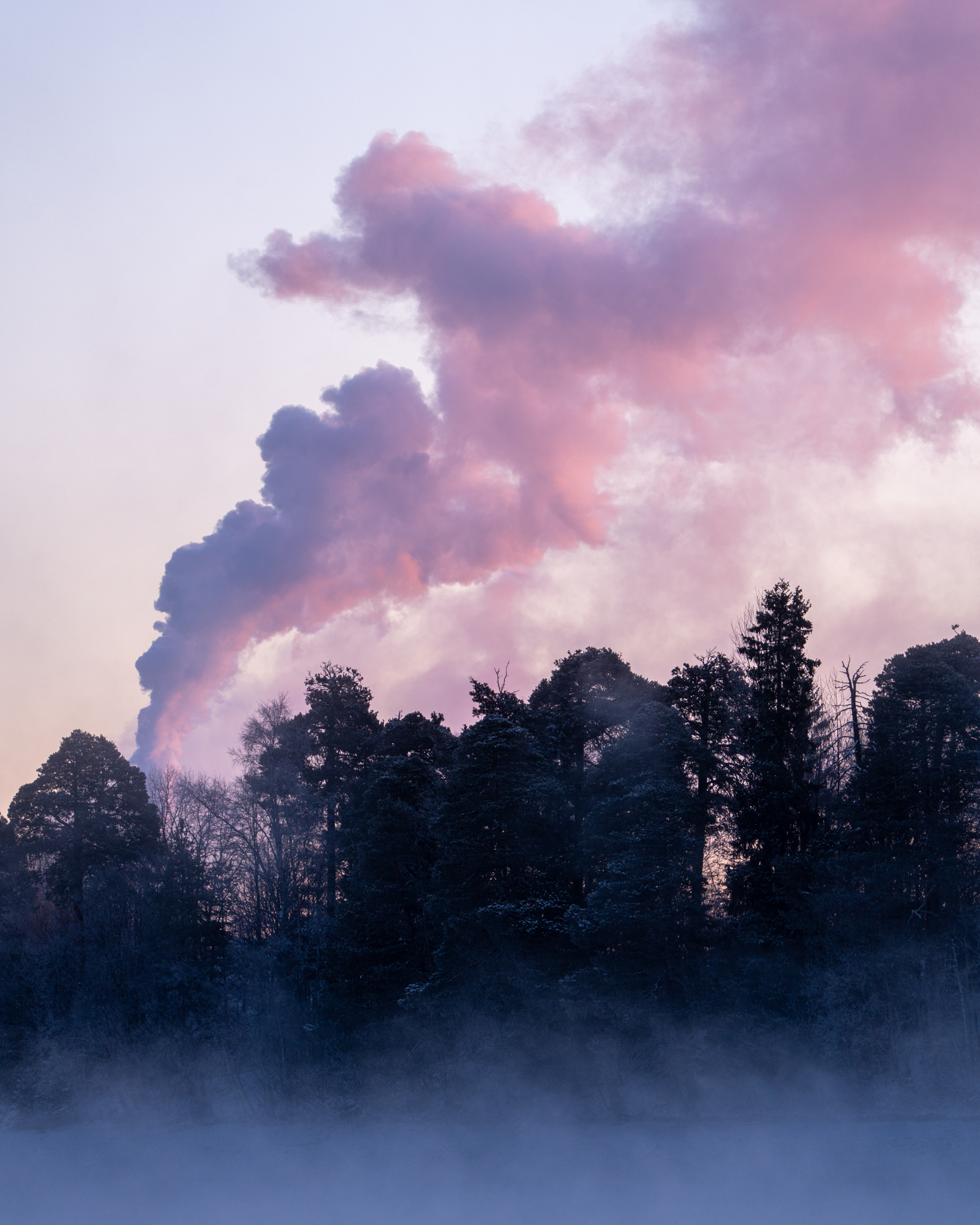
pink clouds of steam from a sawmill // 1/160 sec | f/5.6 | ISO 200 | 200 mm
The morning was bitterly cold, with temperatures below -15°C. Only after 9:00 a.m. did the sky really begin to brighten, and rising clouds of steam from a nearby sawmill (bioenergy plant) were tinged a light pink colour, almost like candyfloss. Mist rose and created an almost fairy-tale atmosphere.
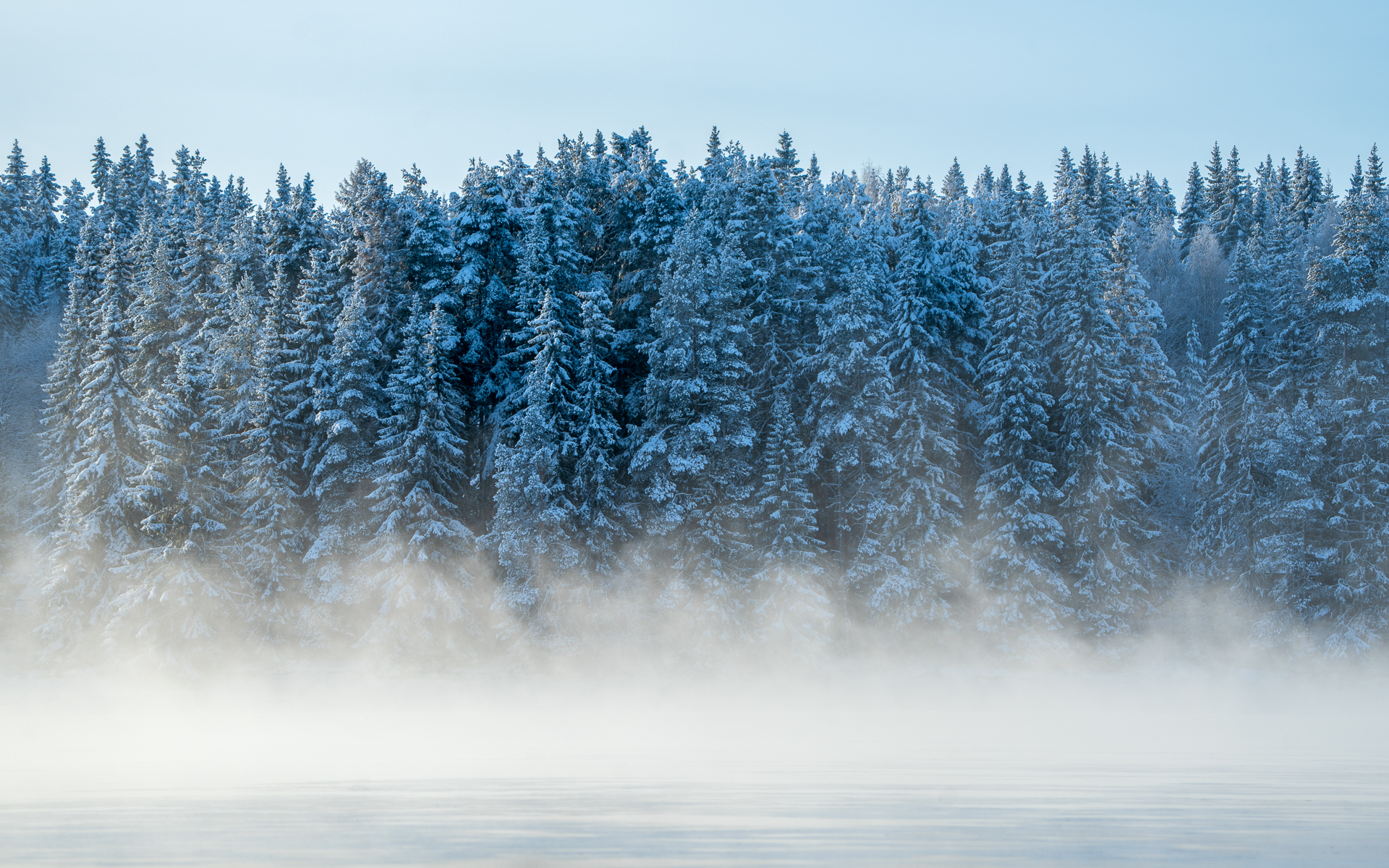
wisps of mist rising over the river and snow-covered spruce forest // 1/200 sec | f/6.3 | ISO 50 | 200 mm
In front of us lay the river, over which wisps of mist were rising, and on the other bank a beautiful snow-covered spruce forest. There were no whooper swans in sight yet, but a few goosanders occasionally flew past.
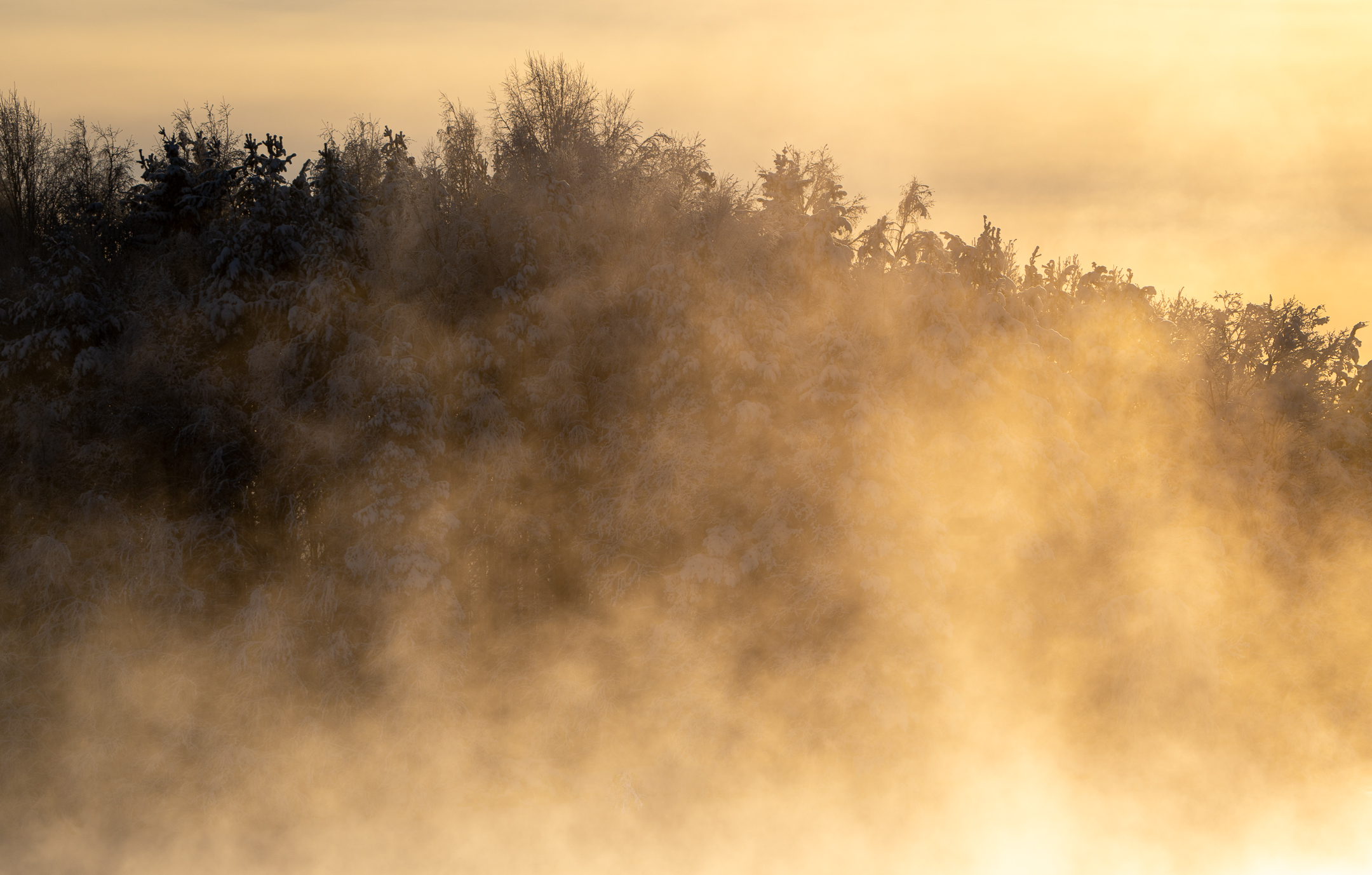
the golden hour begins // 1/1000 sec | f/6.3 | ISO 50 | 325 mm
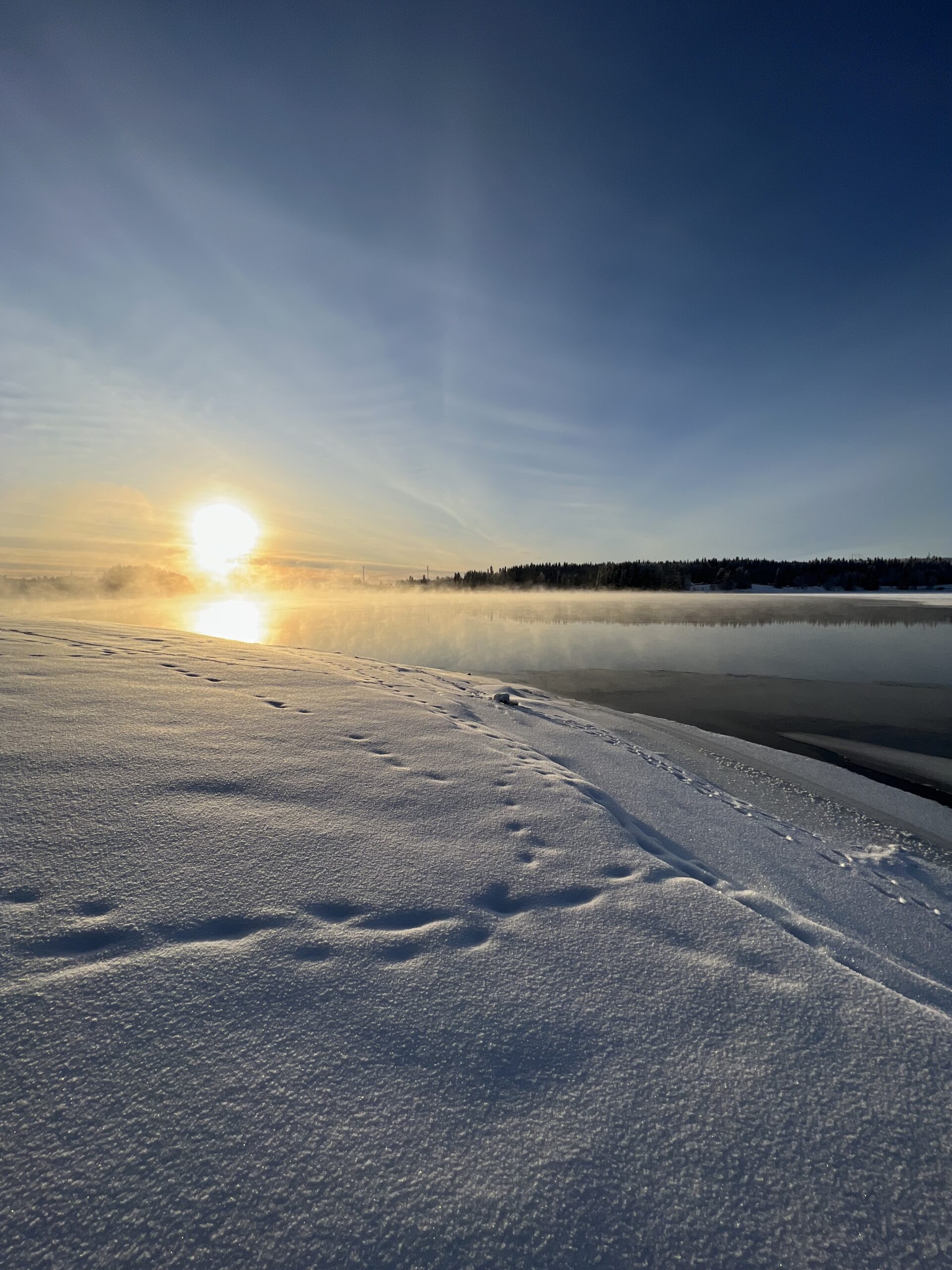
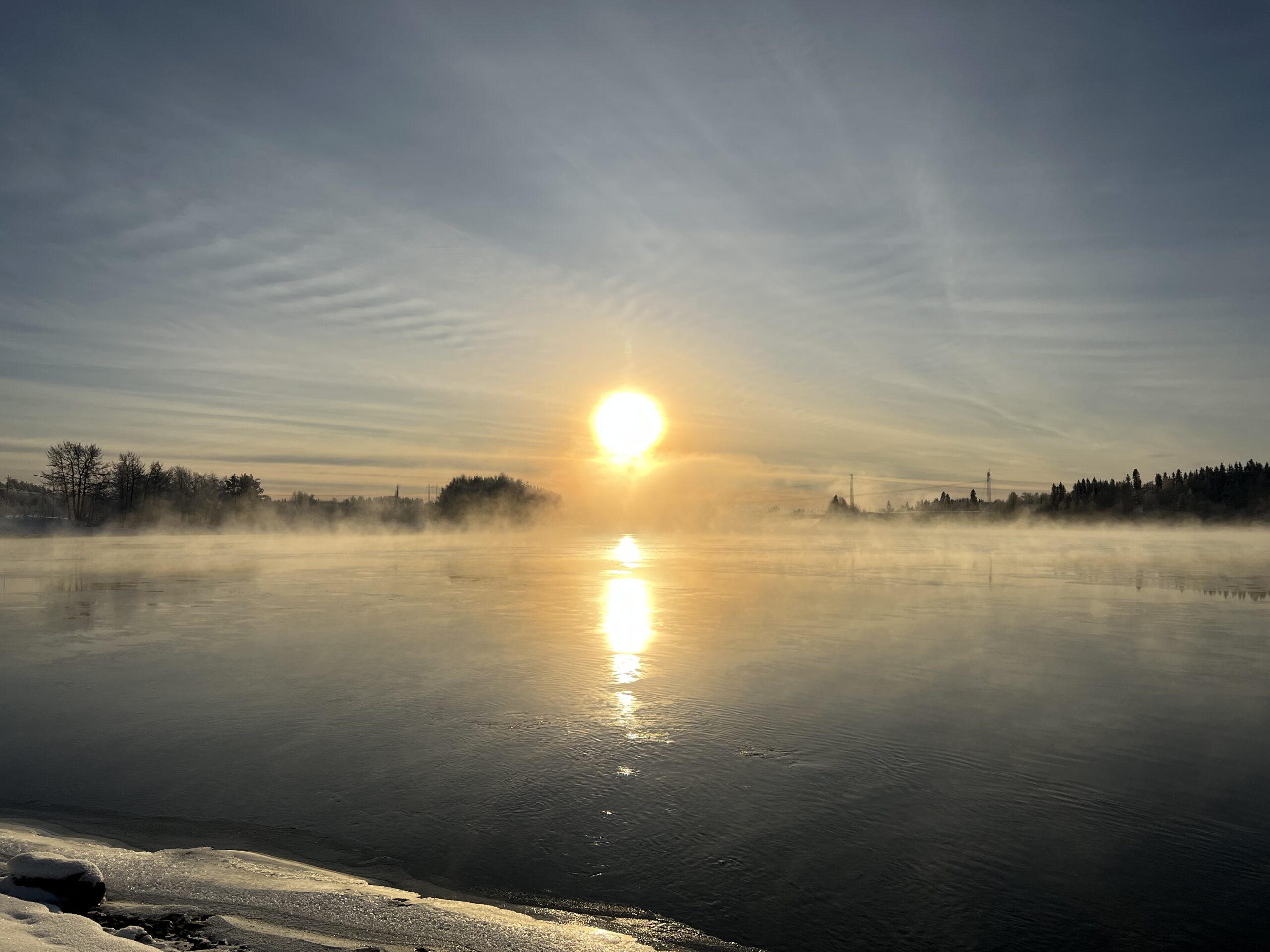
morning sun low over the river
As the “blue hour” gradually came to an end, the “golden hour” began. Suddenly we heard trumpet-like, almost plaintive sounds from afar that could only come from the whooper swans. Shortly afterwards we spotted them on the opposite bank. We quickly crossed the road bridge to get to the other side.
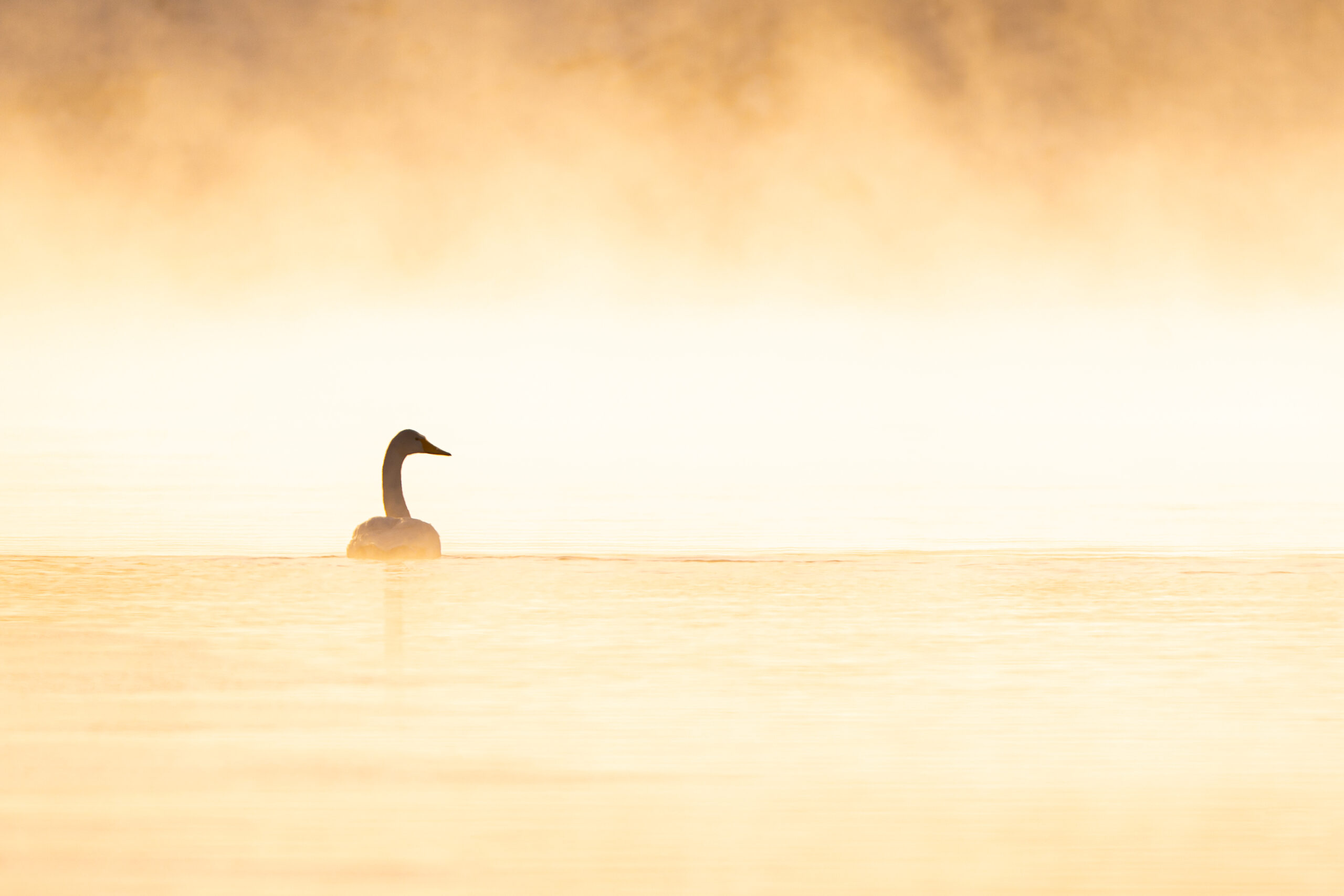
Whooper Swan (Cygnus cygnus) // 1/640 sec | f/6.3 | ISO 200 | 600 mm
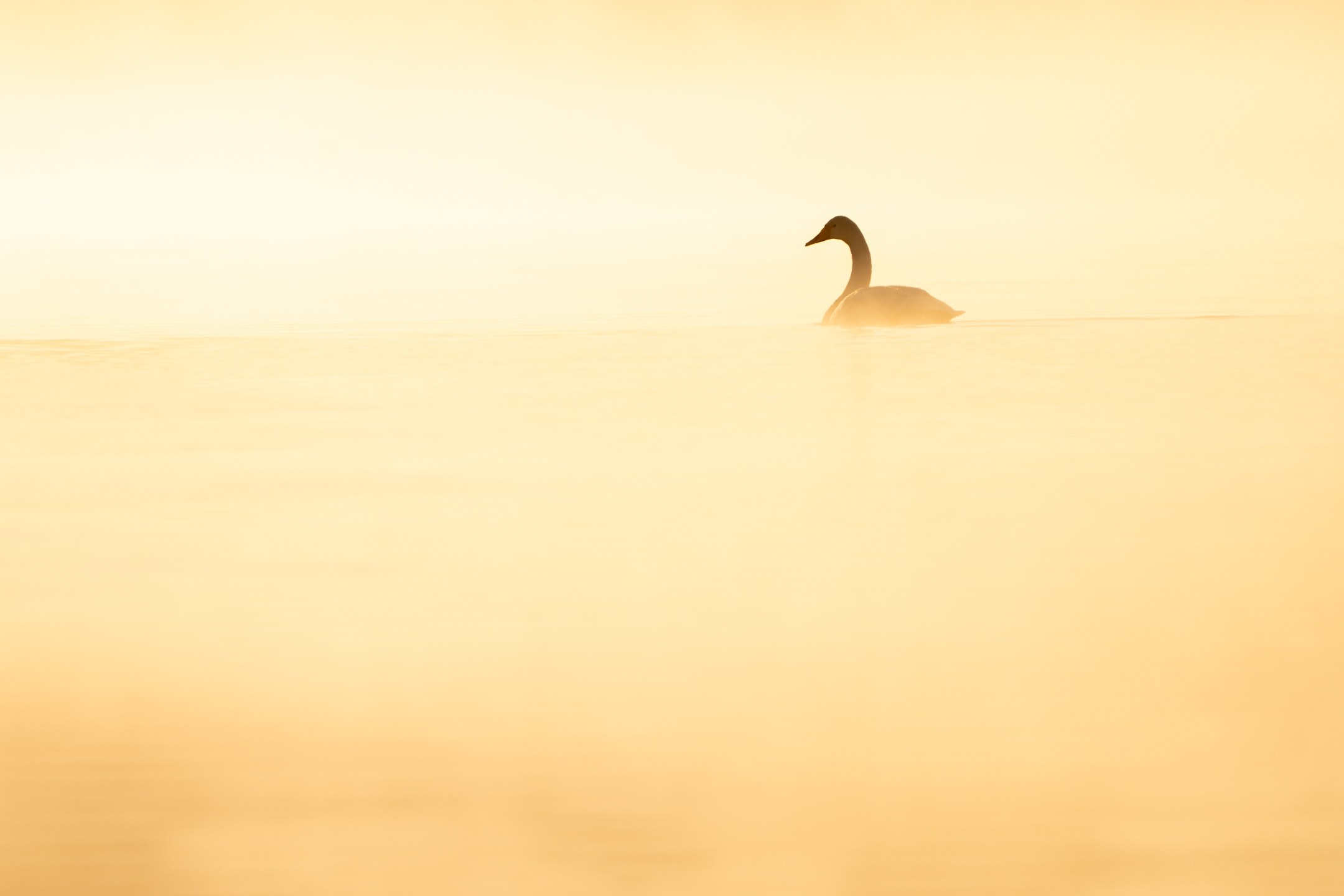
Whooper Swan (Cygnus cygnus) // 1/1000 sec | f/6.3 | ISO 200 | 600 mm
Carefully we approached the whooper swans, which were further upstream in the wisps of mist. Thanks to the low, slowly rising sun, the light was still golden and allowed us to take beautiful silhouette shots. At that moment I was overjoyed, because in my view I had taken my first really successful snapshots. All the extensive research and practice I had invested in my passion for photography had suddenly really paid off.
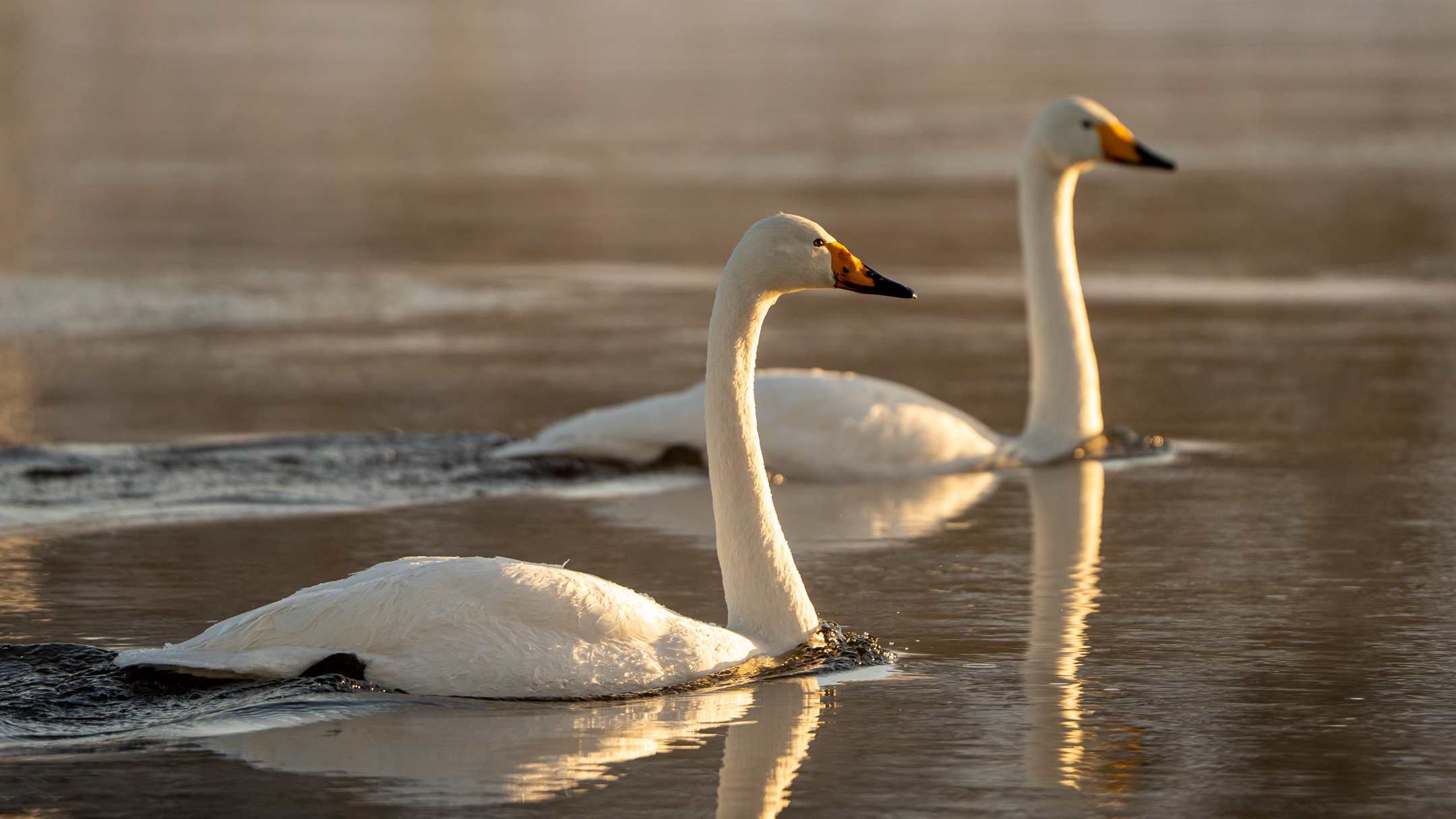
Whooper Swan (Cygnus cygnus) // 1/1000 sec | f/6.3 | ISO 500 | 450 mm
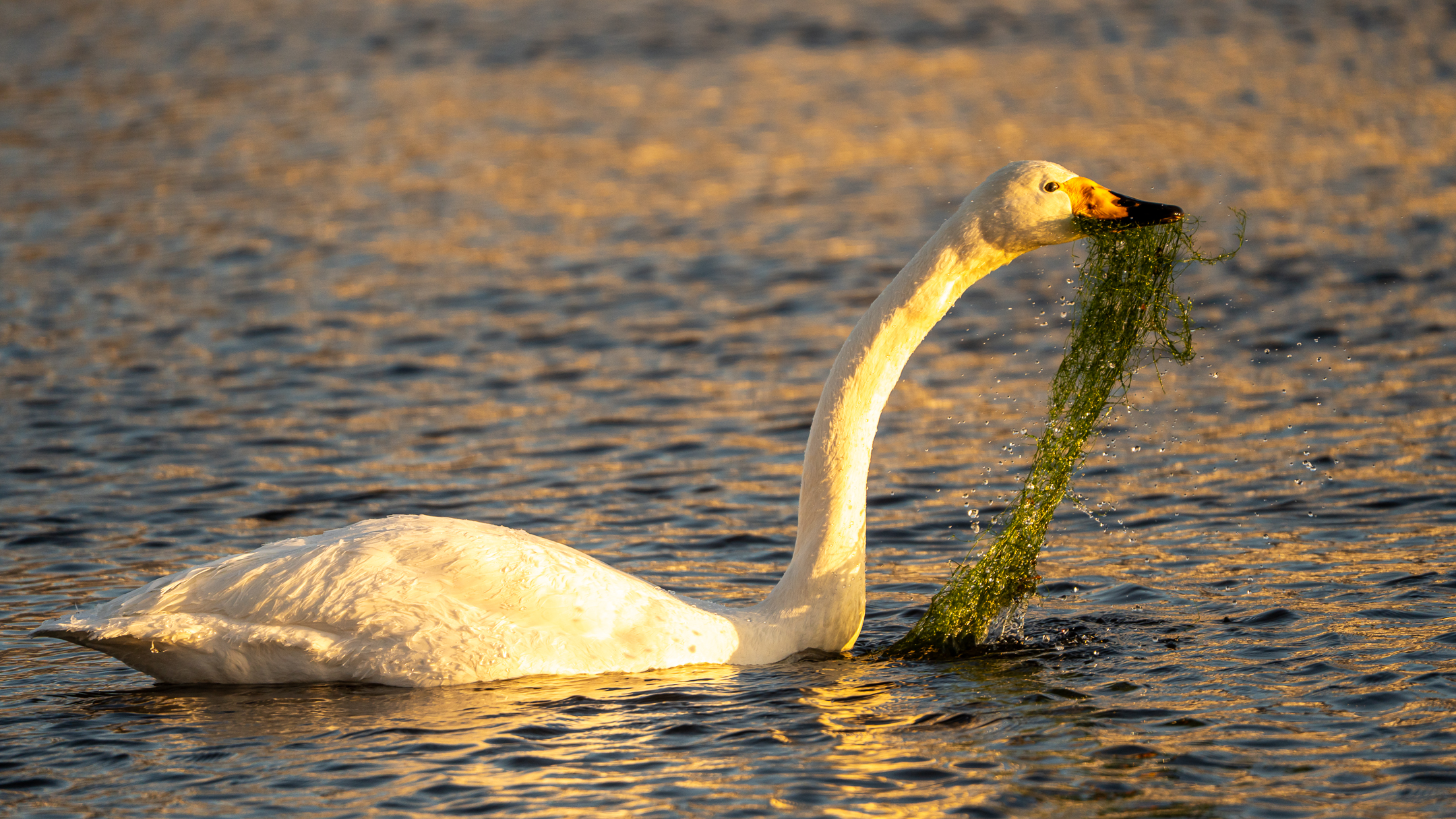
Whooper Swan (Cygnus cygnus) // 1/1000 sec | f/6.3 | ISO 500 | 600 mm
In all the excitement we had completely forgotten the cold and only noticed at lunch how cold our fingers actually were. In January there are only a few hours of daylight in Sweden, so we decided to keep watching until sunset. It was simply impressive to watch these calm, sociable animals. The photos above show two more whooper swans from this winter’s day. I was able to photograph one of them – and that was almost the highlight of the day – just as it was tearing water plants out of the water with its bill.
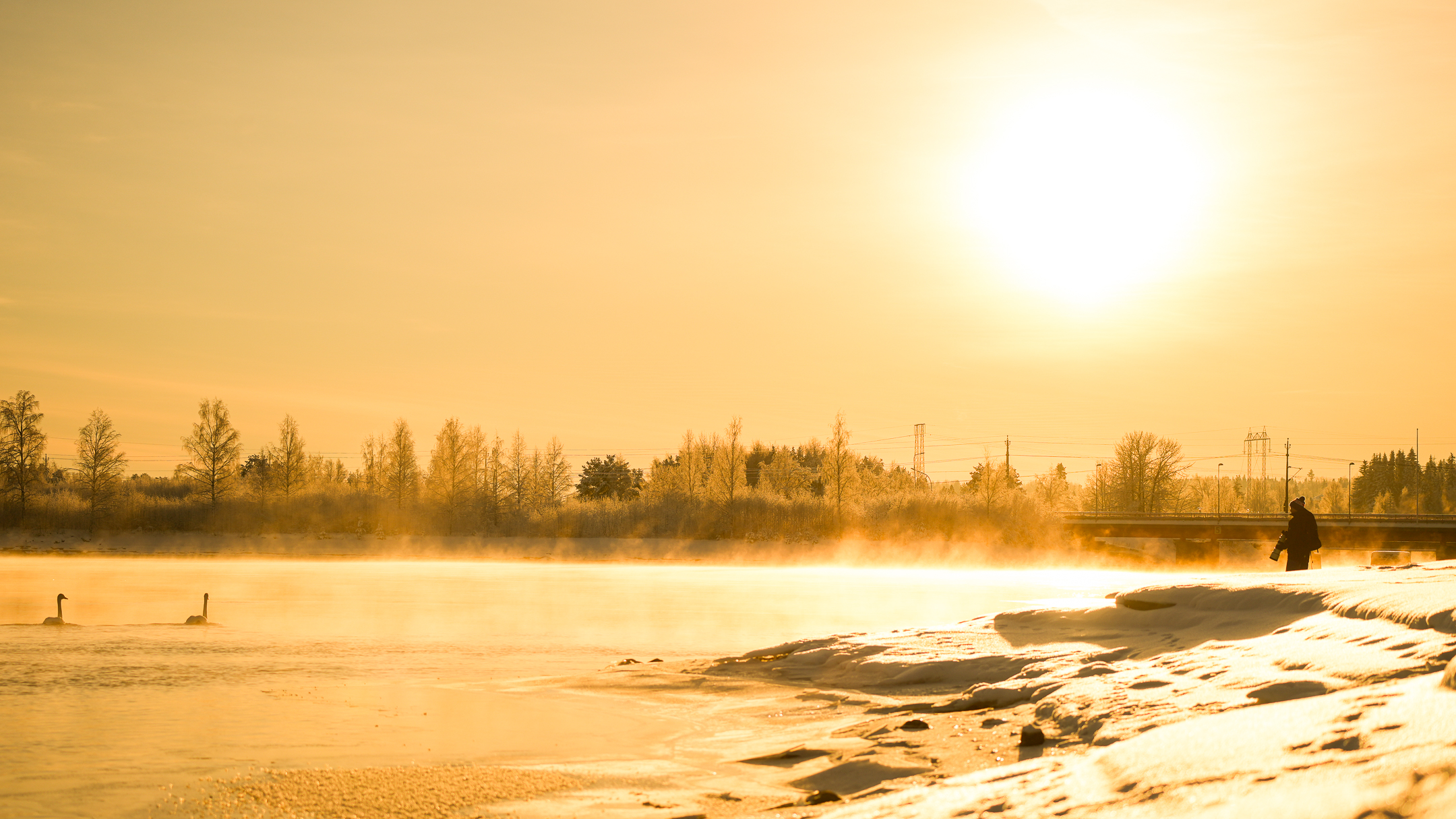
Behind the Scenes I // 1/2500 sec | f/4.5 | ISO 100 | 90 mm // ©Max Remesch
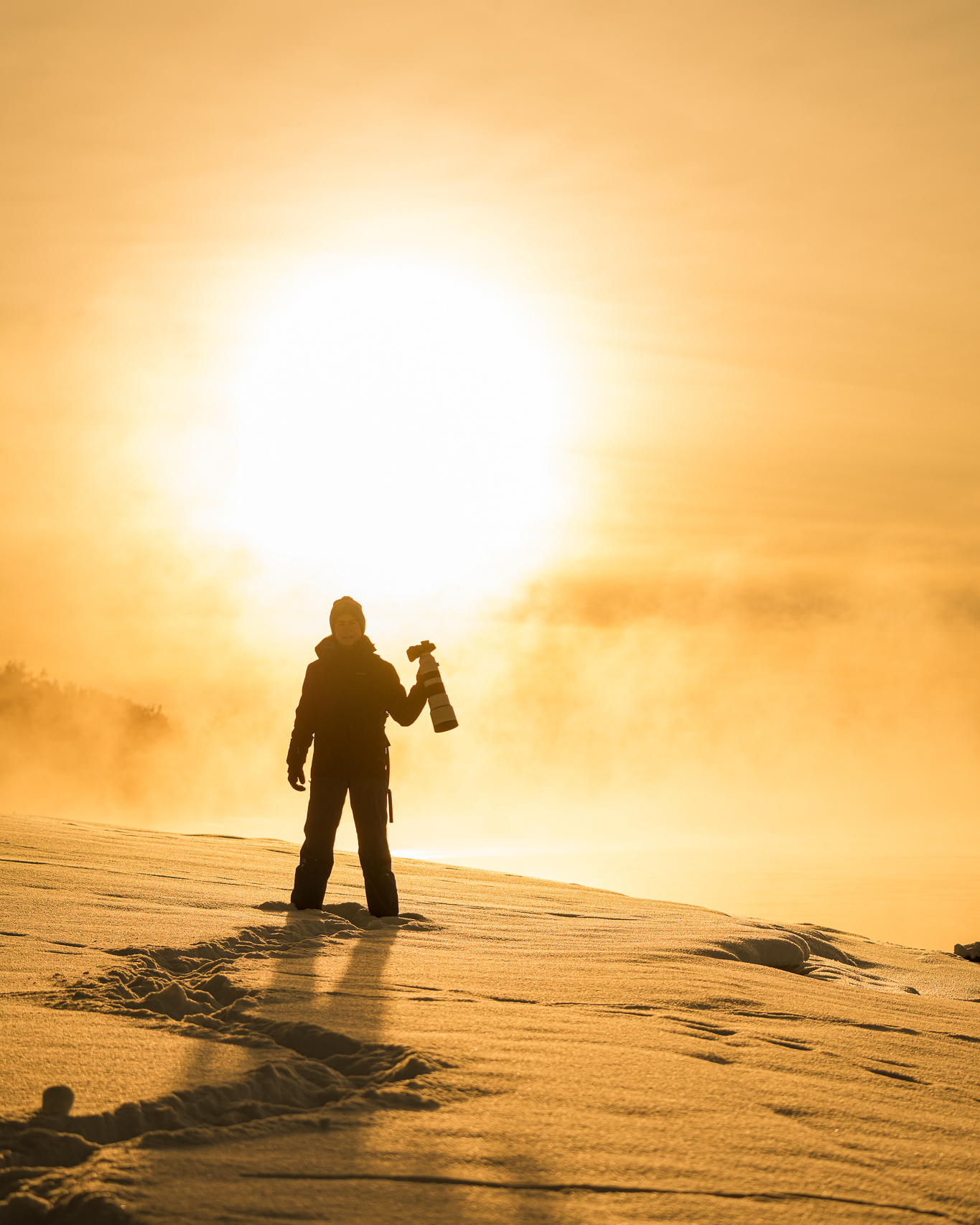
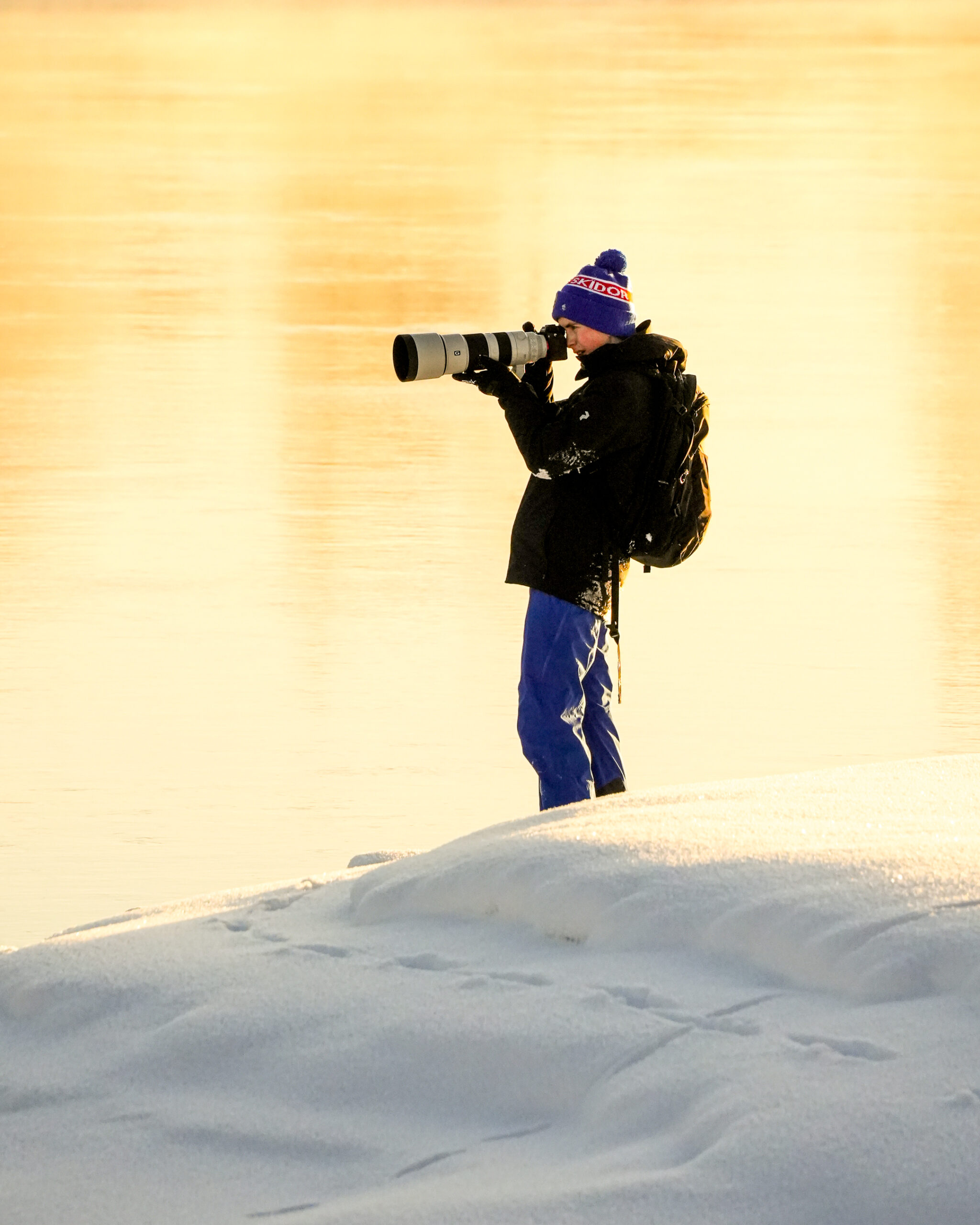
Behind the Scenes II & III // 1/2500 sec | f/4.5 | ISO 100 | 90 mm; 1/2500 sec | f/11 | ISO 3200 | 300 mm // ©Max Remesch
A “mistake” that many amateur photographers make at the beginning – as I did back then – is not being at eye level with the animals, which I regret a little in hindsight. With a blurred background the photos would definitely have looked calmer. Above are two behind-the-scenes photos for which I have Max Remesch to thank. Actually, at that moment I should have photographed lying down (and not standing, as on the right).
Second successful morning
By now two months had passed, the days had become longer, and since the last success the whooper swans had never again shown themselves up close. After countless attempts I had slowly given up hope. But thanks to my perseverance, early one morning in March I was finally able to take probably my best wildlife photos of my entire exchange year in Sweden.
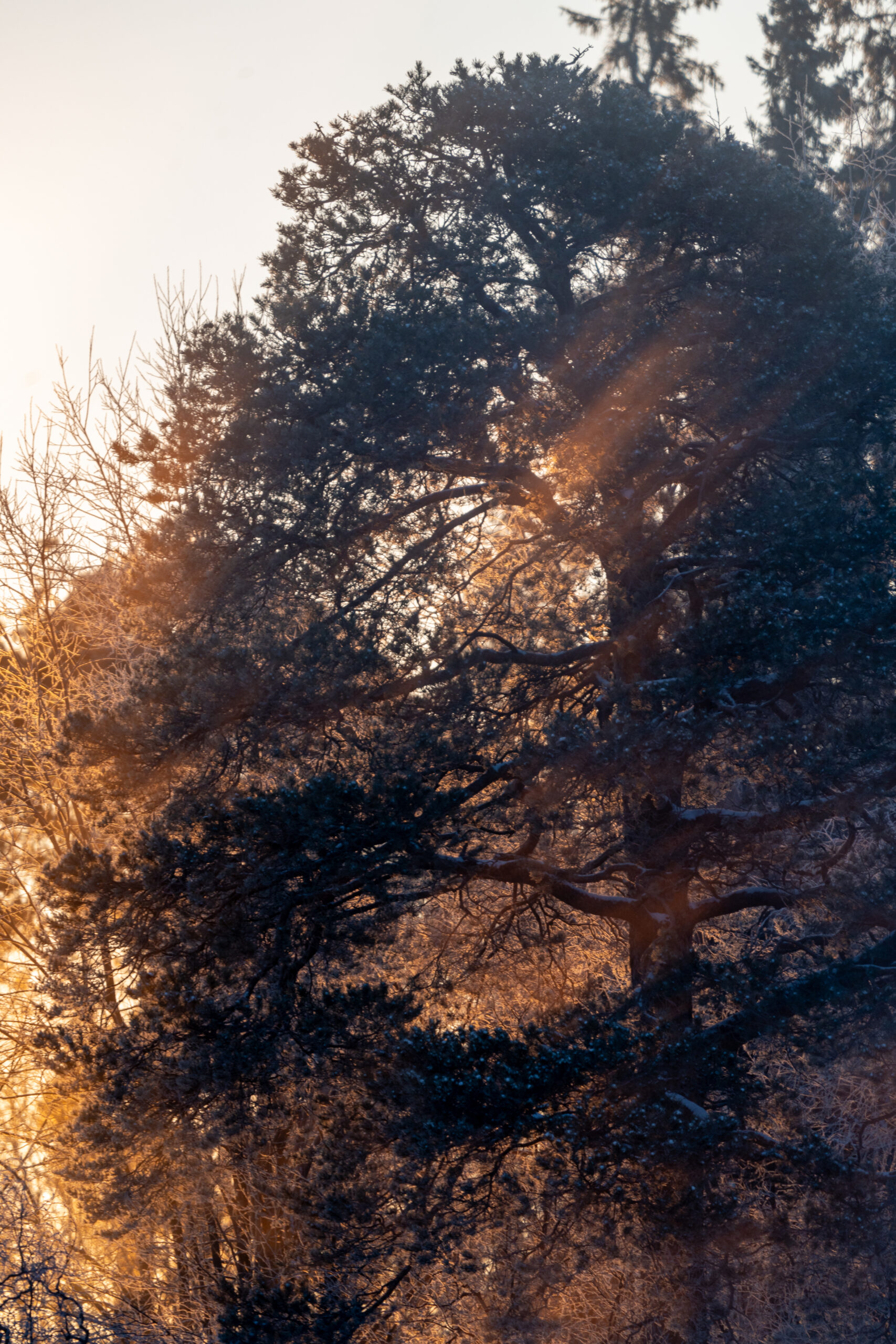
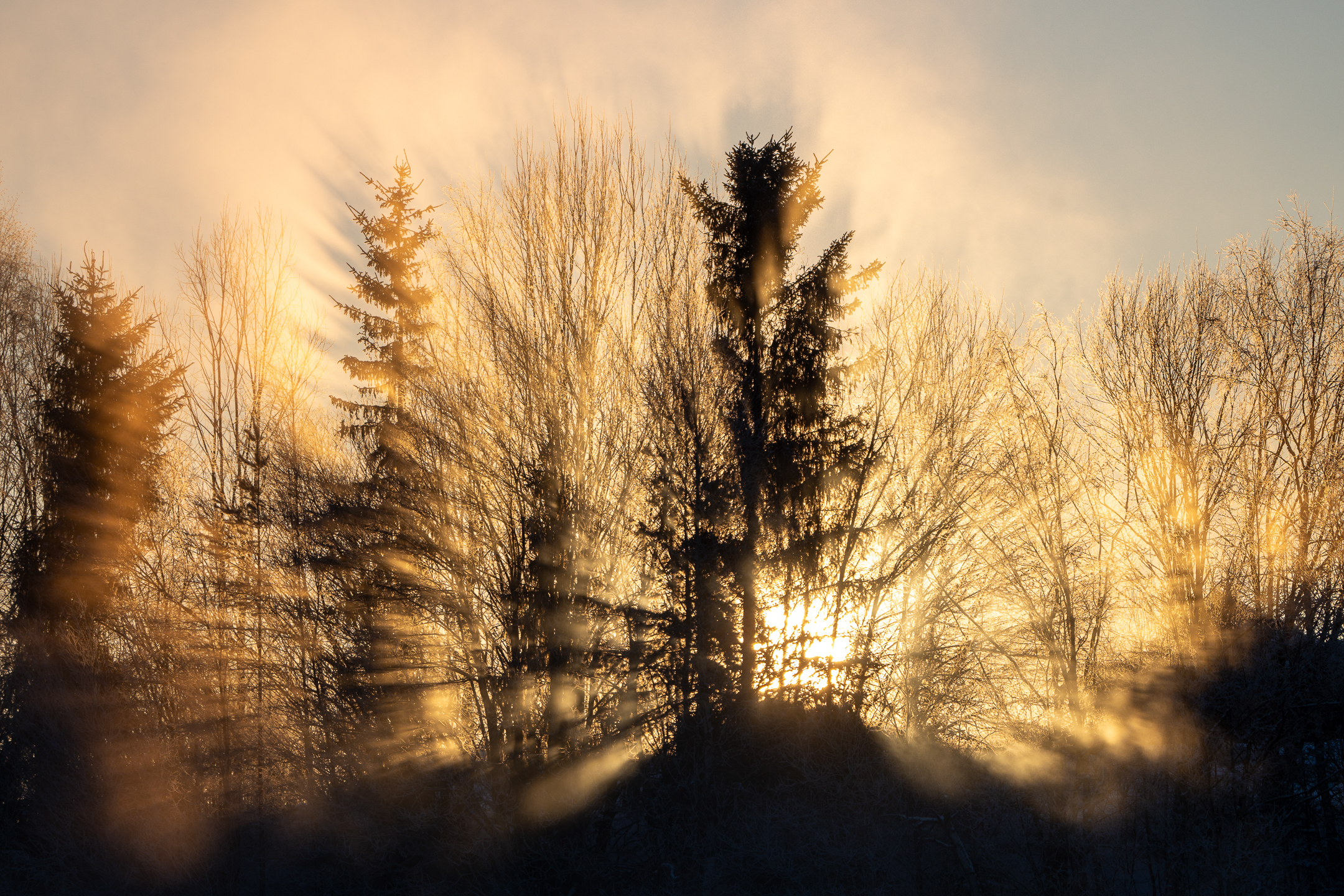
the first rays of sunshine herald a new day // 1/250 sec | f/6.3 | ISO 400 | 600 mm; 1/1000 sec | f/5.6 | ISO 100 | 240 mm
As always, I strolled along the river and watched the first rays of sunshine break through the branches of the trees. This sight alone was worth getting up early for. For me it was quite new to watch such beautiful sunrises and sunsets. In the Swiss mountains, where I grew up, you can only experience such intense golden light on the mountain peaks at most.
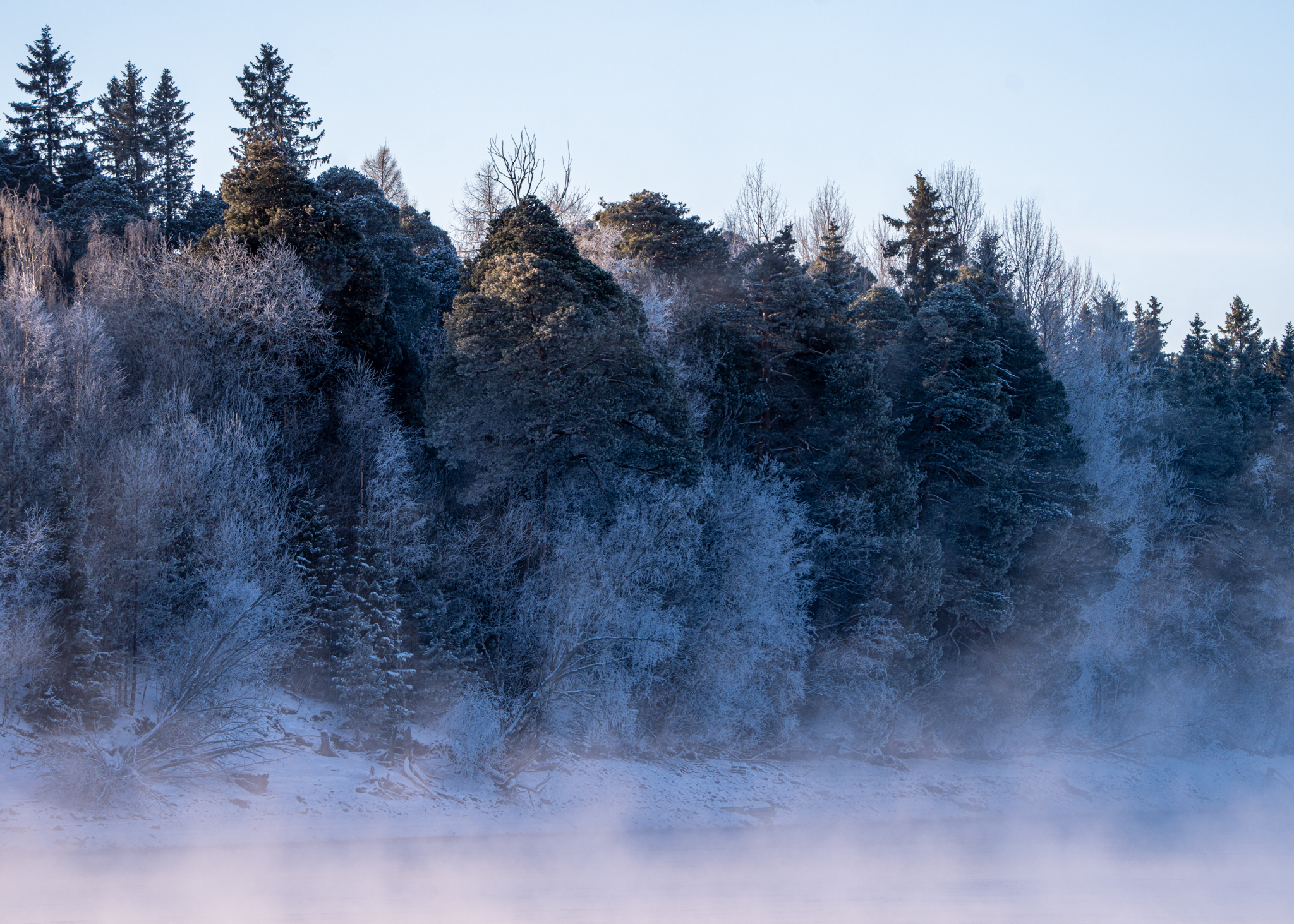
magical winter landscape // 1/200 sec | f/5.6 | ISO 100 | 200 mm
This morning, too, it was bitterly cold, and I had to wear thick gloves, which didn’t exactly make photography easier. The landscape was all the more beautiful for it – this time, however, there was less snow on the trees.
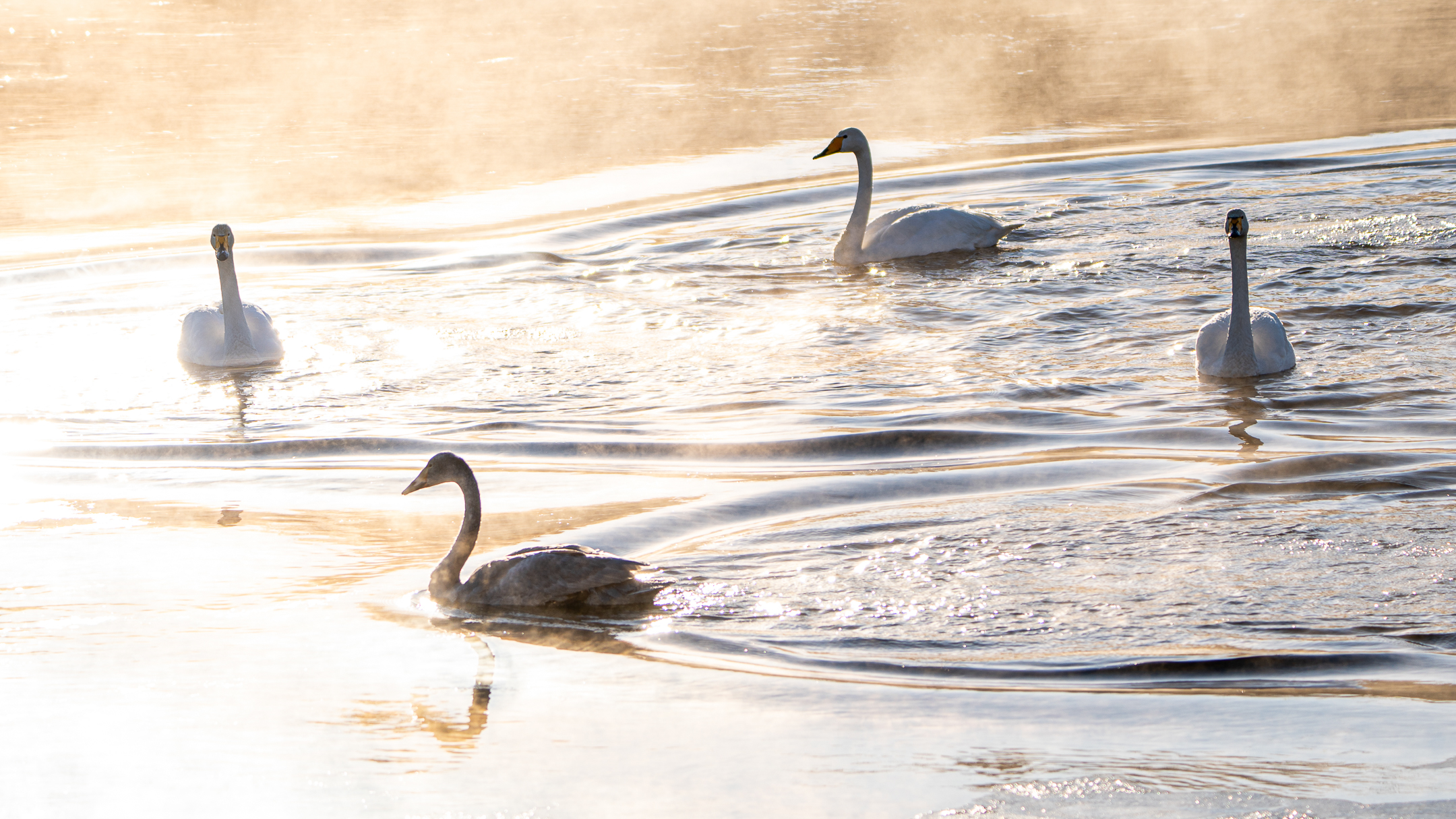
Whooper Swan (Cygnus cygnus) // 1/500 sec | f/5.6 | ISO 100 | 200 mm
Then suddenly, like angels floating down from the sky, the whooper swans appeared and landed in the water right in front of me. For a moment I was startled – they had flown in so quietly that I only really noticed them when they landed. The photo above shows the whooper swans shortly after landing, drifting calmly in the water.
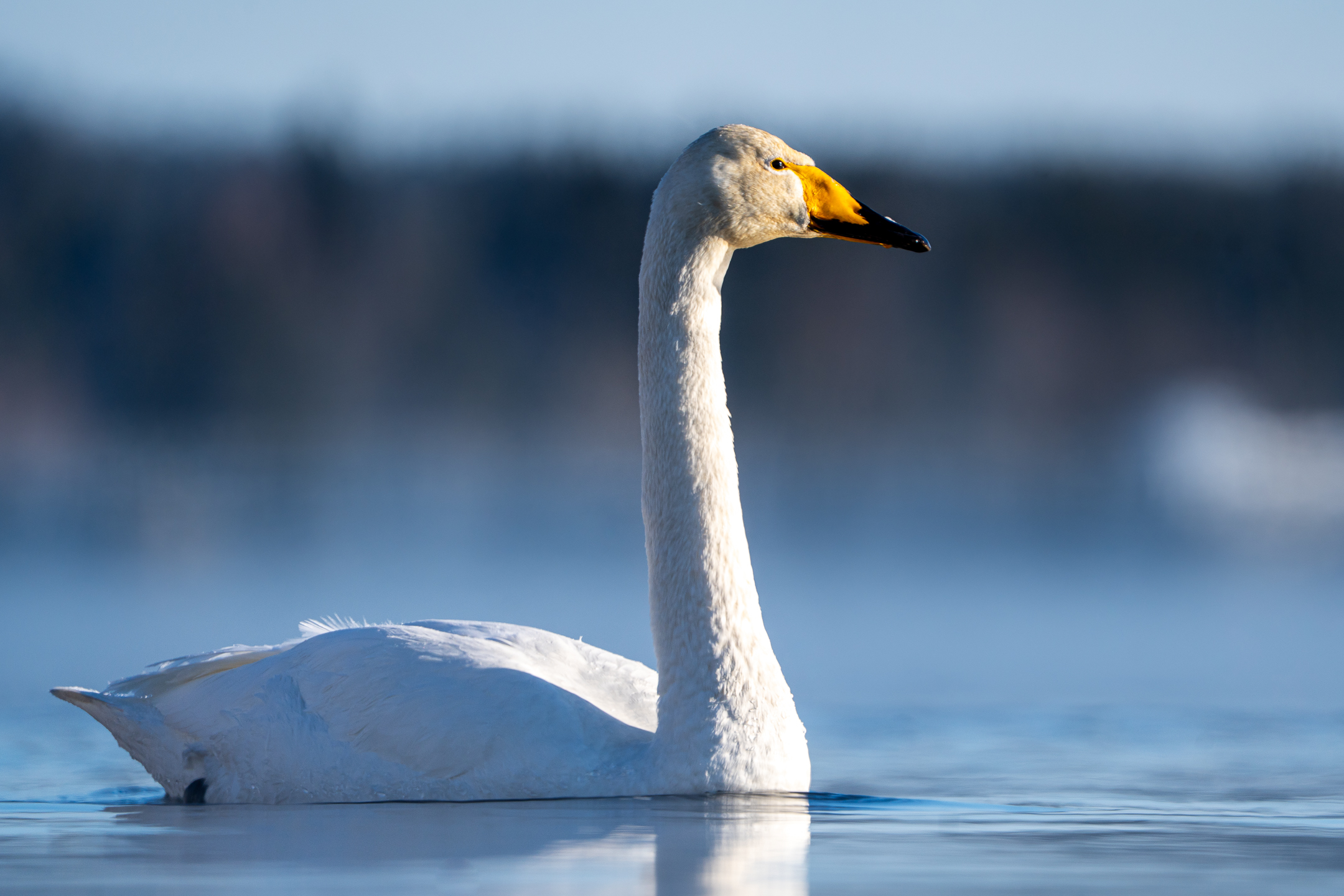
Whooper Swan (Cygnus cygnus) // 1/800 sec | f/6.3 | ISO 200 | 590 mm
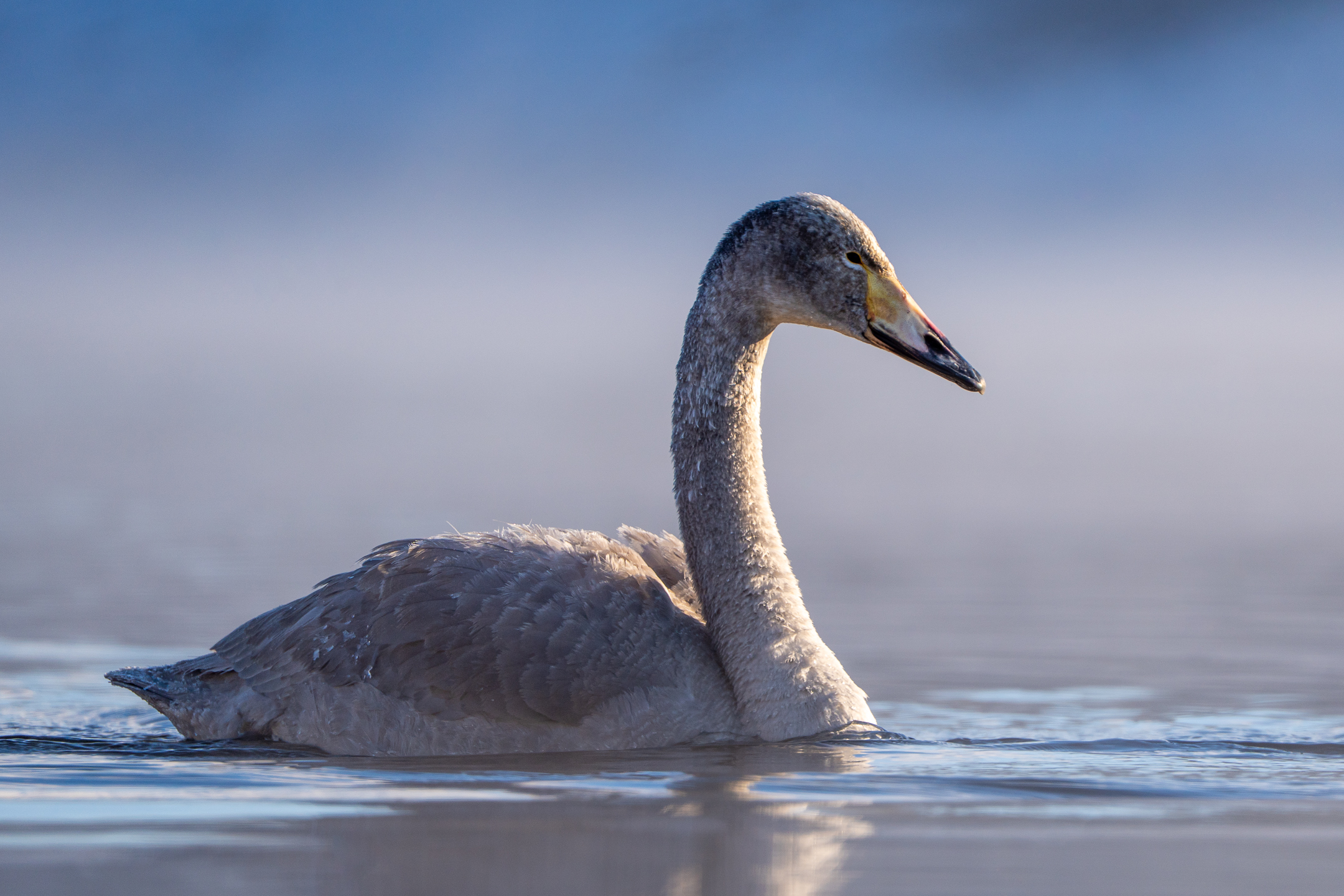
Whooper Swan (Cygnus cygnus) // 1/800 sec | f/6.3 | ISO 250 | 600 mm
Slowly I moved closer to the bank and lay down on the frozen snow to photograph at eye level – unlike last time. As a result the background looks much calmer and the focus is more on the actual subject, the whooper swan.
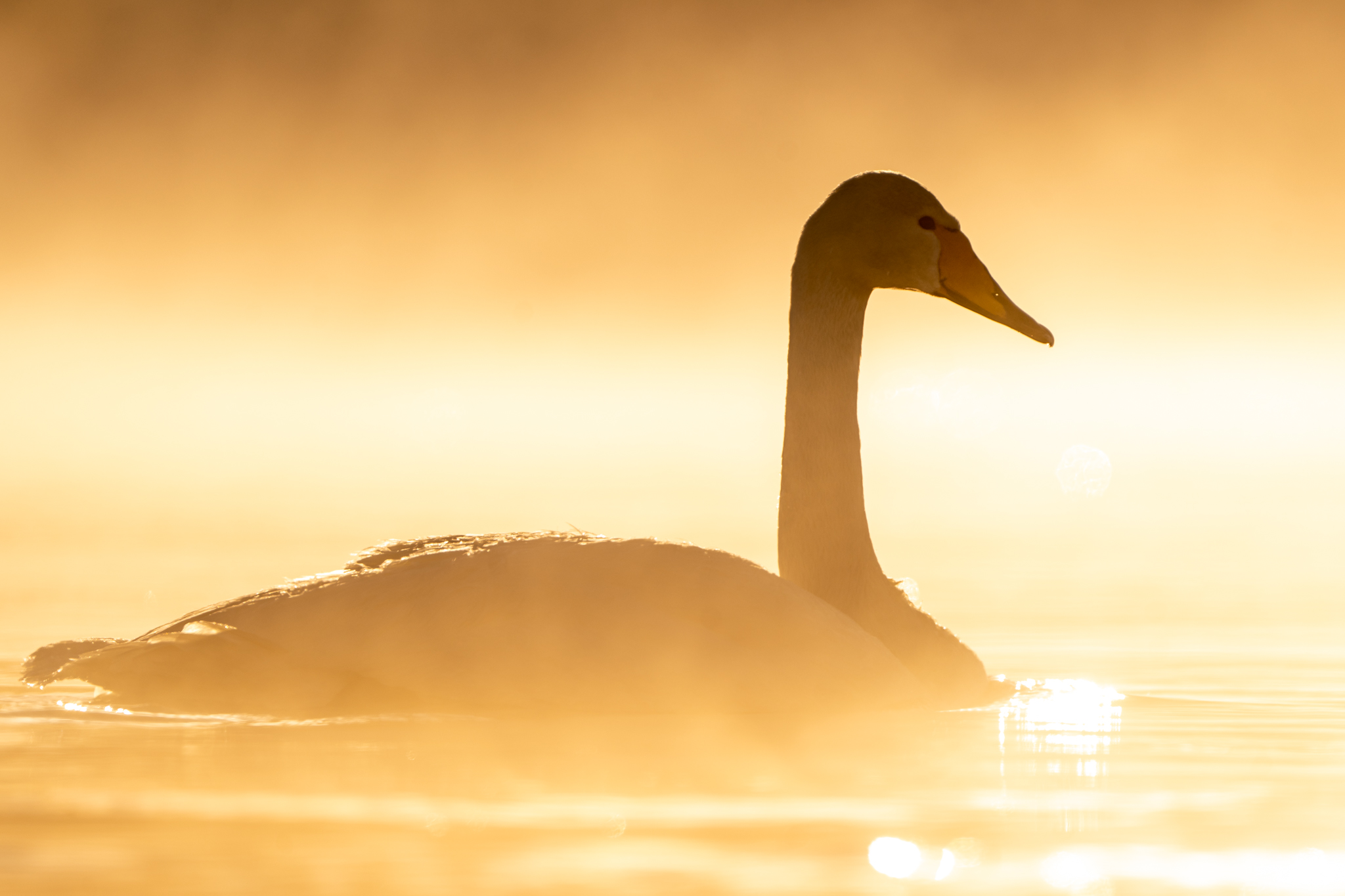
Whooper Swan (Cygnus cygnus) // 1/800 sec | f/6.3 | ISO 100 | 600 mm
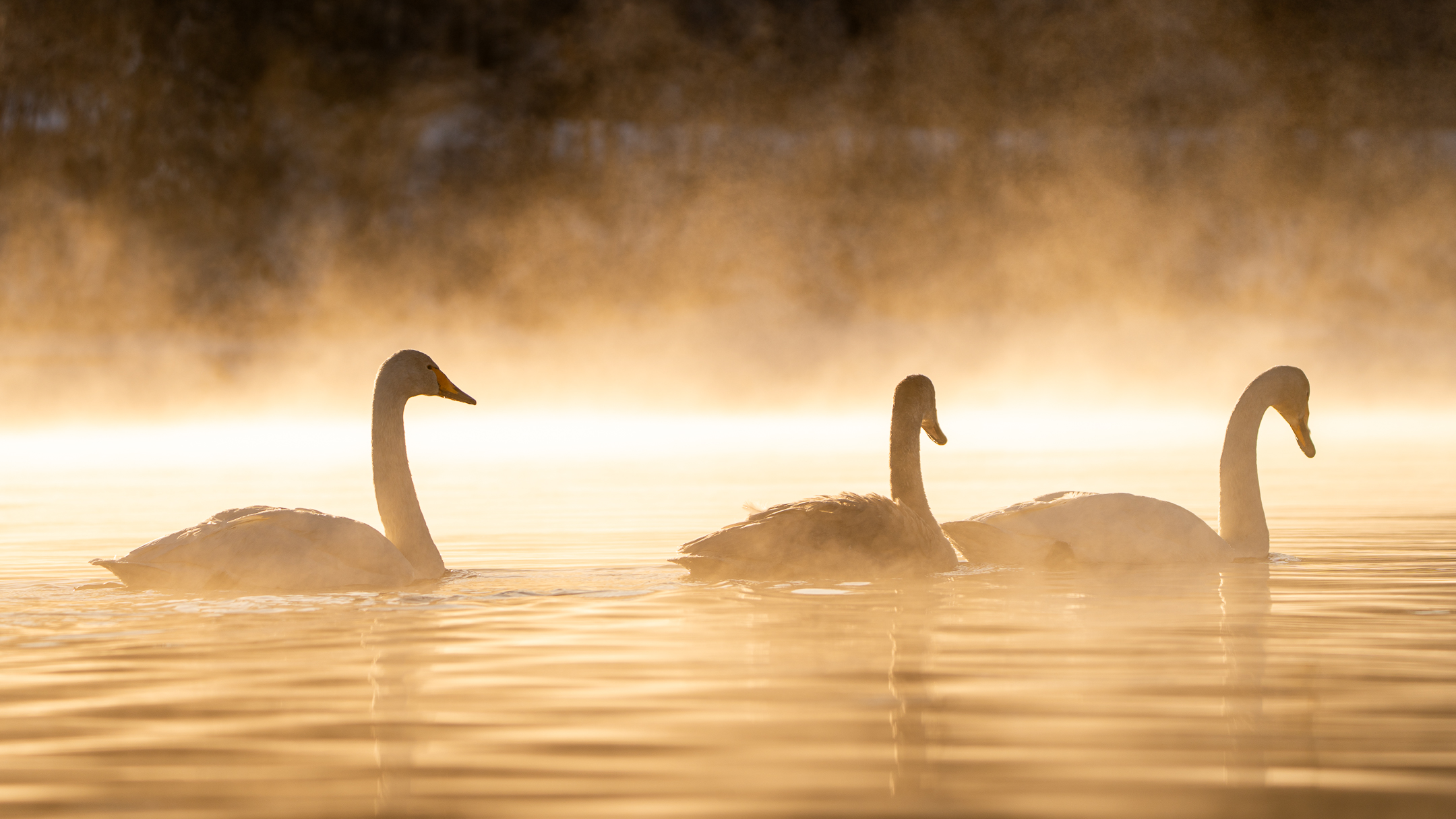
Whooper Swan (Cygnus cygnus) // 1/800 sec | f/5.6 | ISO 100 | 200 mm
The whooper swans seemed to have little interest in me and let me photograph them for a long time. So I could give free rein to my creativity and try out different perspectives. My personal favourites were taken when the rays of sunshine penetrated the forest and bathed the scene in golden light – as the photos above impressively show.
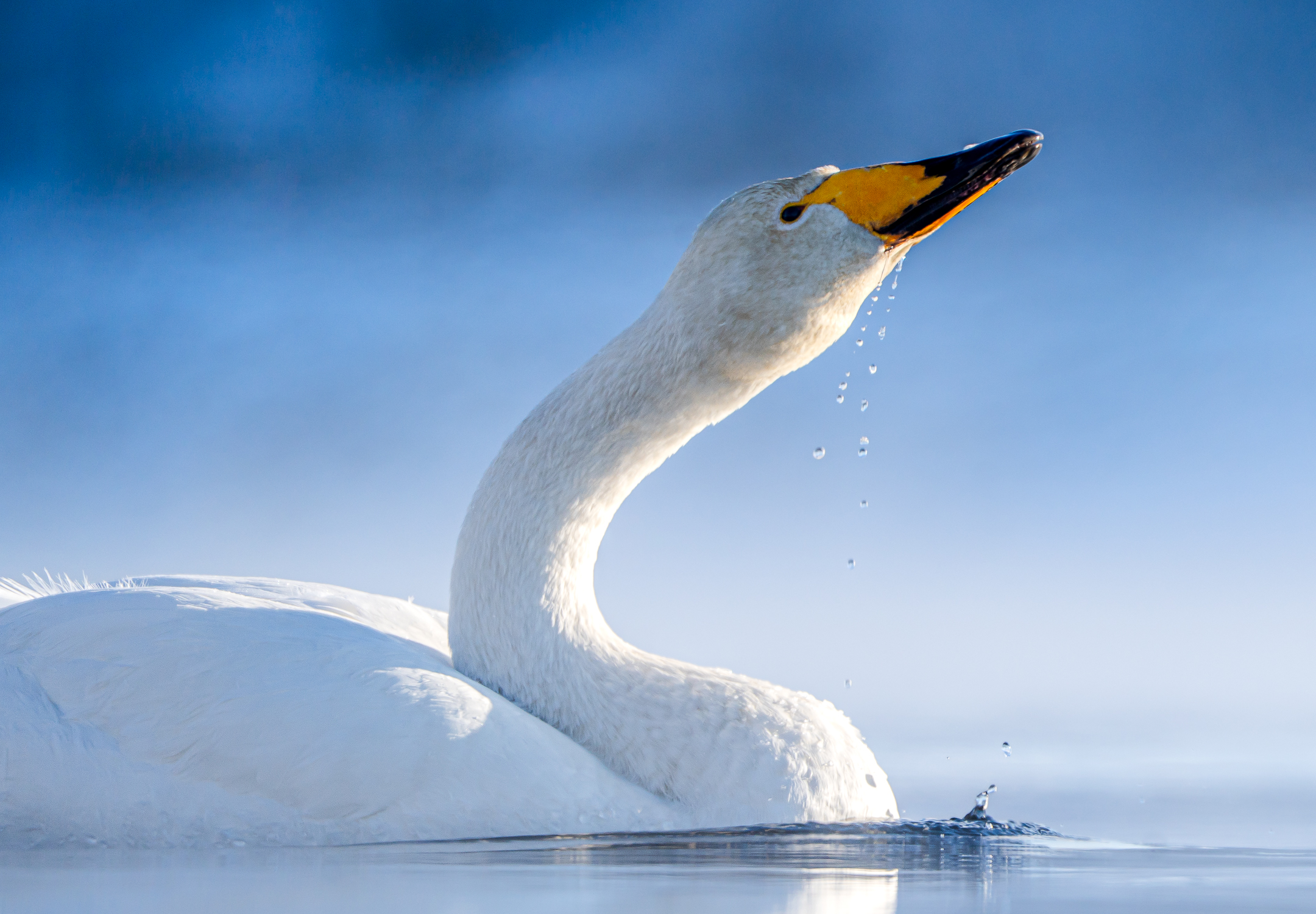
Whooper Swan (Cygnus cygnus) // 1/800 sec | f/6.3 | ISO 200 | 590 mm
I was able to watch one of the whooper swans dipping its head into the water again and again to look for water plants. As it came up, I caught the moment when drops of water ran from its yellow bill.
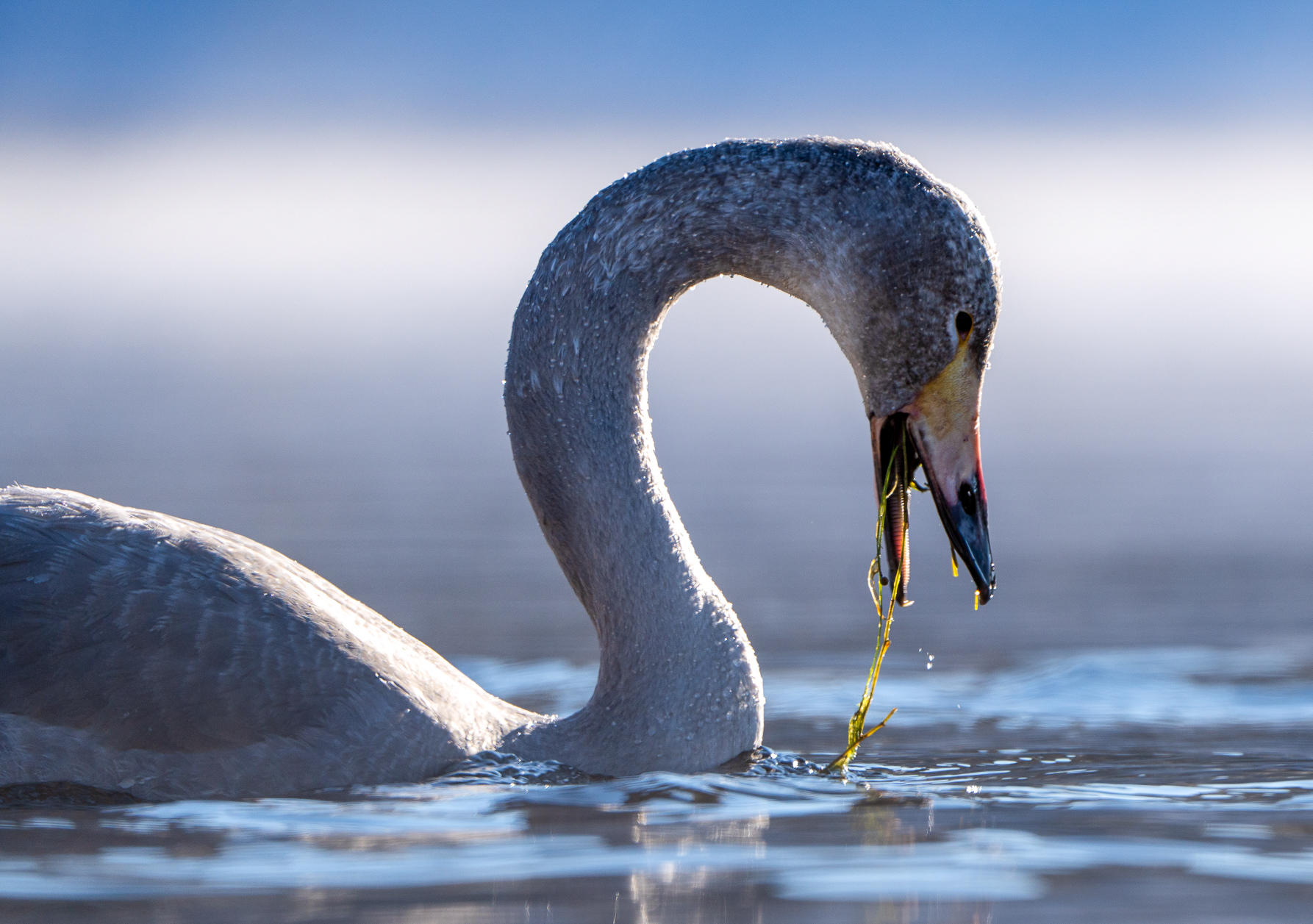
Whooper Swan (Cygnus cygnus) // 1/800 sec | f/6.3 | ISO 200 | 600 mm
Or this young whooper swan, which, apparently looking for water plants – the whooper swans’ main food – pulled up some seagrass and then devoured it.
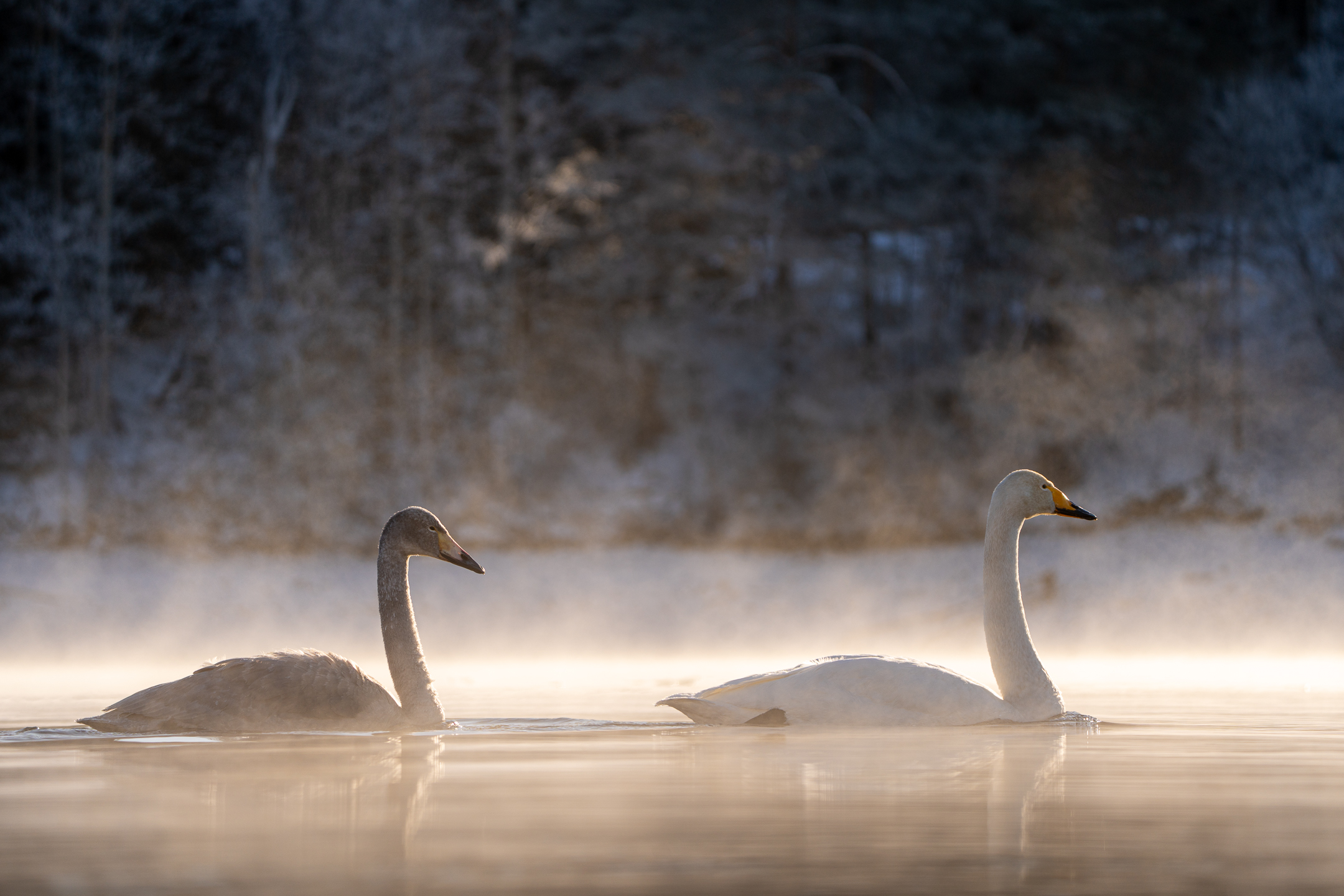
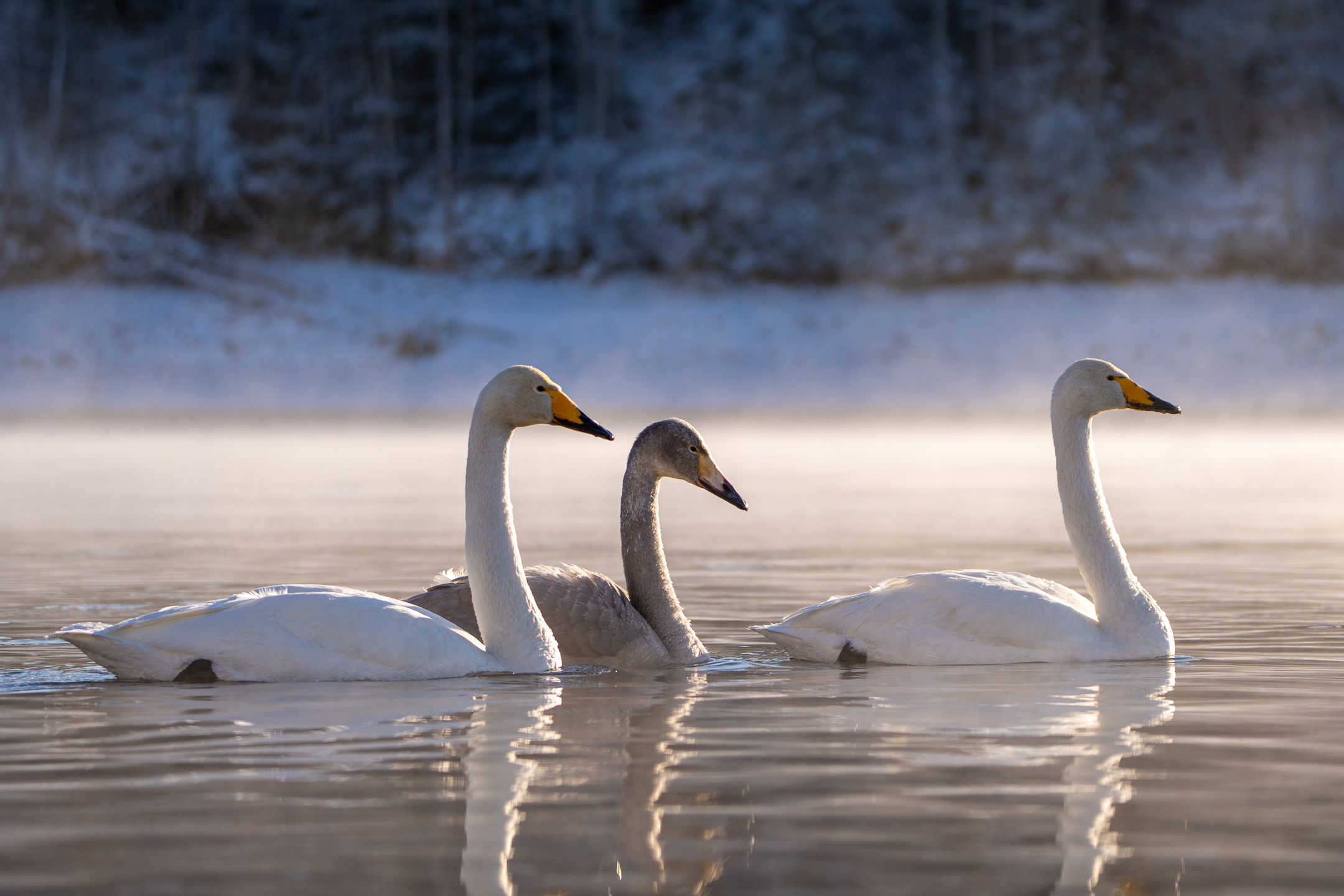
Whooper Swan (Cygnus cygnus) // 1/800 sec | f/5.6 | ISO 200 | 200 mm; 1/800 sec | f/5.6 | ISO 200 | 200 mm
Looking at these photos, you might think it was a lake, because the water is so beautifully calm. In fact, however, it is a river that flowed only slowly downstream because of a nearby hydroelectric power station.
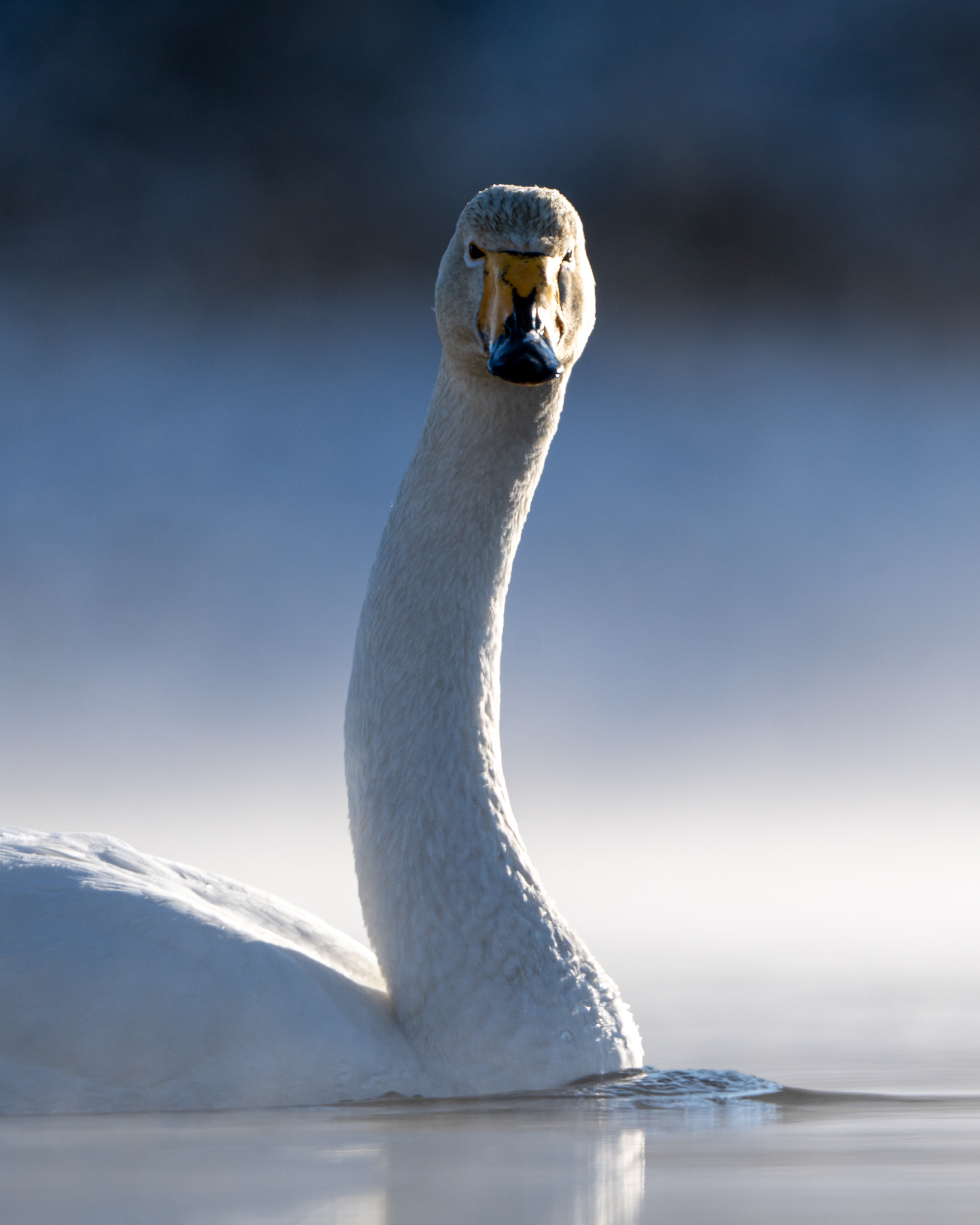
Whooper Swan (Cygnus cygnus) // 1/800 sec | f/6.3 | ISO 160 | 575 mm
Later the whooper swans even came closer to me. Once a whooper swan looked at me very seriously – almost a little “angrily”.
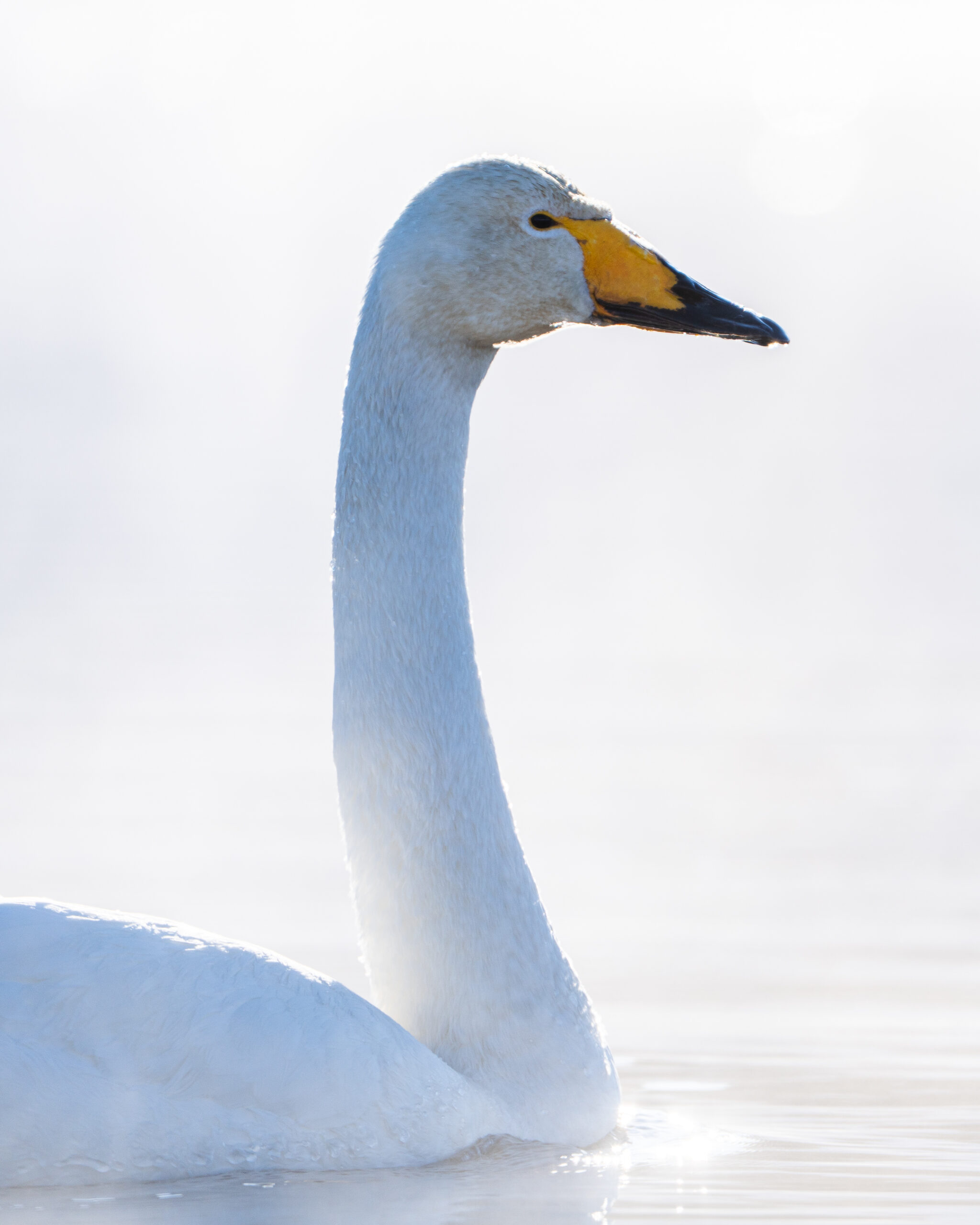
Whooper Swan (Cygnus cygnus) // 1/500 sec | f/6.3 | ISO 100 | 600 mm
The whooper swan looked away from me again. I deliberately overexposed the next photo to create a so-called high-key photo.
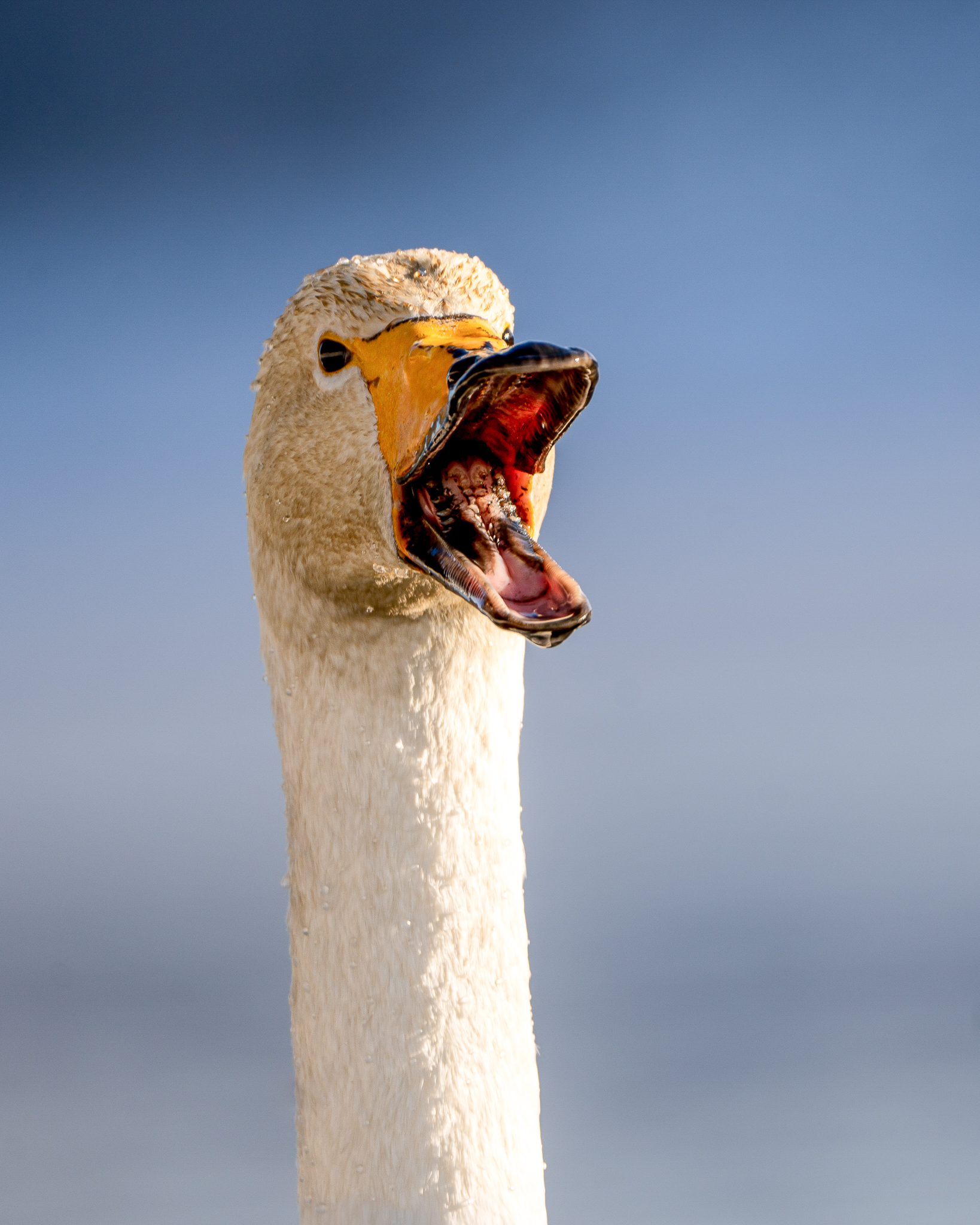
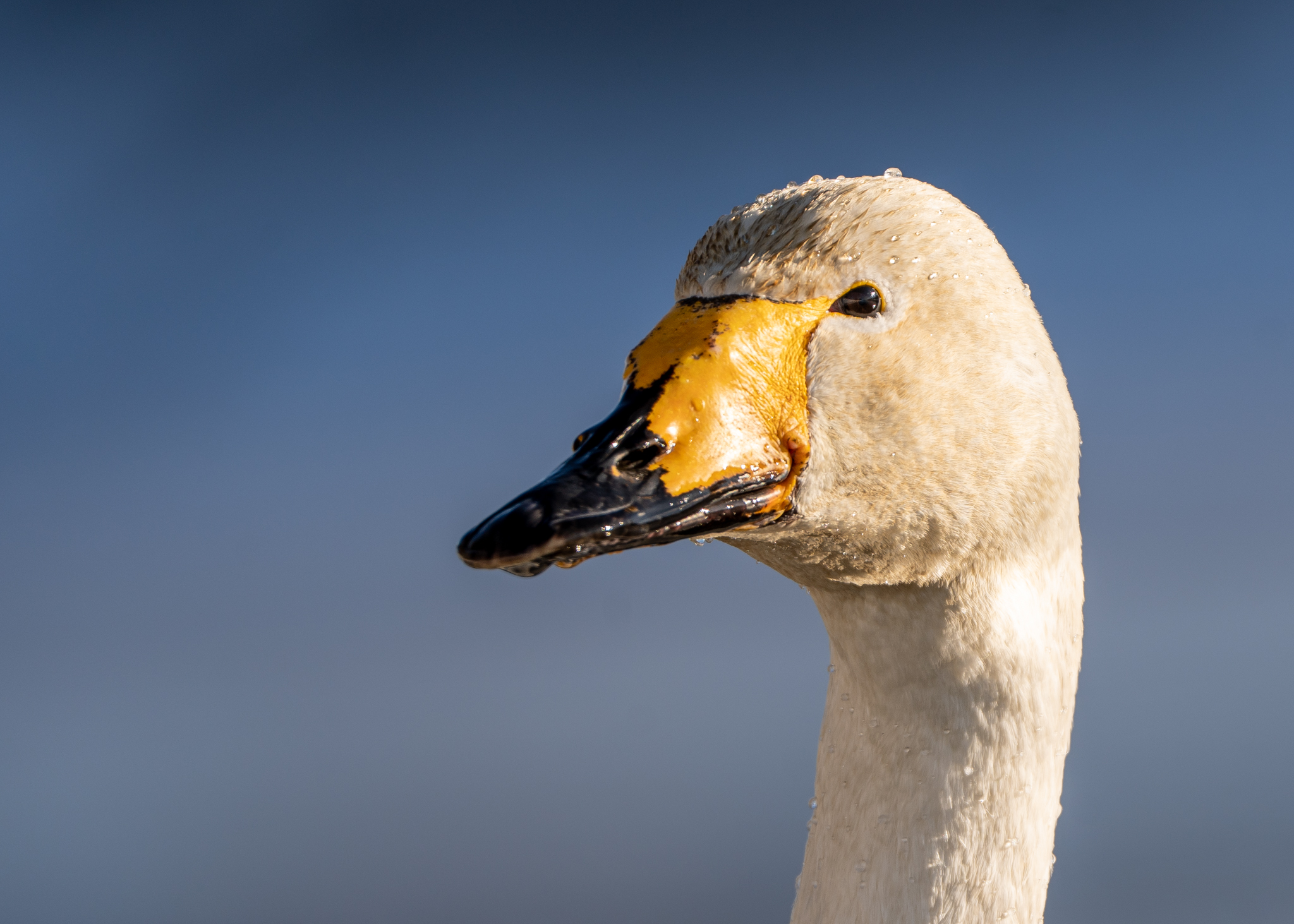
Whooper Swan (Cygnus cygnus) // 1/400 sec | f/6.3 | ISO 100 | 600 mm; 1/400 sec | f/6.3 | ISO 100 | 600 mm
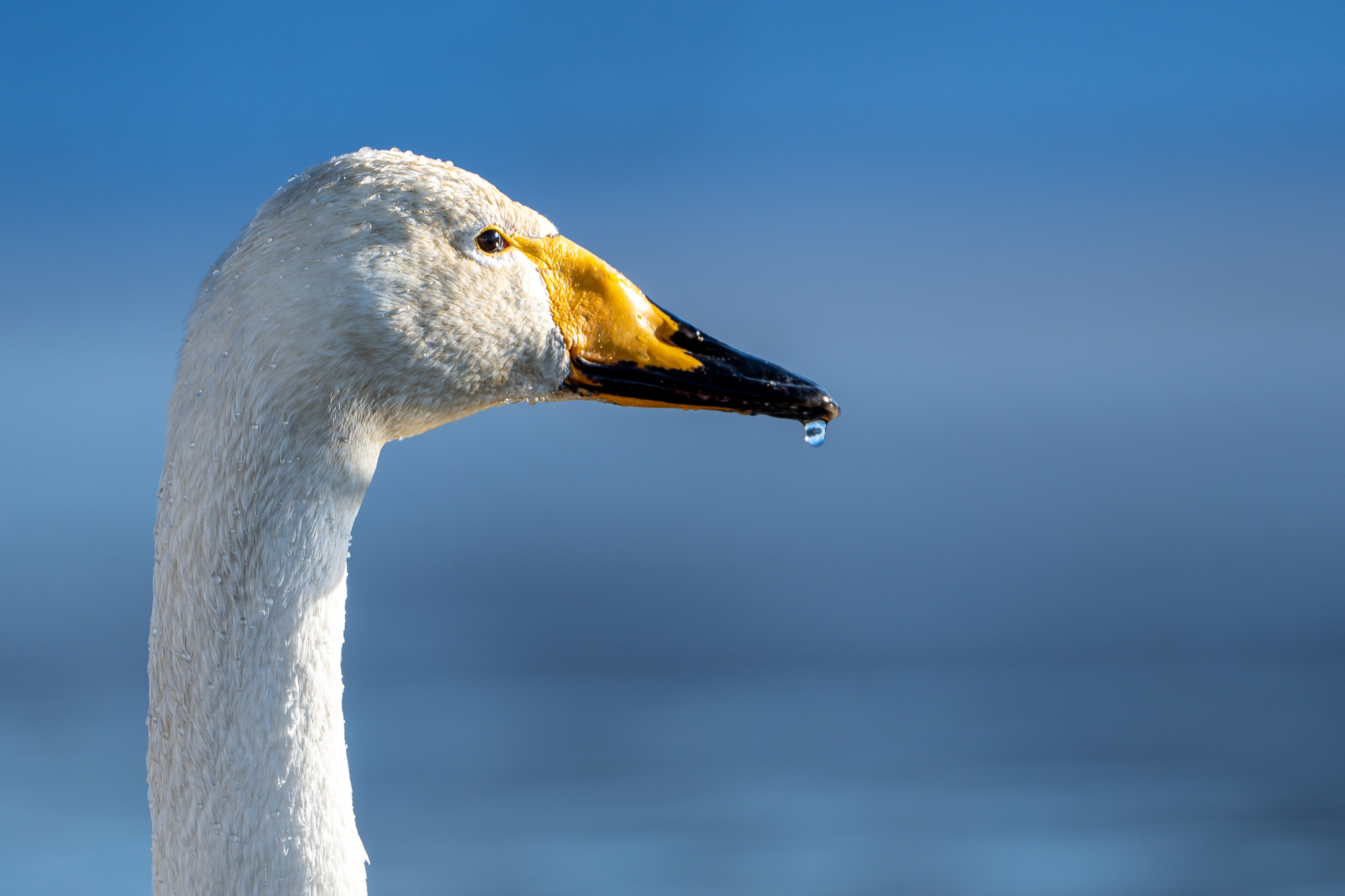
Whooper Swan (Cygnus cygnus) // 1/400 sec | f/6.3 | ISO 100 | 600 mm
In the end the whooper swans came so close that I almost got a little “scared”. But they certainly didn’t want to harm me. I used this opportunity to take extremely close portraits of the whooper swans. I even caught one of them as it spread its bill wide and “trumpeted” loudly. That made me wonder why this species is called the “singing swan” in German (Singschwan) and not the “trumpet swan”. Perhaps the name comes from its call sounding more melodious than that of the North American trumpeter swan (Cygnus buccinator) – or from its calm, elegant charisma, reminiscent of an opera singer or a ballerina.
One thing is clear: the whooper swan project will stay in my memory forever and marked, so to speak, the start of further successful photography experiences. Who knows, perhaps one winter I will travel to the far north again to visit the whooper swans. However, the photos I took back then will probably be hard to beat.
Leave a Reply