Even before sunrise it is oppressively warm, and the sounds of countless animals can be heard from all around. We are full of anticipation, because we are on our way to a lake in north-western Sri Lanka. This morning my father and I got up at half past five to reach the lake before sunrise.
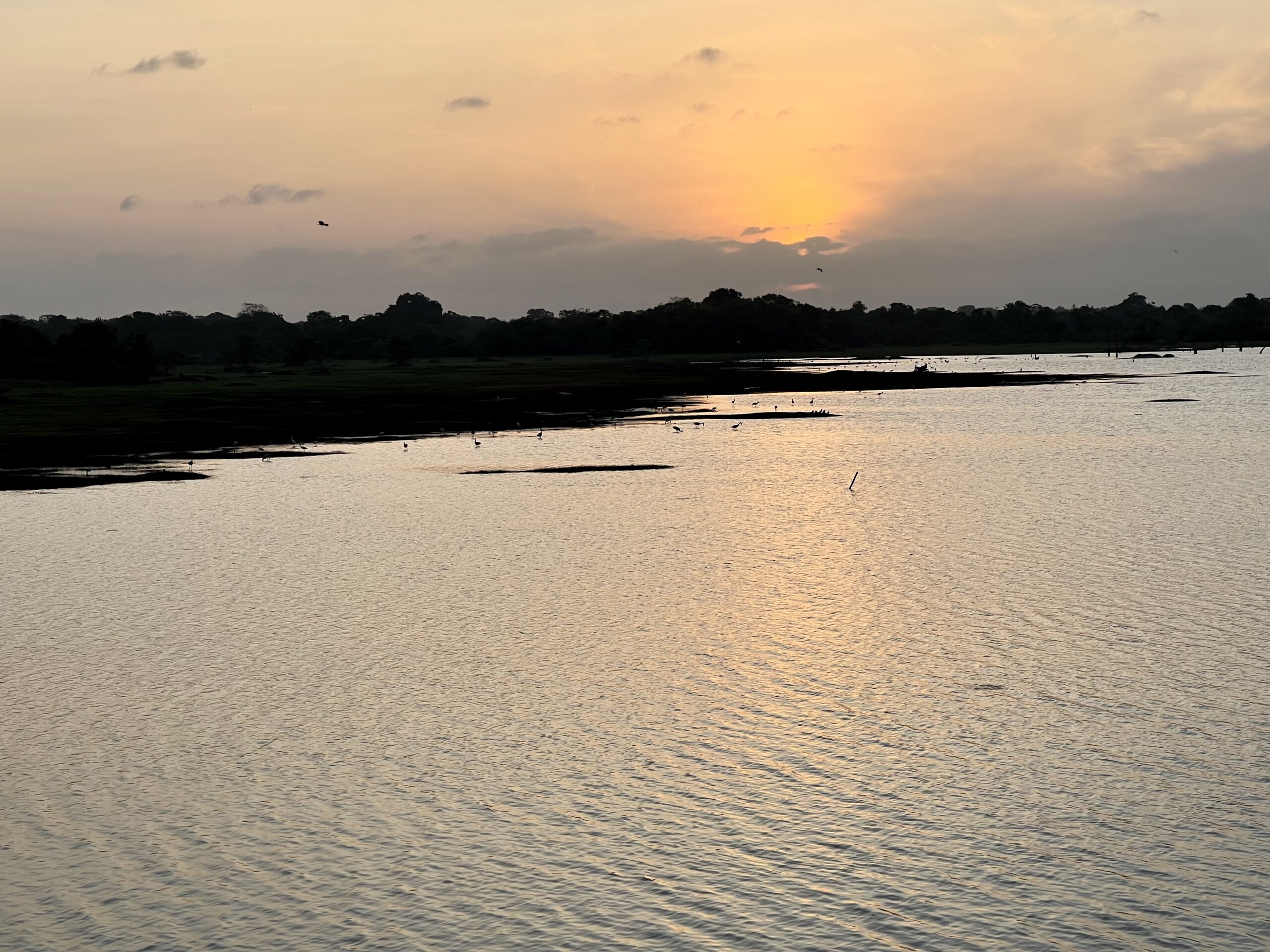
Sunrise at the lake.
After a twenty-minute walk from our accommodation we arrive at the lake. In the twilight we can already make out the silhouettes of the birds on the shore. Apart from a few fishermen, we are the only people at the lake this morning.

We approach the dead tree on which several birds are perched.

The sun shines through the dead tree and creates an almost magical atmosphere.
Soon the sun rises. At first it is hidden by a few clouds, but it soon appears and bathes the landscape in a wonderful orange light. The “golden hour” of photography has begun. In front of us stands a dead tree on which we can make out several birds of prey and a kingfisher called the Stork-billed Kingfisher. The dead tree is backlit by the sun. Carefully I raise my camera and try to capture this atmospheric backlit scene.

Crested Serpent-Eagle (Spilornis cheela) // 1/1000 sec | f/6.3 | ISO 200 | 600 mm
First I photograph the bird of prey, positioning myself so that the sun fits into the background of the picture.

Stork-billed Kingfisher (Pelargopsis capensis) // 1/800 sec | f/6.3 | ISO 100 | 600 mm
After that I also manage to take a photo of the Stork-billed Kingfisher. We don’t want to lose any time, because the sun is rising quickly and the beautiful golden light will soon disappear. So we move on to look for more birds. We find what we are looking for on the shore of the lake: hundreds of birds gather there – more than I have ever seen before. At this time of day most of the birds are looking for food, much like the fishermen earning their living. Carefully I approach the birds. However, I don’t manage to do so completely unnoticed. Some Little Egrets take off and I use the opportunity to photograph one in flight.

Carefully I approach the birds.

Little Egret (Egretta garzetta) // 1/1000 sec | f/6.3 | ISO 640 | 600 mm

Little Egret (Egretta garzetta) // 1/1000 sec | f/6.3 | ISO 800 | 600 mm
As quietly as possible I lie down on the muddy ground on the lake shore. That may sound uncomfortable, but it is the only way to get to eye level with the birds. In this low position I am also better camouflaged. Most of the birds are alert, however, and notice me anyway. Instinctively they turn away from me and walk off in other directions. Only a few birds seem not to notice my presence and continue looking for food.

Black-winged Stilt (Himantopus himantopus) // 1/1000 sec | f/6.3 | ISO 1250 | 600 mm

Asian Openbill (Anastomus oscitans) // 1/1000 sec | f/6.3 | ISO 500 | 600 mm

Black-headed Ibis (Threskiornis melanocephalus) // 1/1000 sec | f/6.3 | ISO 800 | 600 mm

Little Egret (Egretta garzetta) // 1/1250 sec | f/6.3 | ISO 800 | 600 mm

Little Egret (Egretta garzetta) // 1/1250 sec | f/6.3 | ISO 800 | 600 mm
A Little Egret approaches me. Spellbound, it stares into the water as if it had spotted a fish. In my mind I already see it striking into the water with its bill at lightning speed, but nothing happens and it finally turns away.

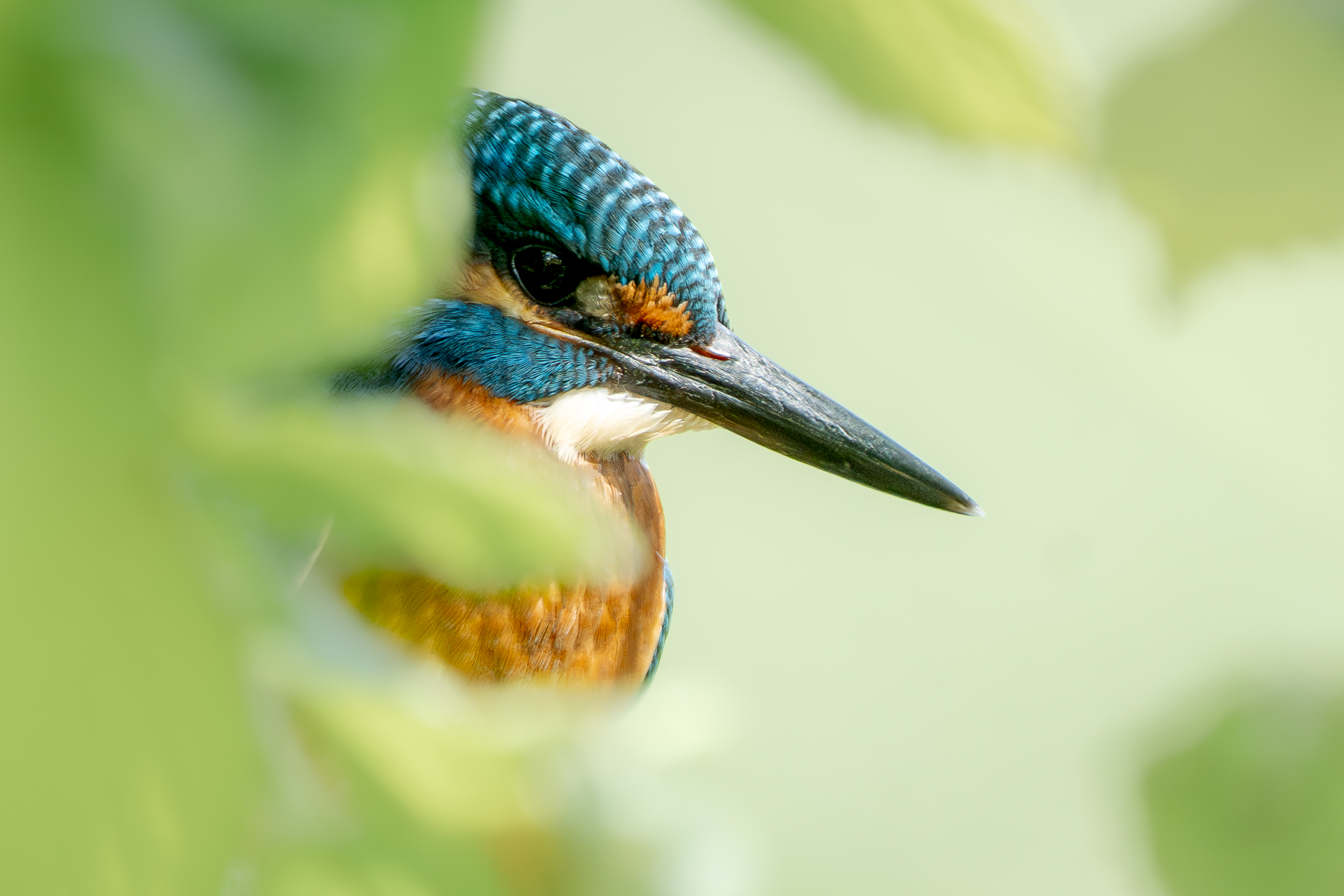
Common Kingfisher (Alcedo atthis) // 1/1000 sec | f/6.3 | ISO 4000 | 600 mm
A little further away I spot several Common Kingfishers and Red-wattled Lapwings. A Common Kingfisher sits on a branch watching a pool of water below it – presumably hunting for fish. Slowly I get up from my lying position and crawl as inconspicuously as possible across the muddy ground towards the Common Kingfisher. It notices me and looks away from the water, but stays calmly on the branch. I point my camera at it and manage to take my best photos of this species so far. In European waters I had only been able to photograph a Common Kingfisher from a relatively long distance. I have long been fascinated by this species because of its bright blue plumage, and this morning my wish for a good photo finally comes true.
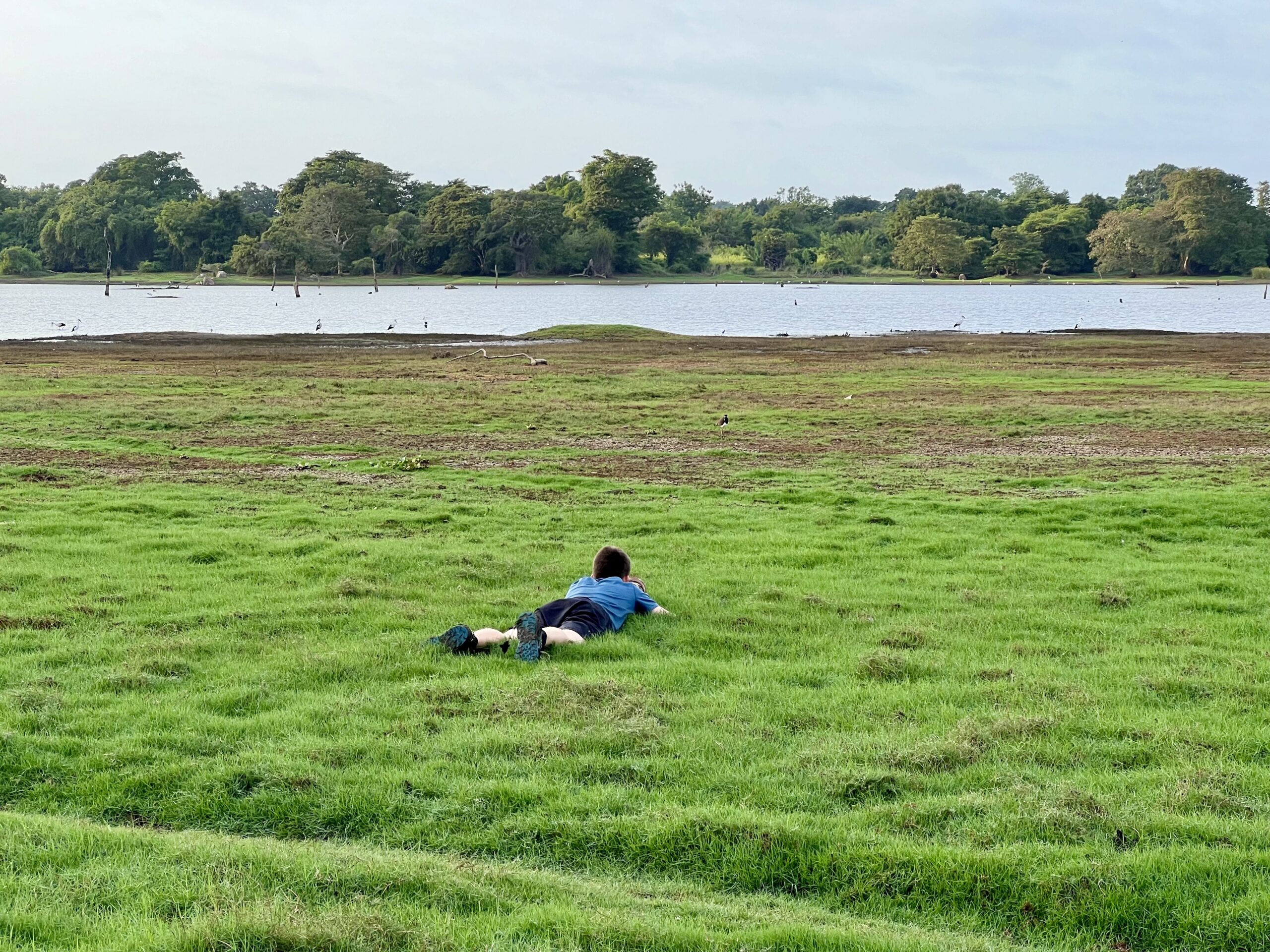
Lying in the lush green grass, I watch the bird gradually come closer.
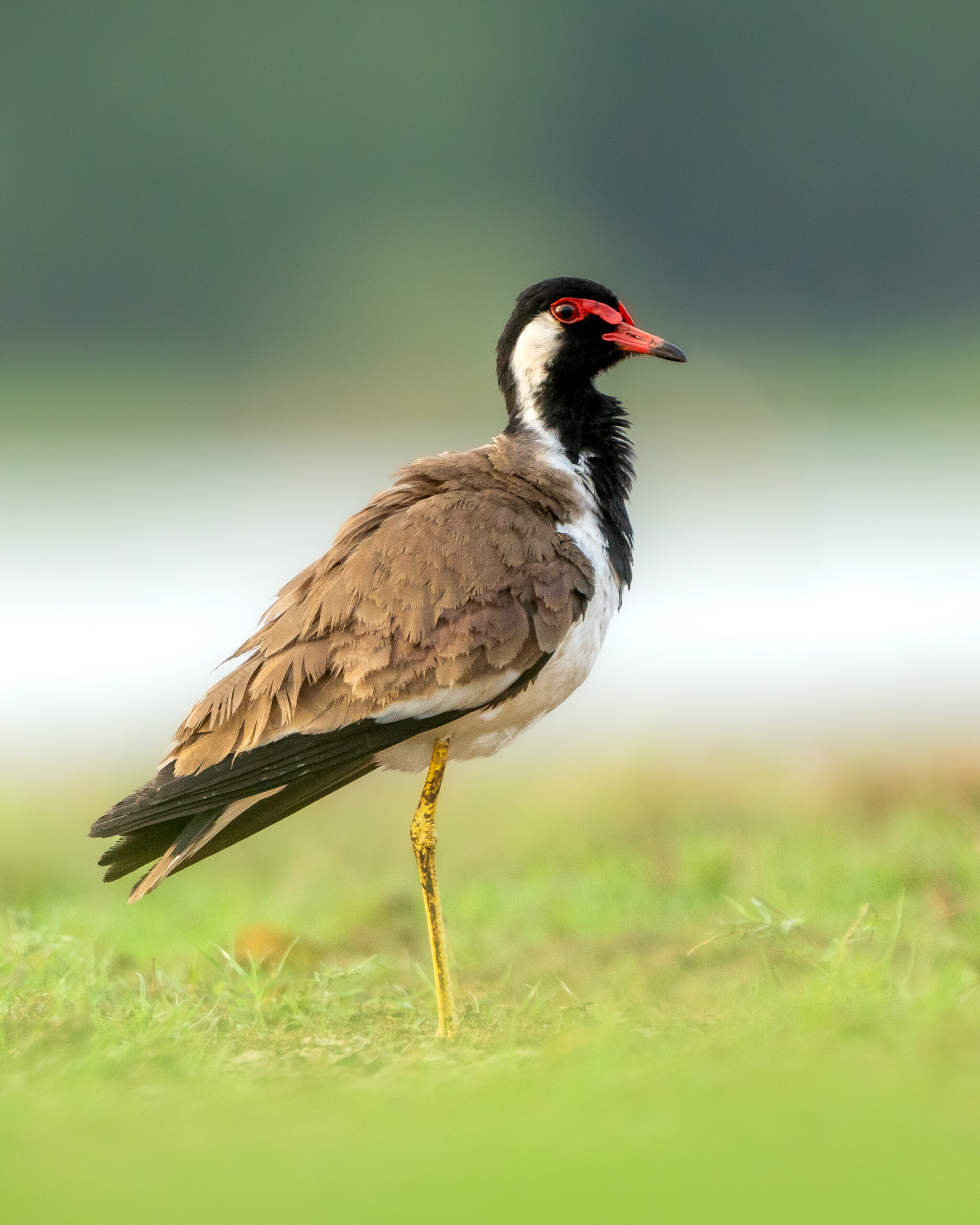
Red-wattled Lapwing (Vanellus indicus) // 1/1000 sec | f/6.3 | ISO 1600 | 600 mm

Red-wattled Lapwing (Vanellus indicus) // 1/1000 sec | f/6.3 | ISO 1000 | 600 mm
Crouching, I move on and get closer and closer to a Red-wattled Lapwing. There are only a few metres between us now. It strides across the grassy ground without taking its eyes off me or my lens. In the background lies the lake, and the opposite shore is bathed in warm light by the morning sun. This creates a picturesque background with colours almost like a rainbow.

Red-wattled Lapwing (Vanellus indicus) // 1/1000 sec | f/6.3 | ISO 1600 | 600 mm
The bird moves further into the deep green grass and the mood changes completely. Finally it almost disappears in the grass, with only its upper body still sticking out.

Concentrating, I point my camera at the bird.

Paddyfield Pipit (Anthus rufulus) // 1/1000 sec | f/6.3 | ISO 1600 | 600 mm

Paddyfield Pipit (Anthus rufulus) // 1/1000 sec | f/6.3 | ISO 2500 | 600 mm
Something rustles in the grass behind me. I turn round and look a Paddyfield Pipit straight in the eye. In its bill it carries a tuft of plant fibres, probably for building a nest. It is a real stroke of luck that I can capture this moment.

Eastern Cattle-Egret (Ardea coromanda) // 1/1600 sec | f/6.3 | ISO 800 | 600 mm

A sight that is no longer so common today: dozens of birds gathering around a lake.

Little Egret (Egretta garzetta) // 1/1600 sec | f/6.3 | ISO 2000 | 600 mm
By now the golden light is over, but the light remains ideal for photography. The sky is slightly overcast, which makes the light appear soft. In clear weather it would already be far too harsh.

Black-headed Ibis (Threskiornis melanocephalus) // 1/1600 sec | f/6.3 | ISO 500 | 600 mm

Purple Heron (Ardea purpurea) // 1/1250 sec | f/6.3 | ISO 2000 | 600 mm
I am impressed by how many birds have gathered here and what a fantastic habitat they live in. It is the first time I have been able to watch so many birds in one place. Places like this are unique and unfortunately becoming increasingly rare. It is all the sadder to see how these habitats are gradually being destroyed and the birds are losing their home.

Asian Green Bee-eater (Merops orientalis) // 1/1600 sec | f/6.3 | ISO 1000 | 600 mm
I try to get closer to the bee-eaters, which I have already been able to watch and photograph several times on this trip. Fascinated, we watch how they cling acrobatically to thin branches and look out for insects. As soon as an opportunity arises, they swoop down from the branches to chase their prey. My dream picture would have been a flight shot of a bee-eater, but I don’t manage it very well. Their speed exceeds my reactions, and the moment of take-off is almost impossible to predict.

Asian Green Bee-eater (Merops orientalis) // 1/1250 sec | f/6.3 | ISO 1000 | 600 mm

Asian Green Bee-eater (Merops orientalis) // 1/2500 sec | f/6.3 | ISO 800 | 600 mm

Asian Green Bee-eater (Merops orientalis) // 1/2500 sec | f/6.3 | ISO 1600 | 600 mm
Instead, I manage to take some portraits of these birds.

Asian Green Bee-eater (Merops orientalis) // 1/1000 sec | f/6.3 | ISO 1600 | 600 mm
I particularly like one of these pictures, because two bee-eaters are sitting side by side on one branch.

Black-rumped Flameback (Dinopium benghalense) // 1/2000 sec | f/6.3 | ISO 3200 | 600 mm
Besides the bee-eaters, we can watch many other bird species this morning. Some birds are not very shy, while others react extremely sensitively and leave early. As the day has now begun, we are no longer the only people around the lake. Some stray dogs sometimes chase the birds, which makes watching them more difficult for us.

Red-wattled Lapwing (Vanellus indicus) // 1/1600 sec | f/6.3 | ISO 320 | 600 mm
One of the dogs chases a Red-wattled Lapwing, which I can then capture in flight.
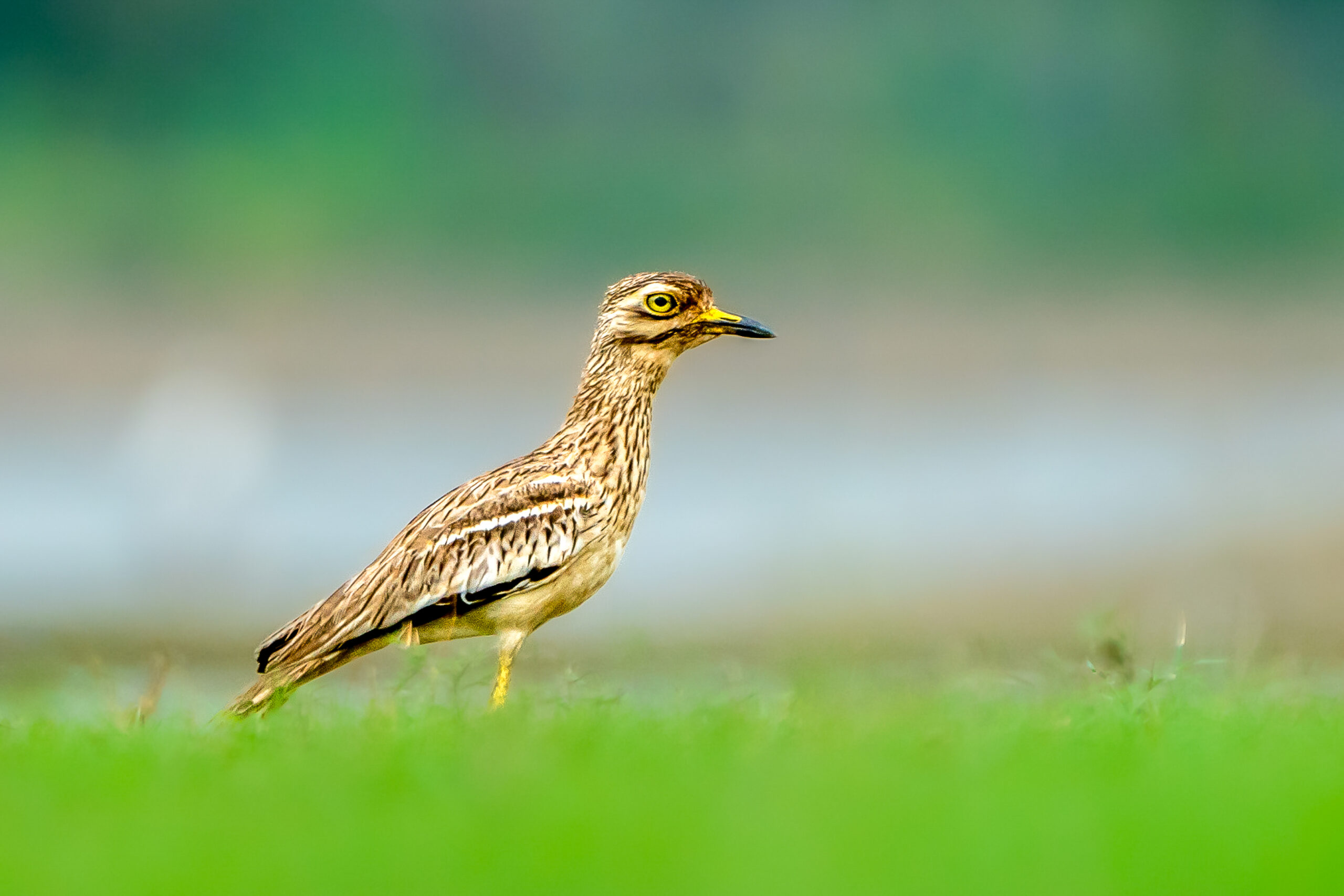
Indian Stone-curlew (Burhinus indicus) // 1/1600 sec | f/6.3 | ISO 1000 | 600 mm
A completely new species for me is the Indian Stone-curlew, which I can watch for the first time this morning. I also manage to take a photo of this species. As so often, the blue of the lake and the deep green of the forest shine in the background.

A group of larger birds.
Larger birds are the biggest challenge for me. They are often shyer than the smaller birds and become aware of us through the behaviour of the smaller birds. The larger species we watch this morning include the Asian Openbill, the Black-headed Ibis and various species of heron, of which I have already taken pictures. Asian Openbills often move in groups of several dozen birds, and the chance that one of them notices us is high. As we don’t want to disturb the animals, we leave this group in peace.

Black Drongo (Dicrurus macrocercus) // 1/2000 sec | f/6.3 | ISO 1600 | 600 mm

Paddyfield Pipit (Anthus rufulus) // 1/2000 sec | f/6.3 | ISO 2500 | 600 mm
We move on around the lake and pay particular attention to branches and trees, as birds often settle on them. The challenge is to find birds that sit at eye level, because they often hide in the treetops, where good photos are difficult. But sometimes we are lucky and spot birds sitting on lower branches or tree stumps. That’s when I often get the photos I want most.

Common Kingfisher (Alcedo atthis) // 1/2000 sec | f/6.3 | ISO 640 | 600 mm
By the lake a Common Kingfisher lies in wait on a tree stump, looking out for fish, just as we observed in the morning.

Little Egret (Egretta garzetta) // 1/1250 sec | f/6.3 | ISO 250 | 600 mm
A Little Egret elegantly climbs a rotten tree trunk.

Pied Kingfisher (Ceryle rudis) // 1/2000 sec | f/6.3 | ISO 400 | 600 mm
To round off this successful morning, we come across a species of kingfisher we had not seen before – the Pied Kingfisher. Like other kingfishers, it sits on a branch waiting for the perfect moment to catch a fish. When I take the photo, the sun appears from behind a cloud, creating a beautifully soft light. But when the cloud has passed, the sun is already high in the sky and the light becomes too harsh for photography. So we end our birdwatching and return to our accommodation with many wonderful memories.
Leave a Reply