Early in the morning, the roaring of the stags echoes through the forests. The rut is in full swing. This is the name for the mating season of Red Deer, which takes place over several weeks in September and October. Dense fog envelops the landscape, and an intense, earthy smell hangs in the air. My father and I are out in a Swiss pine forest looking for Red Deer. It is still pitch dark, and the starry sky above us is beautiful.
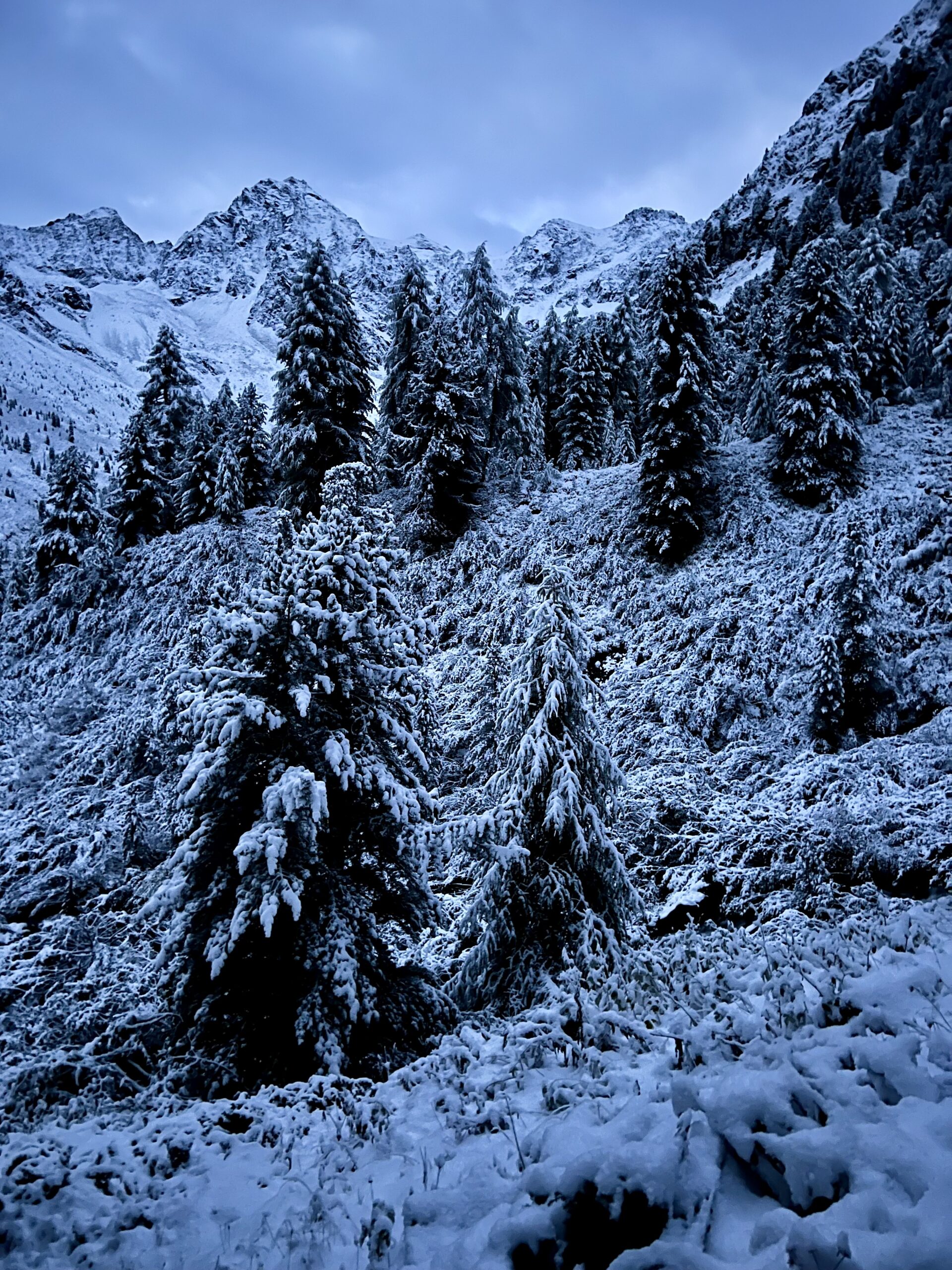
An impressive winter landscape.
It snowed the night before, and the winter landscape is impressive. But this beauty also has its pitfalls: we keep sinking into the fresh snow. Step by step we move carefully along the hiking trail, as quietly as possible – we don’t want to scare the deer away before we spot them. Suddenly my father stops. A mighty, royal stag crosses the path. Several times it lets out its deep roar, but after a short time it disappears into the thicket again.
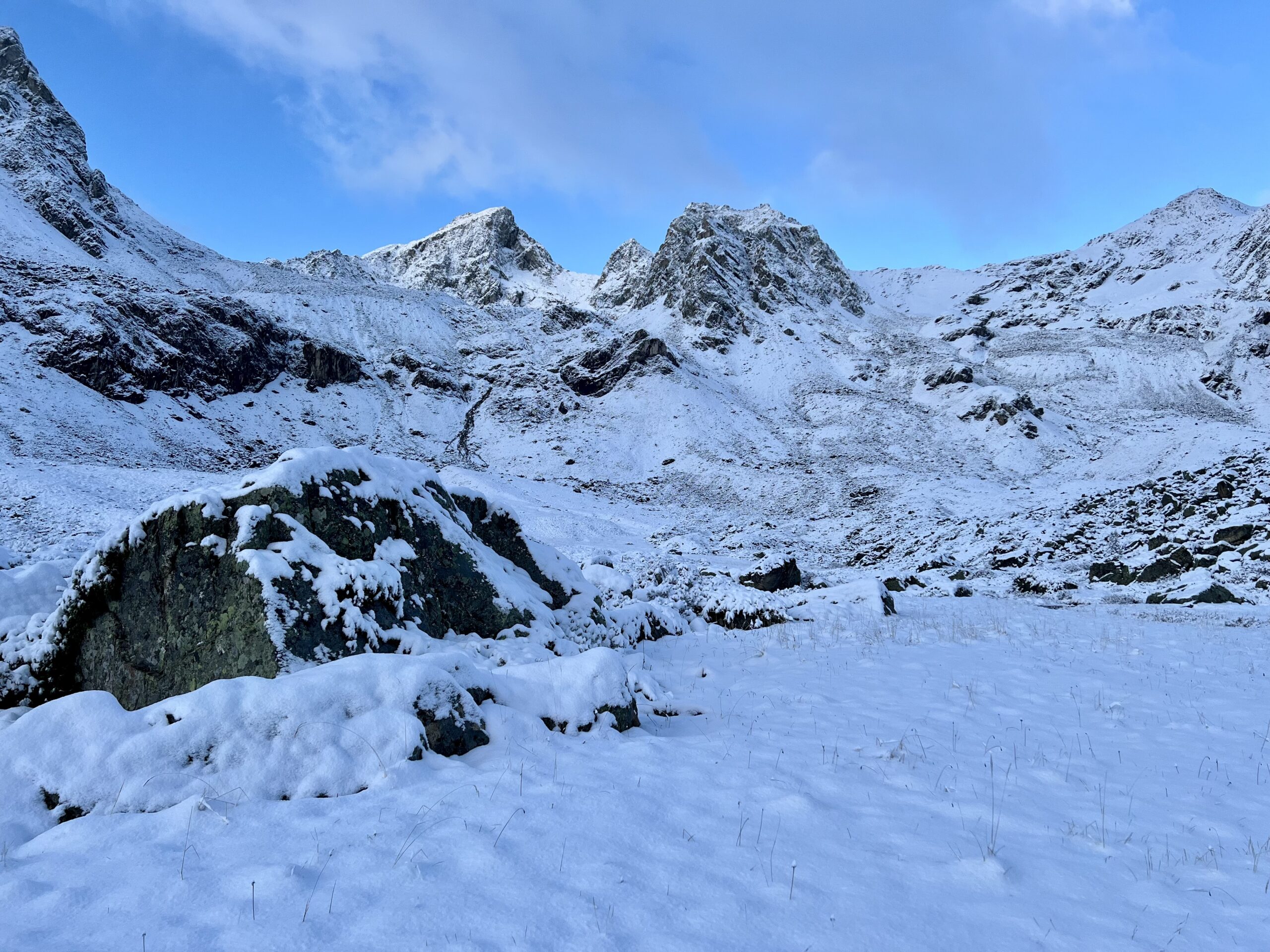
Arrived above the tree line.
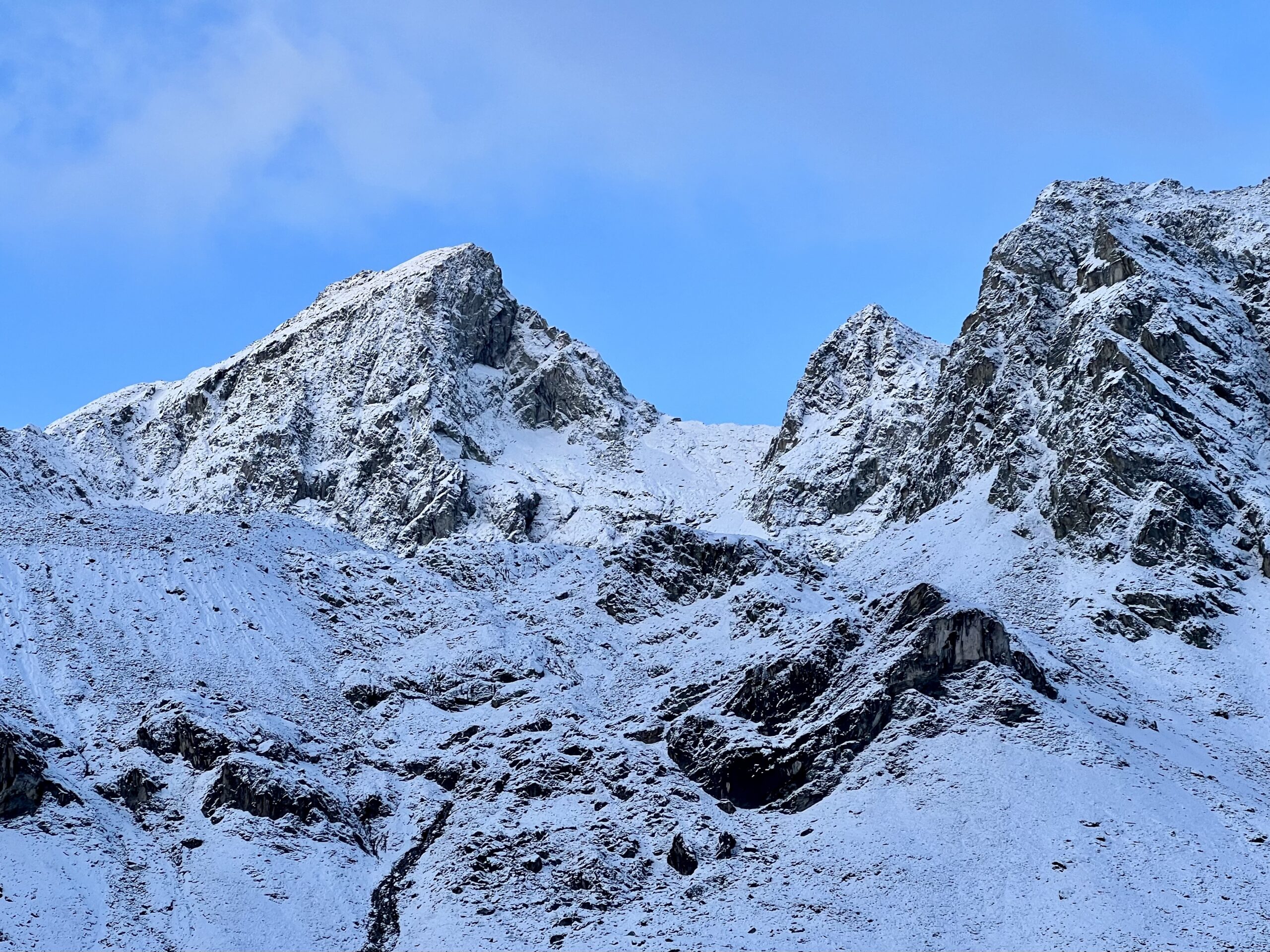
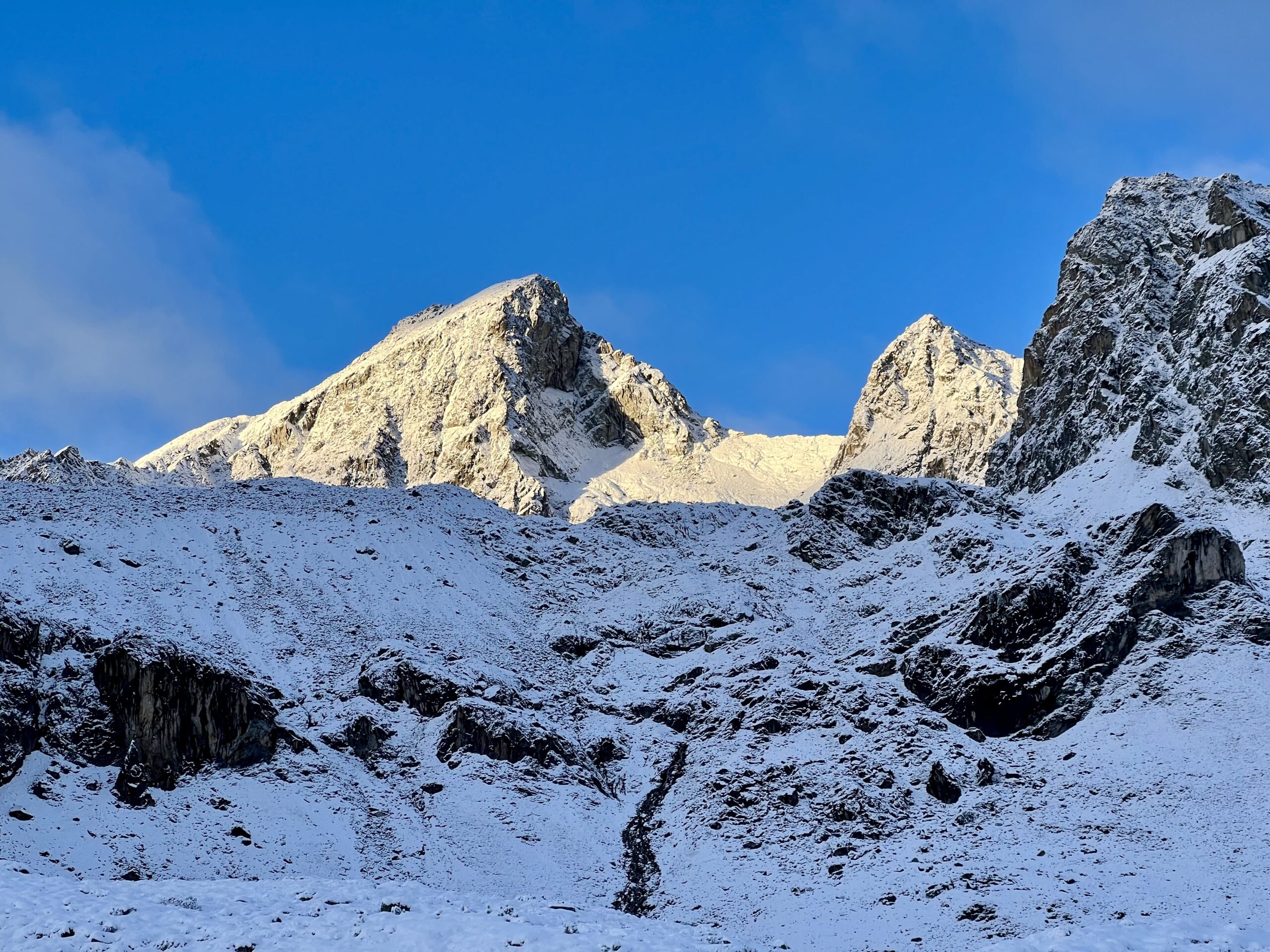
Finally the sun rises and lights up the mountains.
Shortly before sunrise we reach the tree line. Now we are completely exposed to the sharp eyes and keen sense of smell of the deer. The valley we are in offers only a few hiding places. From now on we stop talking and only whisper when absolutely necessary.
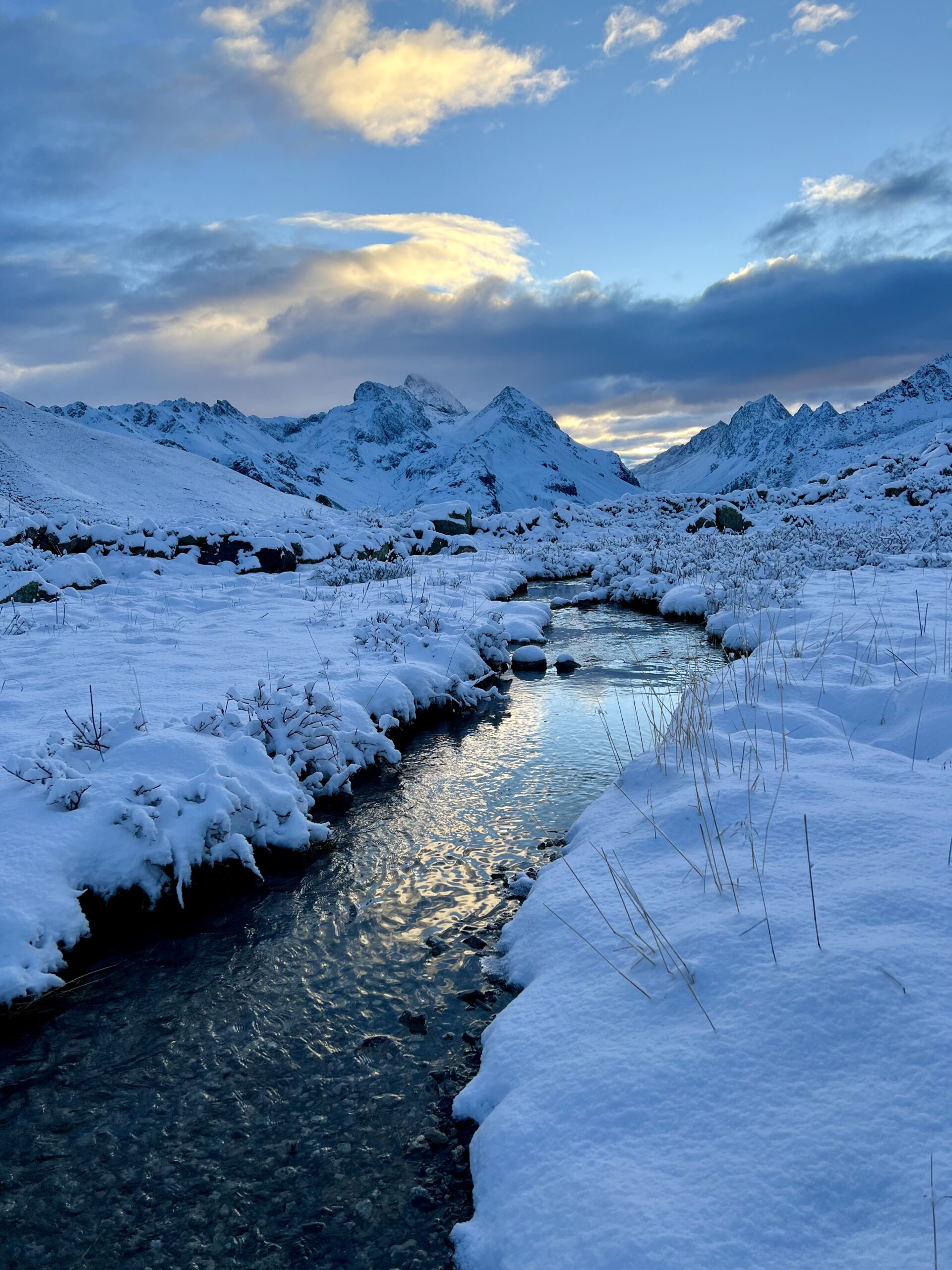
Carefully we cross a stream.
From both sides of the valley comes the impressive roaring of the stags. Carefully we cross a stream, making sure not to slip on the slippery stones.
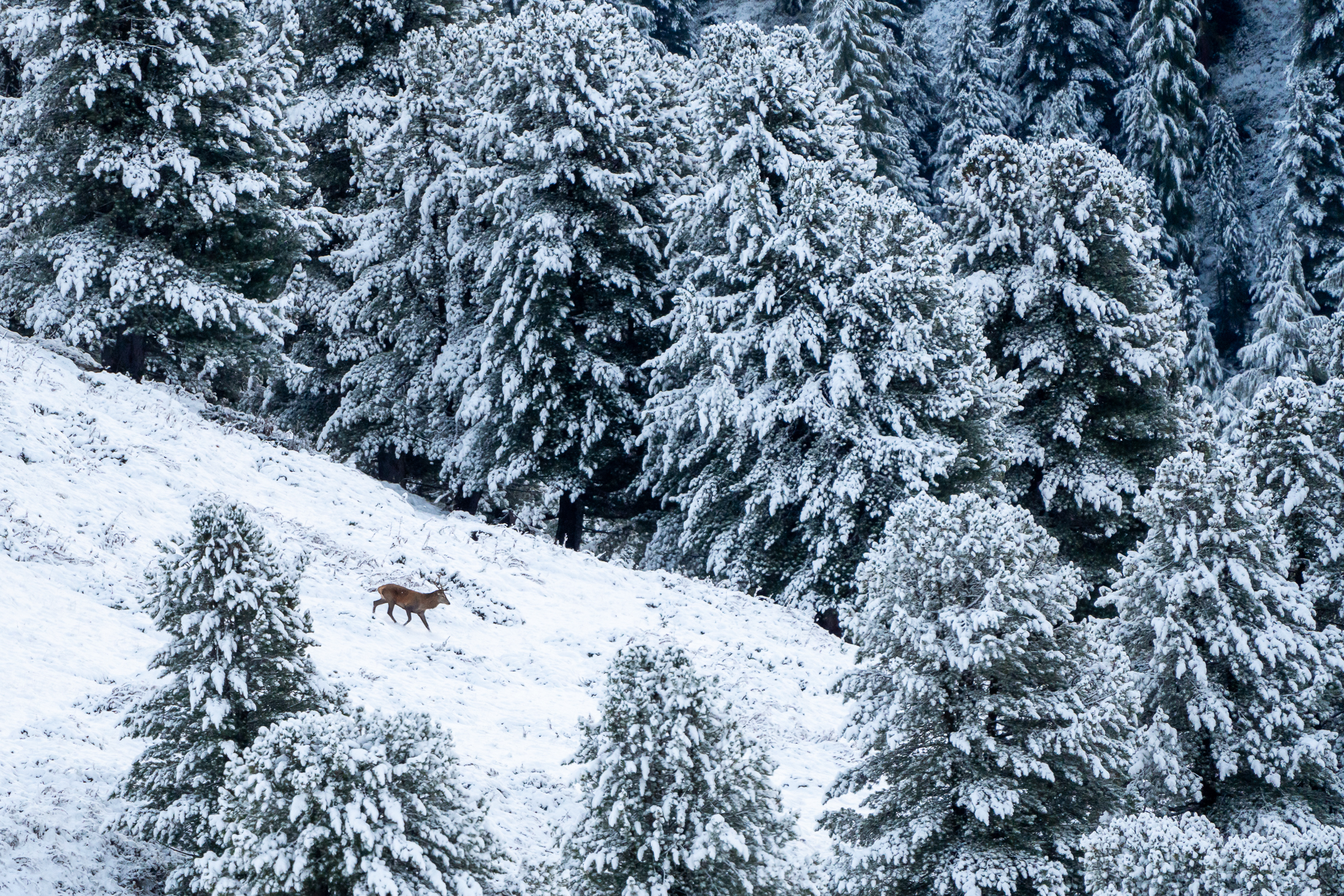
Red Deer (Cervus elaphus) // 1/1000 sec | f/6.3 | ISO 1250 | 600 mm
In the distance we spot a stag – an uneven twelve-pointer. Slowly we try to approach the stag. We move crouching, almost crawling across the snowy ground. We stop behind a large stone and watch it without being noticed. Our plan works. The stag doesn’t notice us and walks slowly in our direction. Something seems to have aroused its curiosity. It comes closer and closer – closer than I have ever been to a stag. I have already placed my camera on the stone and manage to capture this special moment. With its big eyes the stag looks straight in our direction.
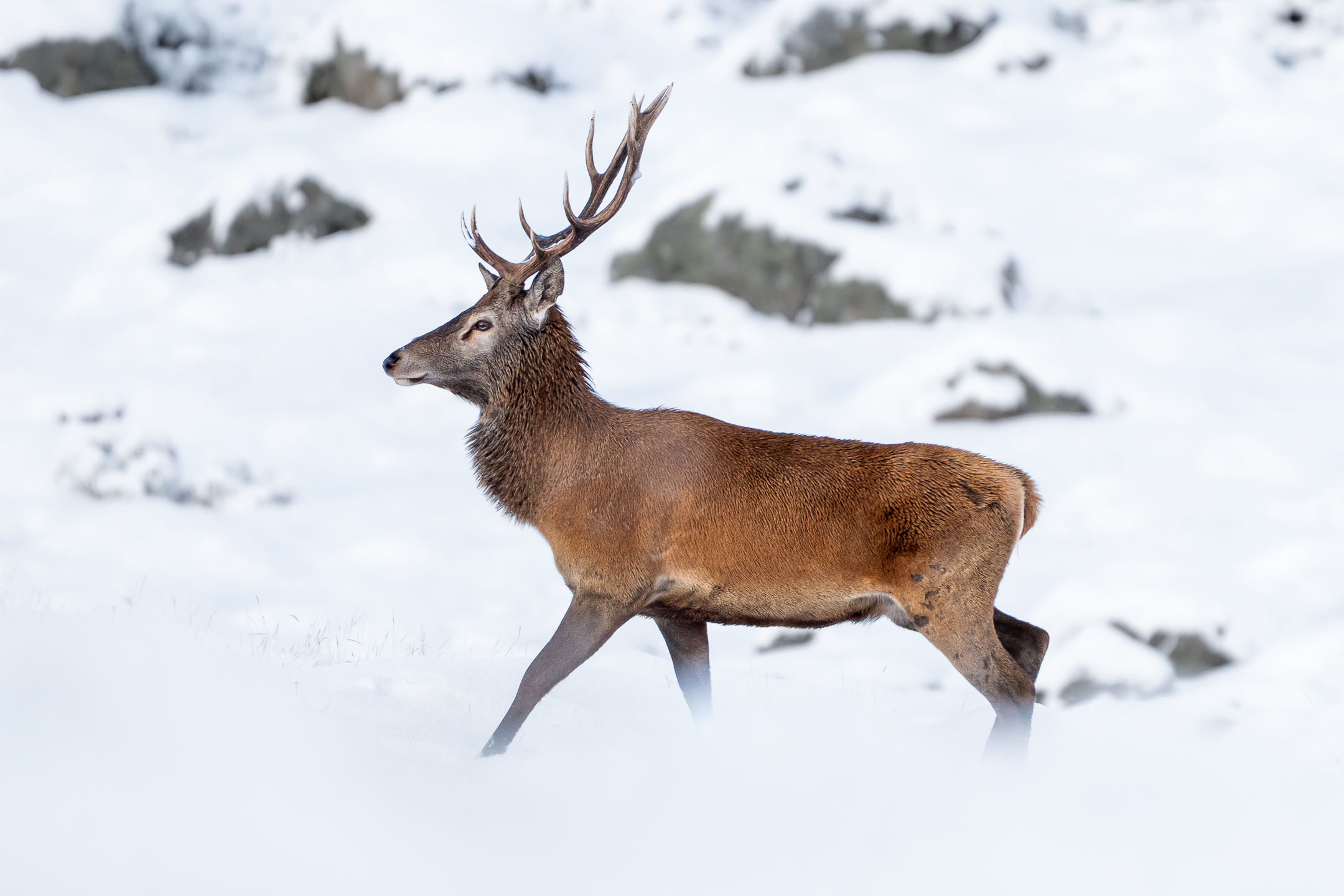
Red Deer (Cervus elaphus) // 1/1000 sec | f/6.3 | ISO 500 | 600 mm
A feeling of excitement flows through me, mixed with an overwhelming sense of happiness. At last a long-cherished dream comes true. After numerous unsuccessful attempts, I manage to take a close-up shot of a stag. But the stag doesn’t stay long and disappears behind a rocky embankment, roaring, in search of hinds.
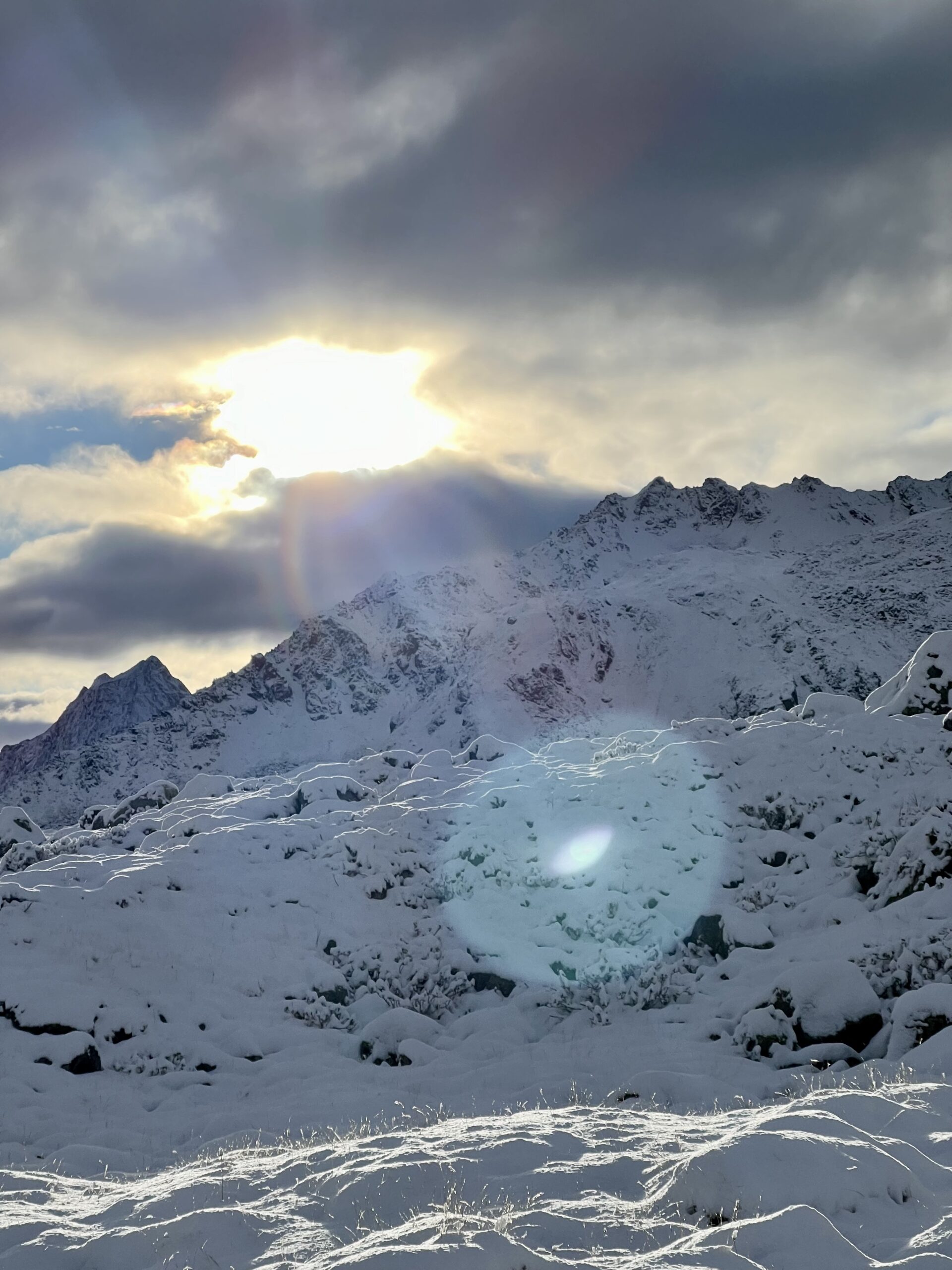
Phenomenal light.
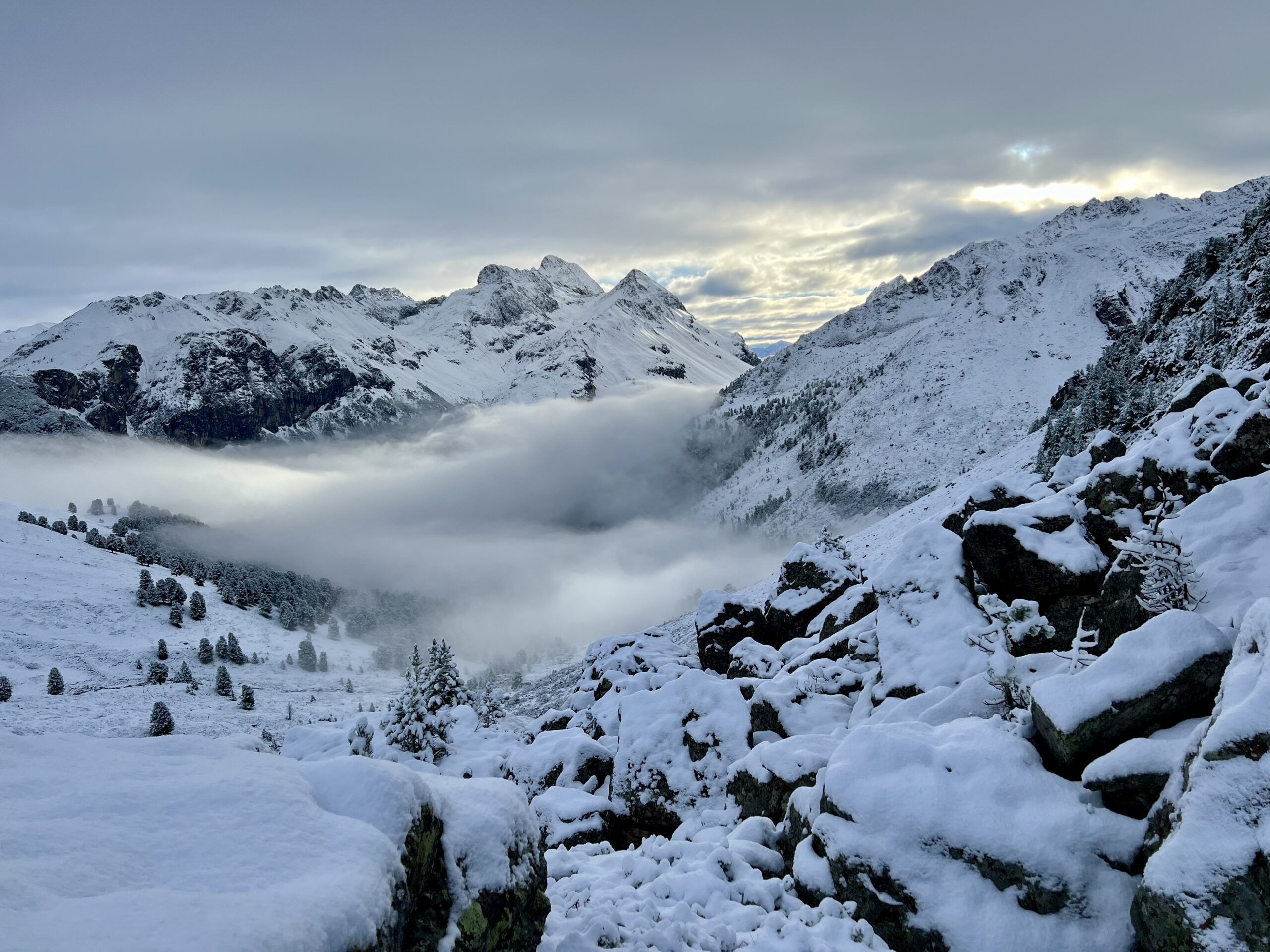
Soon dense fog rises from the valley.
The sunrise is beautiful, and at times the light is simply phenomenal. But soon dense fog drifts over the mountains and hides the sun. We decide to move on and walk further away from the stream until we reach the other side of the valley.
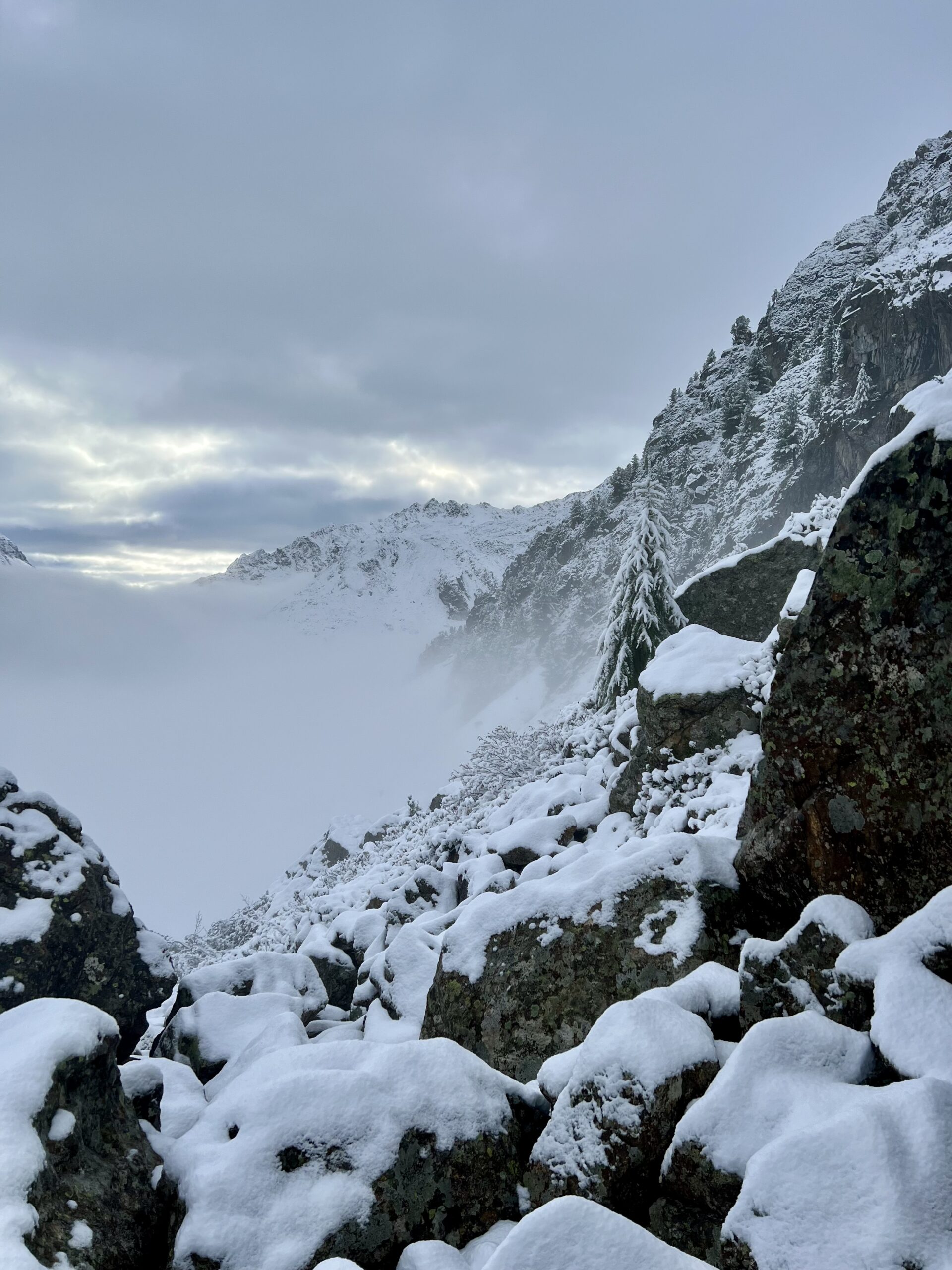
Climbing through snow-covered boulder fields.
We climb up the slope, which becomes steeper and steeper. Soon we have to navigate through boulder fields, taking care not to slip on the snow-covered blocks of rock.
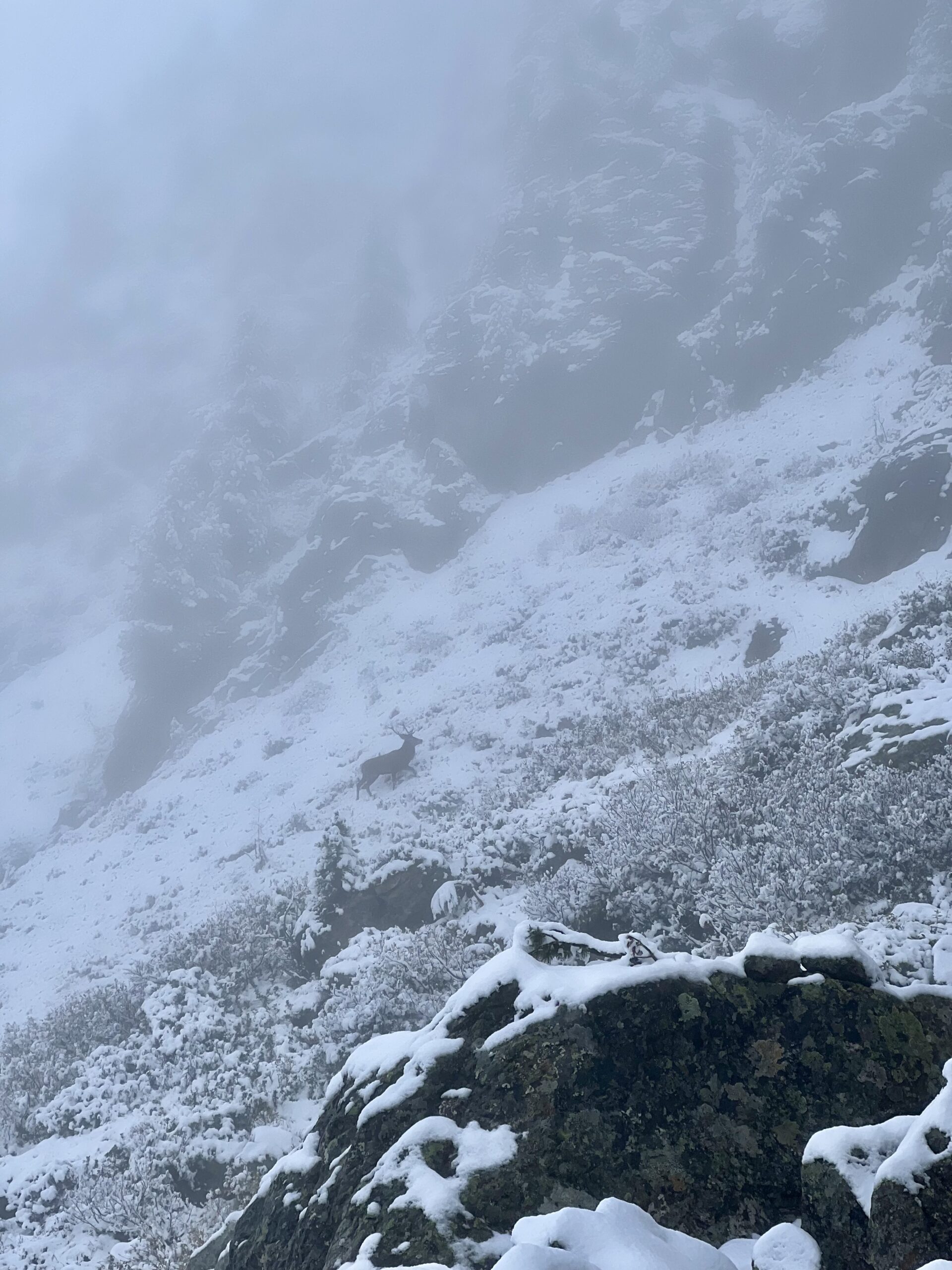
Well hidden behind a boulder, we can watch the deer grazing.
Finally we reach a large boulder behind which we can hide well. A few stags with their hinds and calves are a few hundred metres away from us on a steep mountainside. The hinds are grazing, while the stags march around their herd roaring to defend it against rivals. Caution is needed here too, as hinds are very alert. Unlike the excited stags, hinds are extremely sensitive and flee immediately at the slightest suspicion, for example if they see, hear or smell us. I try to take photos of the deer in the fog, but it proves almost impossible to get sharp pictures in these conditions.
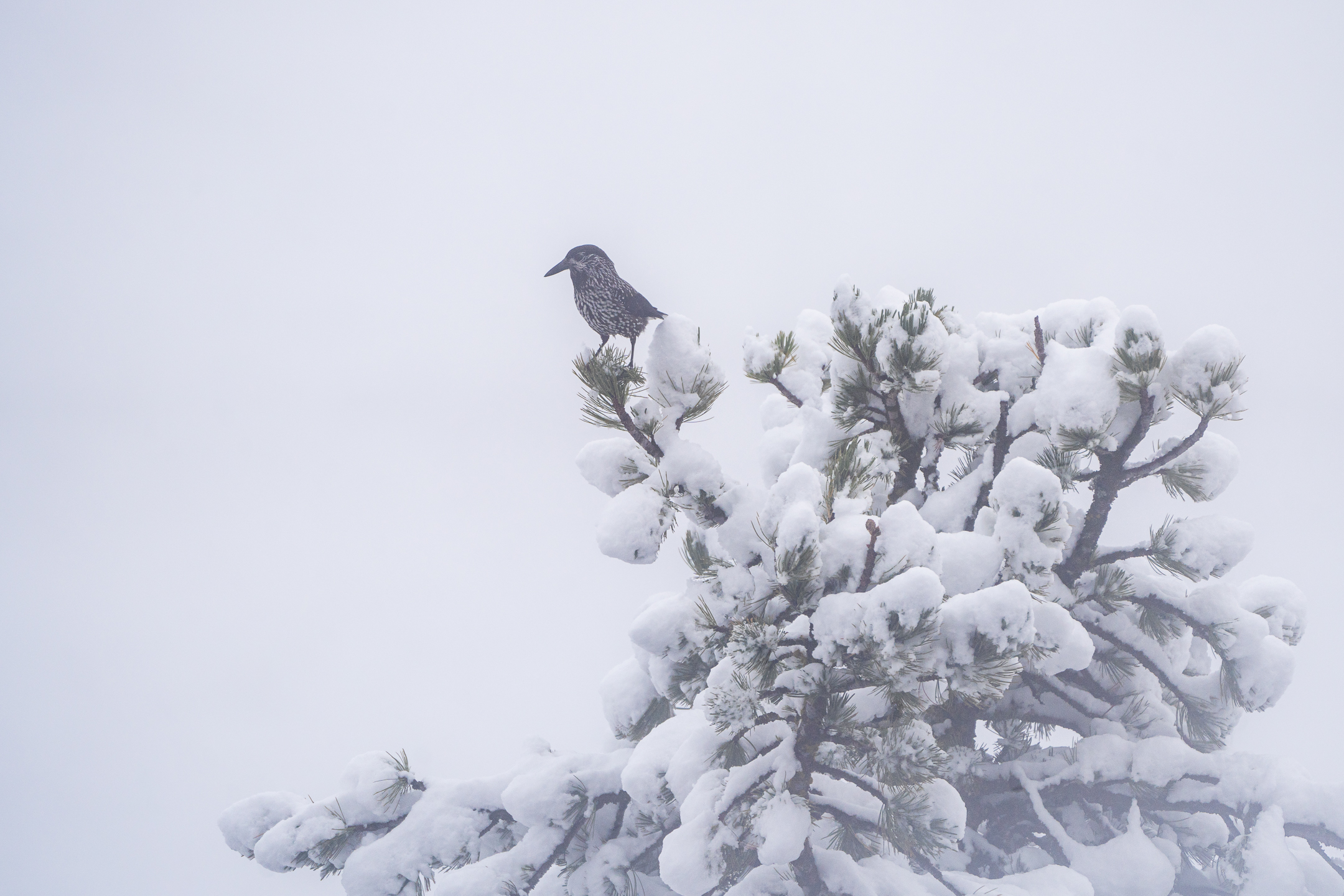
Northern Nutcracker (Nucifraga caryocatactes) // 1/1250 sec | f/6.3 | ISO 160 | 600 mm
For a brief moment we can watch a Northern Nutcracker. It seems to be looking for food. Even after a long wait, the fog doesn’t lift and the deer don’t come closer. So we decide to approach the deer carefully. We continue uphill, past a mountain stream and along a steep rock face. A fine stag lies on a rise. Behind it, well camouflaged, we spot hinds. Only a few metres separate us from the animals. I carefully take out my camera and try to photograph the stag unnoticed. But it is not enough for a perfect photo, as the dense fog continues to limit visibility.
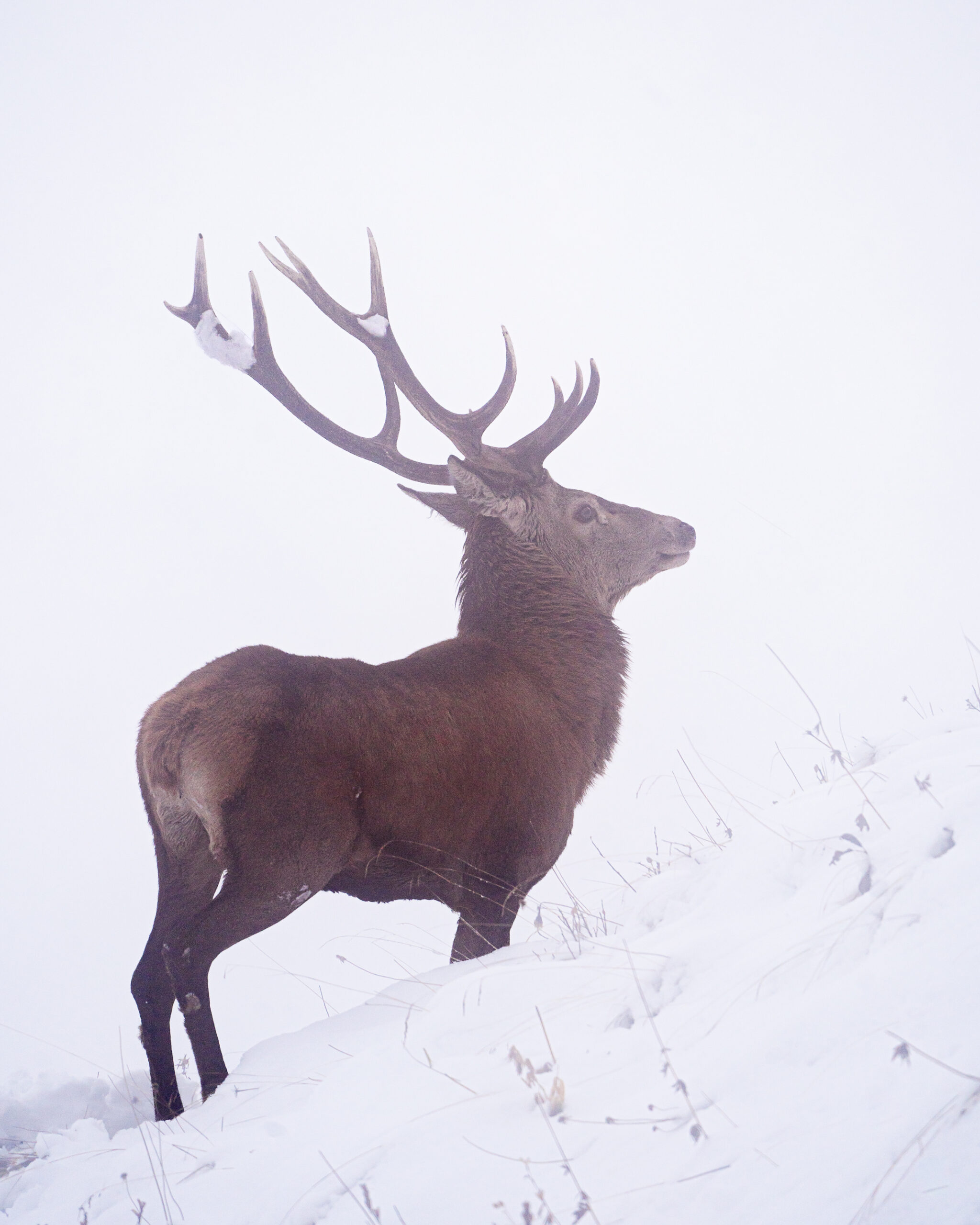
Red Deer (Cervus elaphus) // 1/2000 sec | f/6.3 | ISO 160 | 600 mm
The stag doesn’t notice us. Finally it slowly gets up and walks behind an embankment. We decide to approach it.
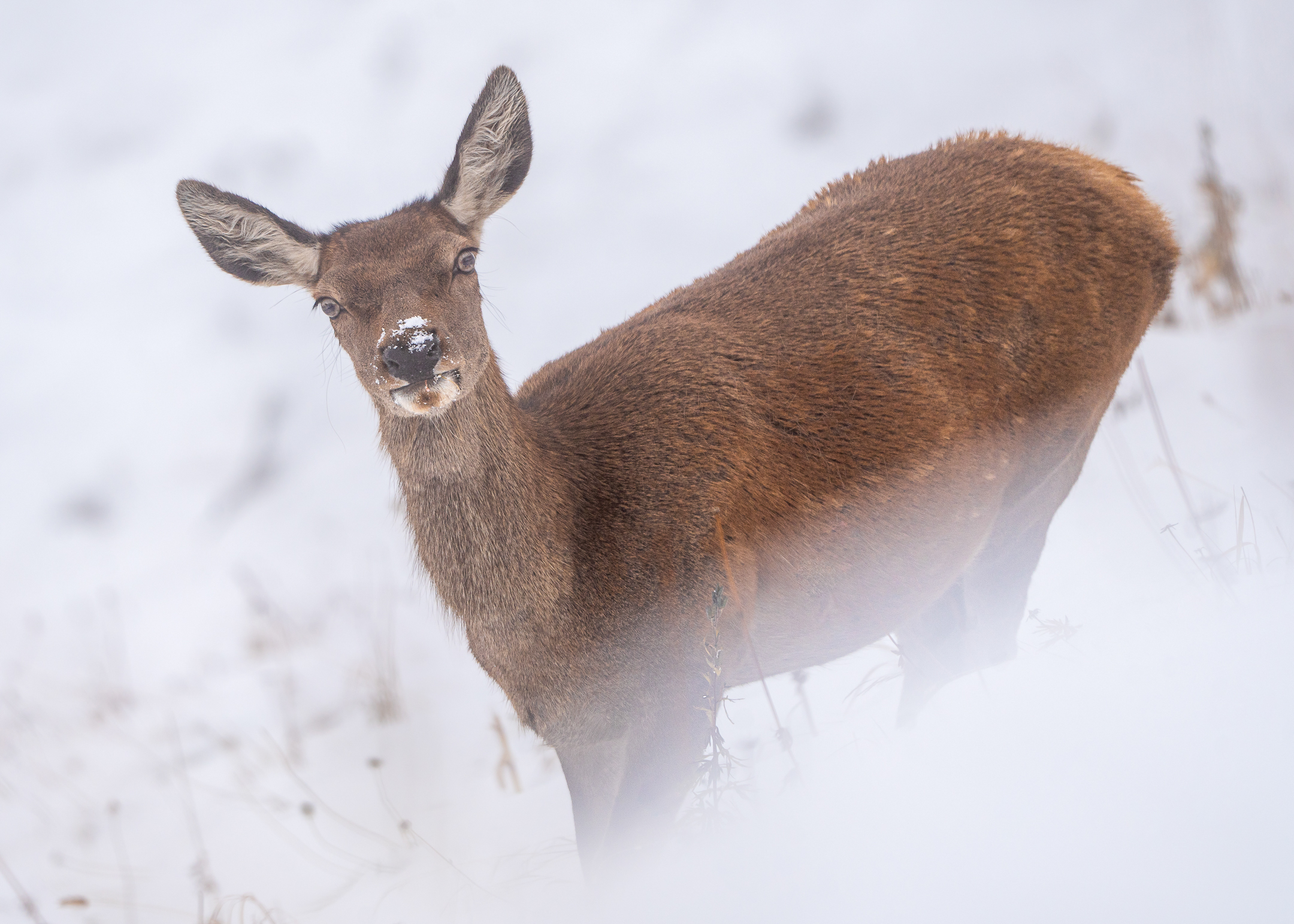
Red Deer (Cervus elaphus) // 1/2000 sec | f/6.3 | ISO 200 | 480 mm
We stop in front of the rise where it had been lying – and suddenly a hind stands right in front of us, only about ten metres away. Concentrating, I point the camera at her and manage to photograph her. I even have time to try out different angles. I would never have dreamed of such a close encounter!

Red Deer (Cervus elaphus) // 1/2000 sec | f/6.3 | ISO 160 | 600 mm
After this great encounter we carefully move away from the animals and go back down the slope. We continue on the other side of the valley, where we had already watched numerous deer.
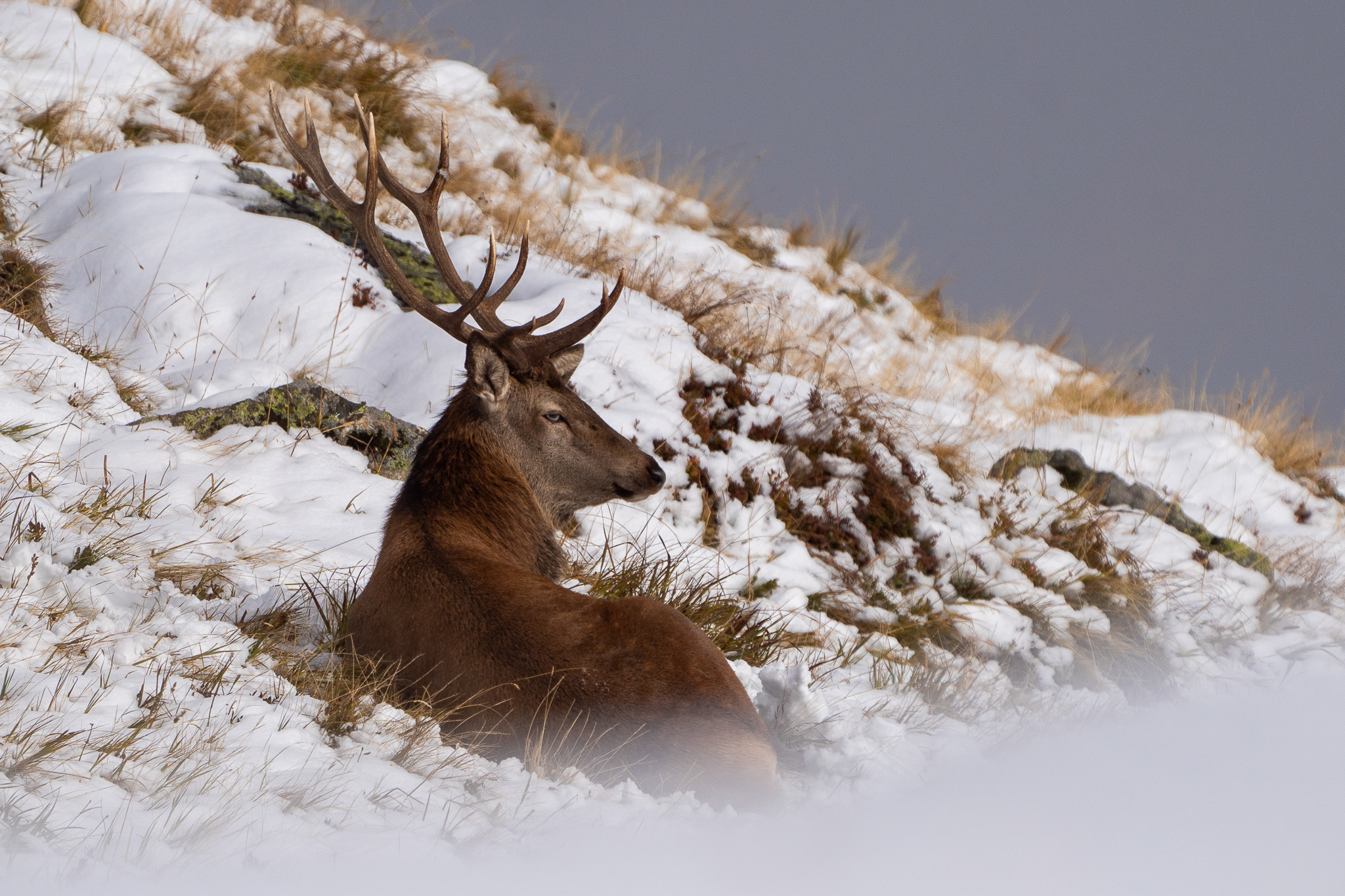
Red Deer (Cervus elaphus) // 1/2000 sec | f/6.3 | ISO 125 | 600 mm
Some distance away we watch a stag lying comfortably in the grass. We walk on downhill, away from the stag, so as not to scare it. Suddenly we see a Northern Chamois leaping across a snow-covered area below us – too fast to take a photo. But this sighting is not the last, as we come across several more Northern Chamois.
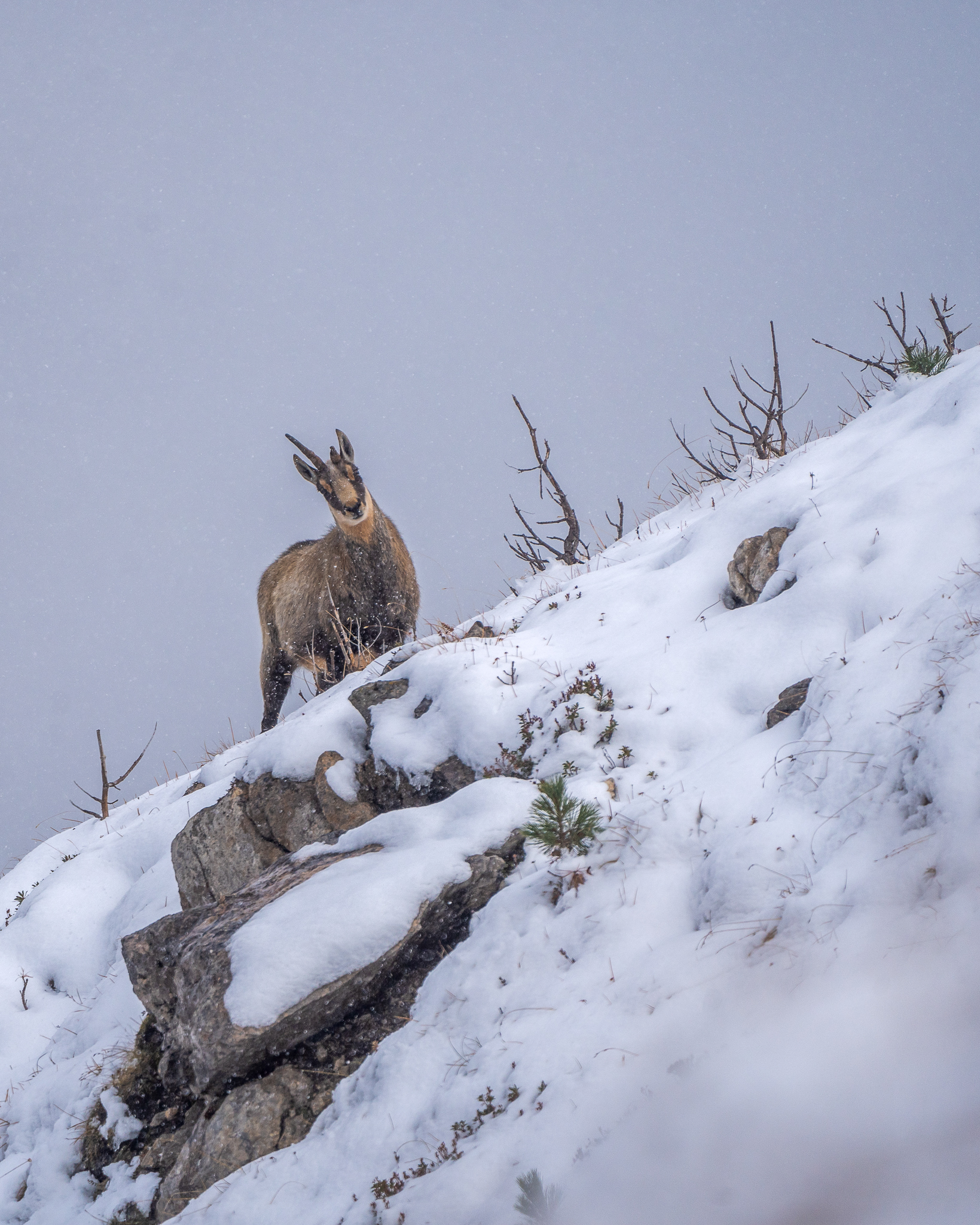
Northern Chamois (Rupicapra rupicapra) // 1/2000 sec | f/6.3 | ISO 200 | 600 mm
This Northern Chamois has lost its left horn.
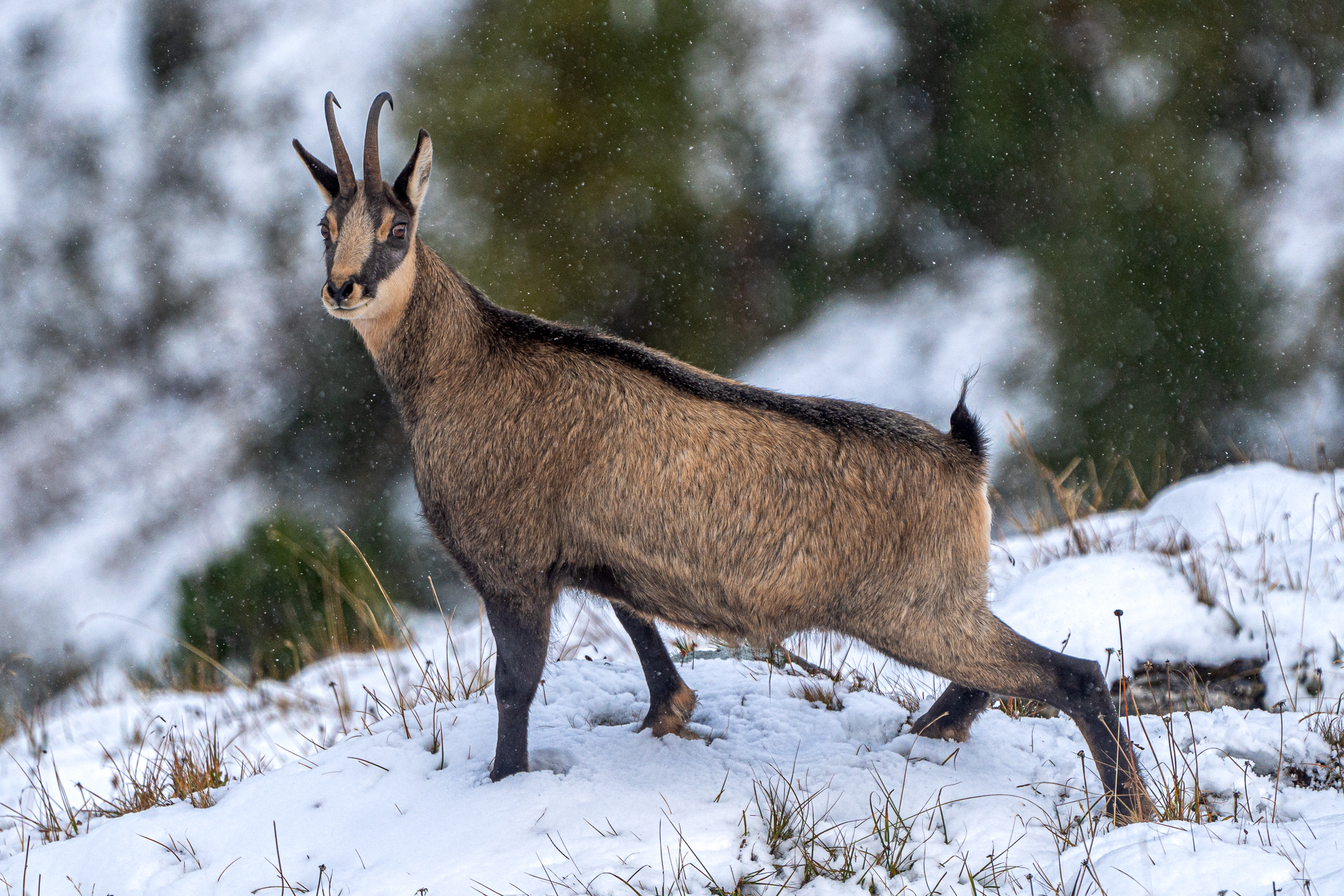
Northern Chamois (Rupicapra rupicapra) // 1/2000 sec | f/6.3 | ISO 400 | 600 mm
Another Northern Chamois stands on a slope.
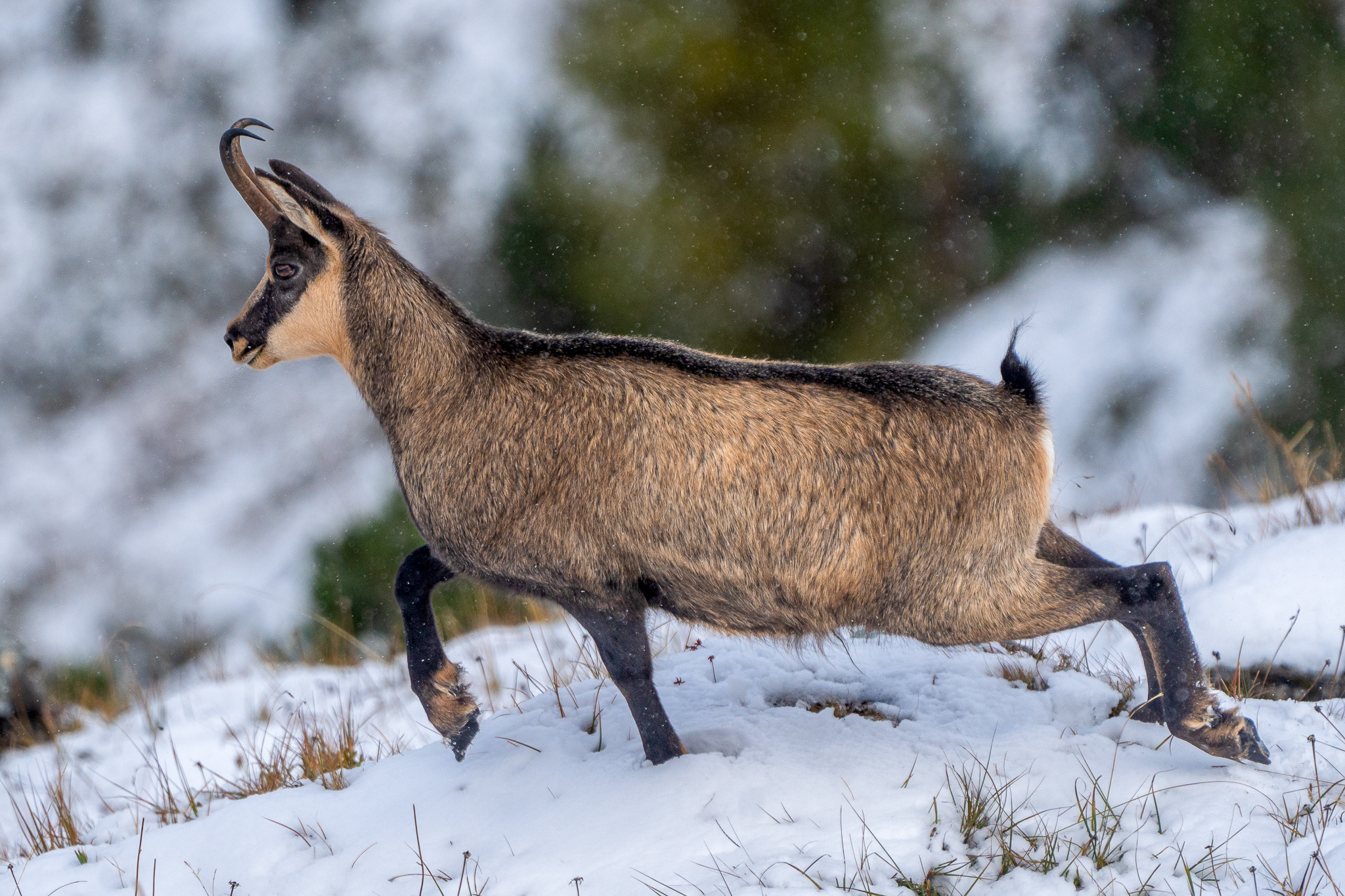
Northern Chamois (Rupicapra rupicapra) // 1/2000 sec | f/6.3 | ISO 400 | 600 mm
Unfortunately it soon leaps away, which is what we had actually wanted to avoid. However, I am very happy with the pictures I took.
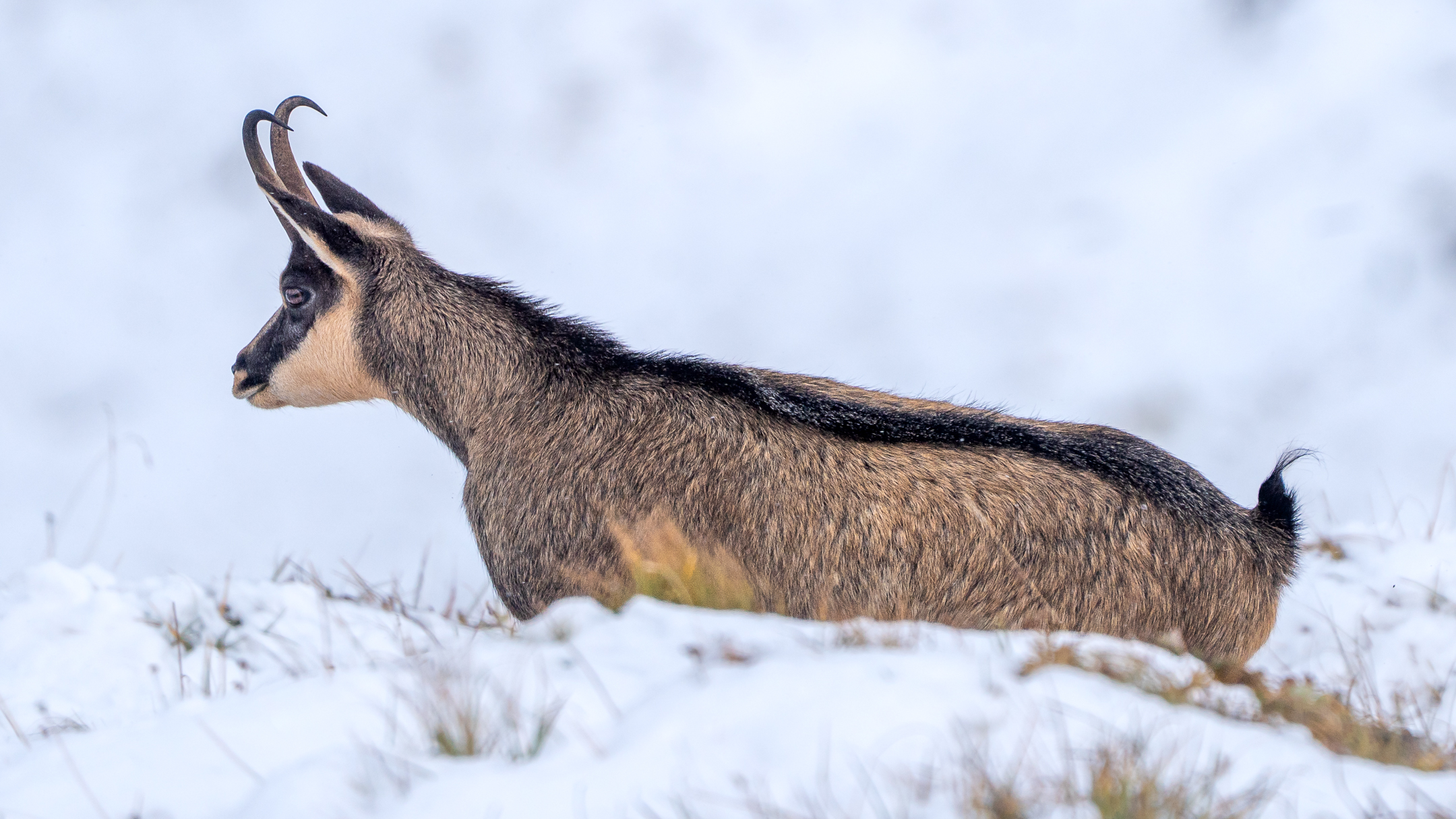
Northern Chamois (Rupicapra rupicapra) // 1/2000 sec | f/6.3 | ISO 250 | 600 mm
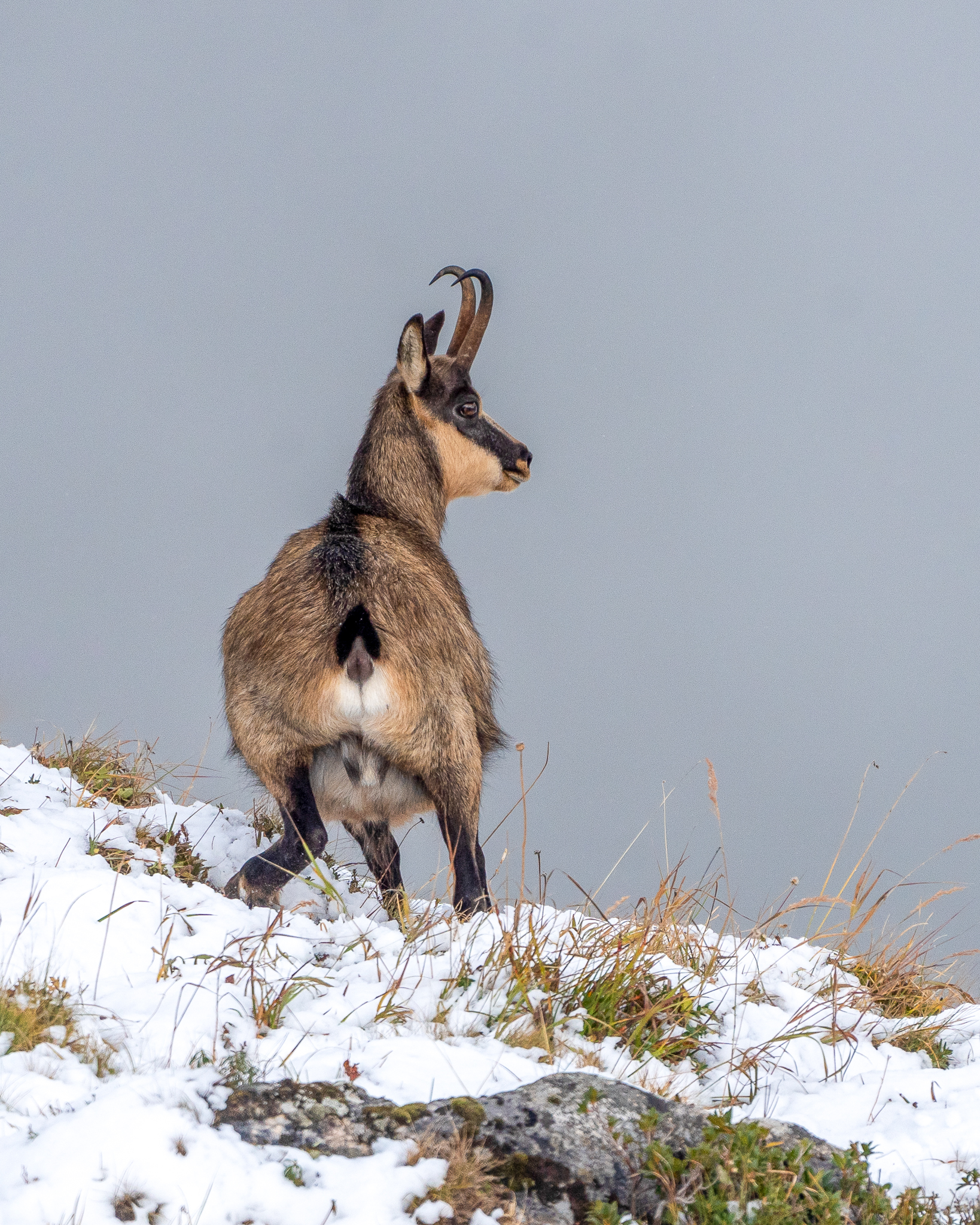

Northern Chamois (Rupicapra rupicapra) // 1/2000 sec | f/6.3 | ISO 500 | 600 mm
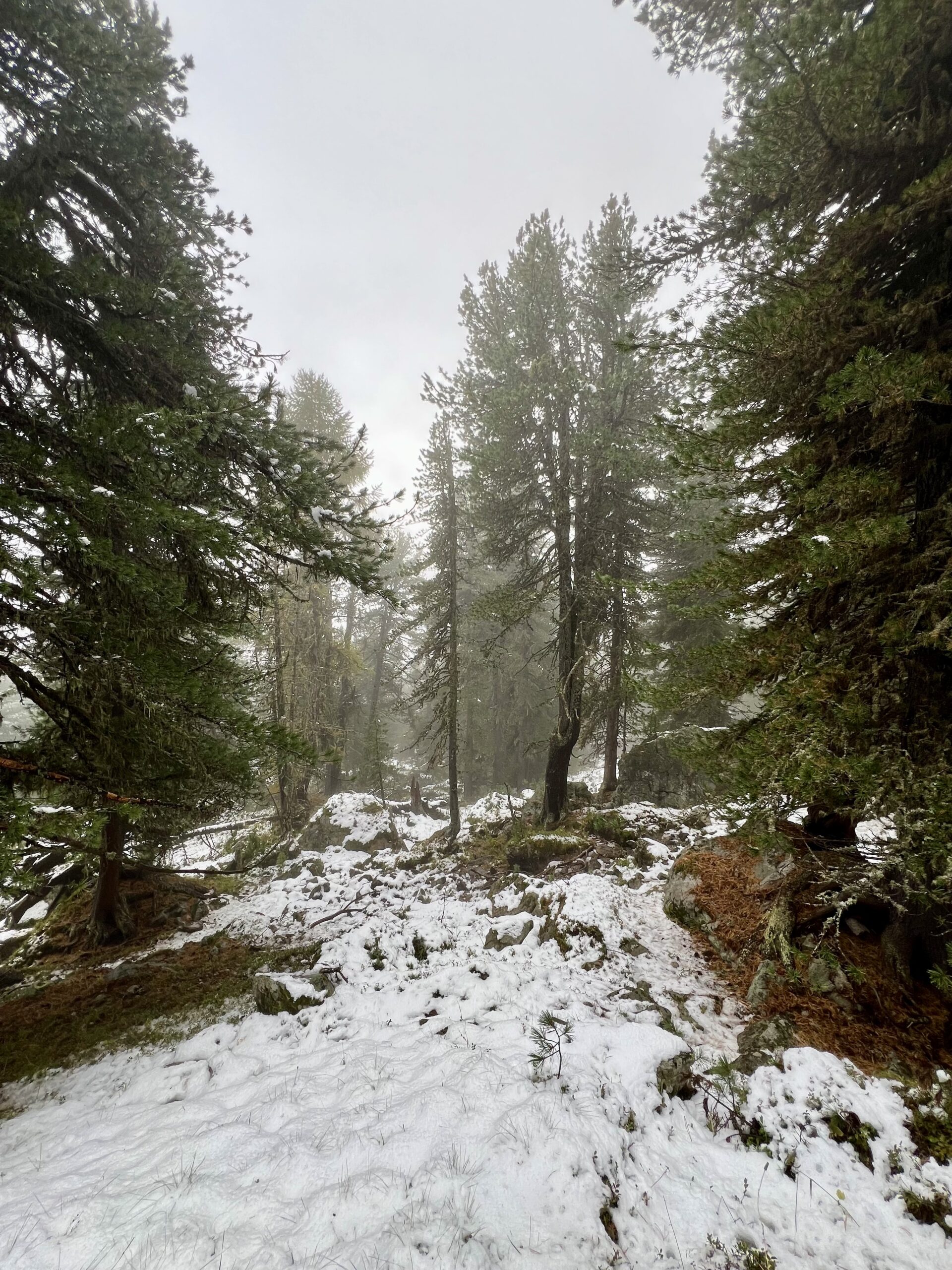
It starts to rain in the Swiss pine forest.
Back in the Swiss pine forest we move almost silently, because there could be deer here too. Leaning against a tree trunk, we wait for a while in the hope that deer will pass by. When it starts to rain heavily, we decide to head home.
After ten hours outdoors I am tired, but very satisfied with our experiences. I have never been so close to deer, and I was very happy to be able to watch Northern Chamois afterwards as well. I would love to return to places like this in the future to experience the fascinating mountain wilderness.
Leave a Reply