For a long time it had been a dream of mine to watch Rock Ptarmigans in the snowy mountains in winter. Until then I had only been able to watch them in summer or autumn – and even then only from a great distance. No wonder, because these birds are perfectly camouflaged in the snow thanks to their white winter plumage. They are often overlooked by winter sports enthusiasts and unfortunately keep being chased out of their habitat. Exactly the same happened to me when I was out on an official winter hiking trail.
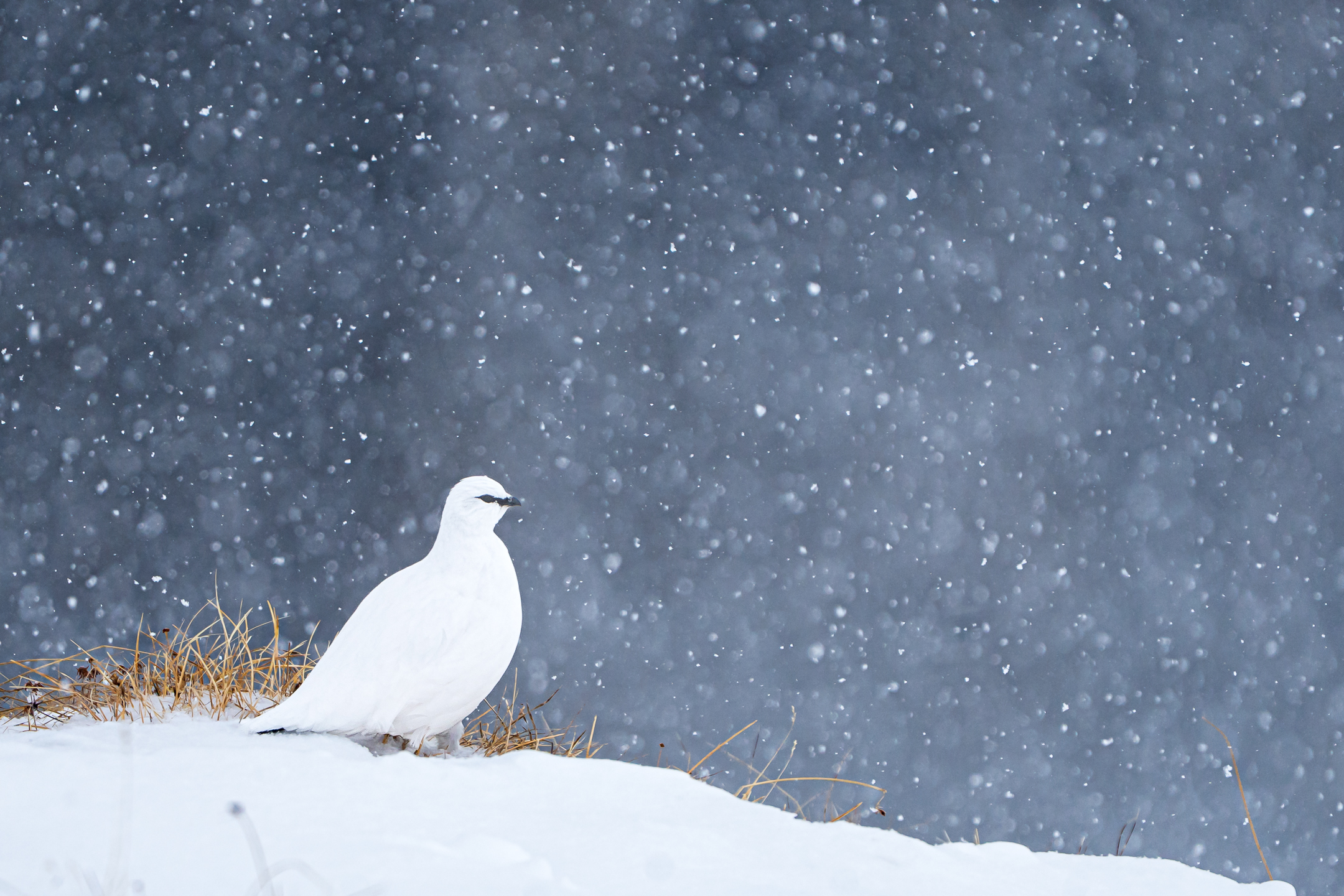
female Rock Ptarmigan (Lagopus muta) // 1/2000 sec | f/6.3 | ISO 800 | 600 mm
Completely unexpectedly, I spotted a Rock Ptarmigan in front of me in a flurry of snow. Fortunately early enough to avoid startling it. I would never have expected that, especially given the extreme weather conditions. Accordingly, the Rock Ptarmigan was not very active and stayed where it was, where I managed to take my first photos in the snow.
After this first encounter I wanted to photograph more that same winter – and with success. After I got a tip about a location, I set off into the mountains. That day it was nice and sunny. Only a few clouds covered the sun from time to time. As there was a lot of snow, I made only slow progress. Fortunately I had snowshoes with me, which made the climb a lot easier. With my binoculars I scanned the surroundings in search of suitable spots.
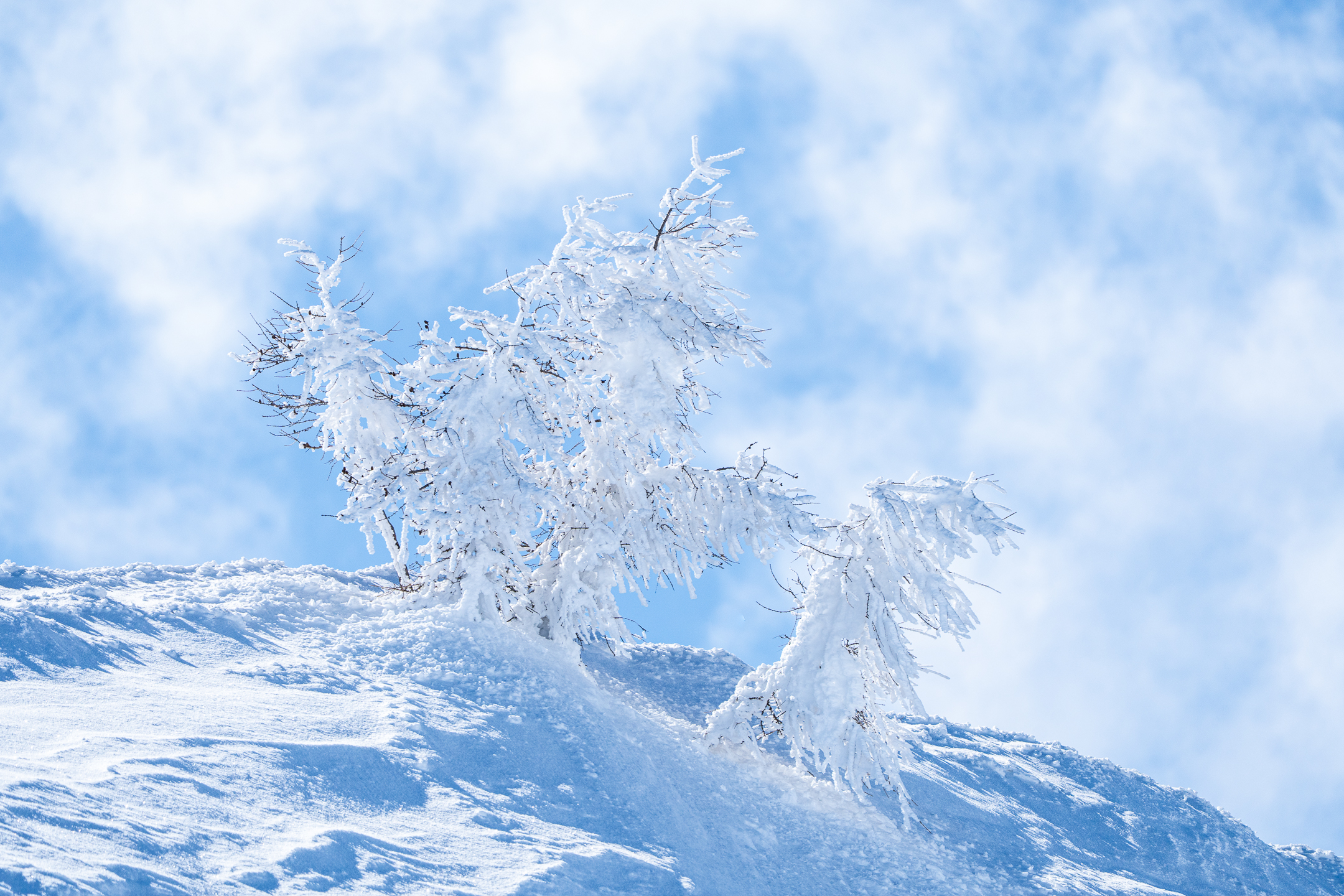
snow-covered larch with veil clouds in the background // 1/3200 sec | f/6.3 | ISO 500 | 455 mm
I suspected that the Rock Ptarmigans would stay in the shelter of small trees like the larch in the picture above. For a long time I searched for them along the hiking trail, but without success.
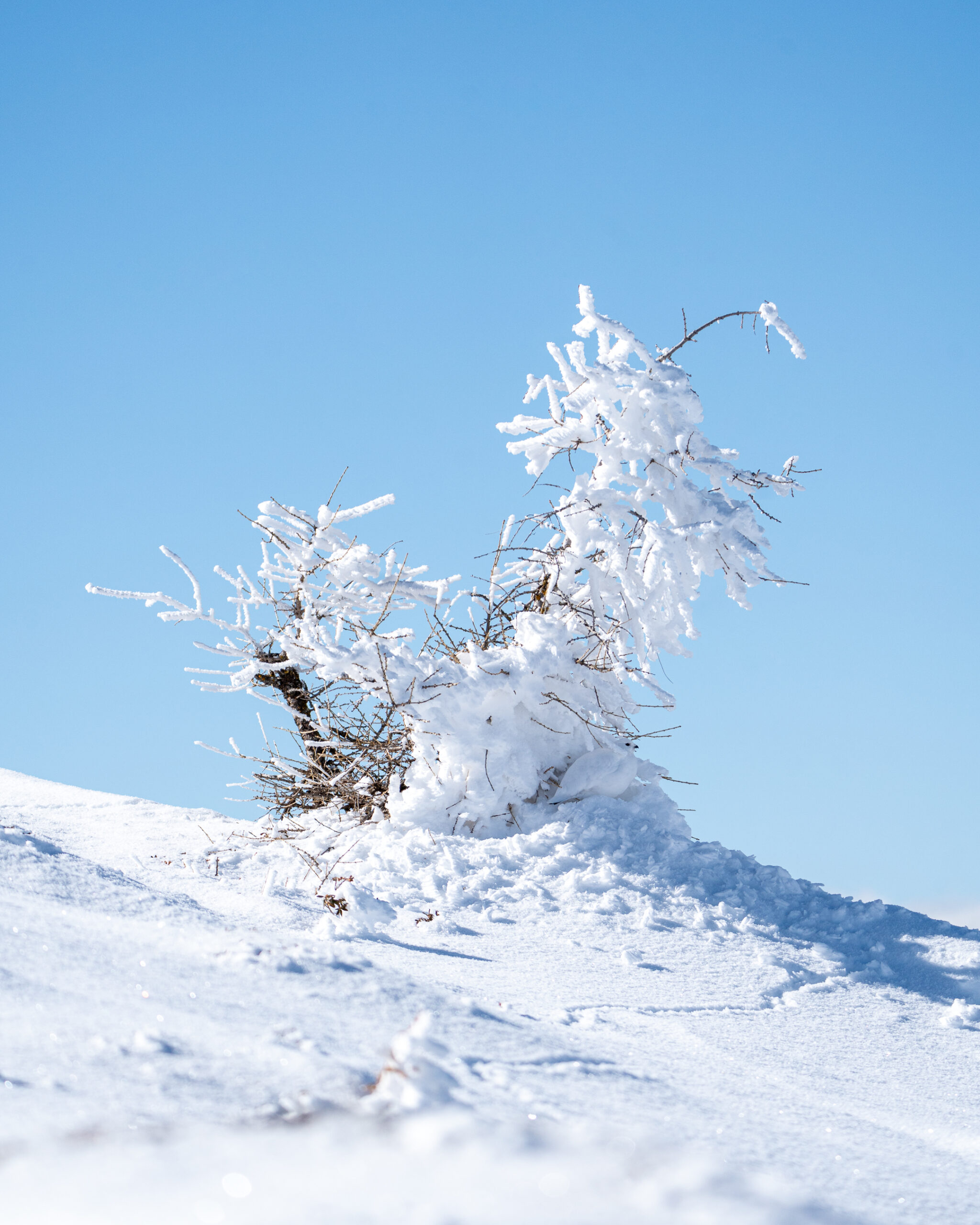
At last I was able to spot a ptarmigan. // 1/3200 sec | f/6.3 | ISO 500 | 205 mm
As I trudged through the snow, I suddenly heard a throaty cooing – the typical call of the Rock Ptarmigans. Then I knew that one had to be very close by. And indeed, my guess was right. Under one of the many small trees sat a Rock Ptarmigan. Can you see it too?
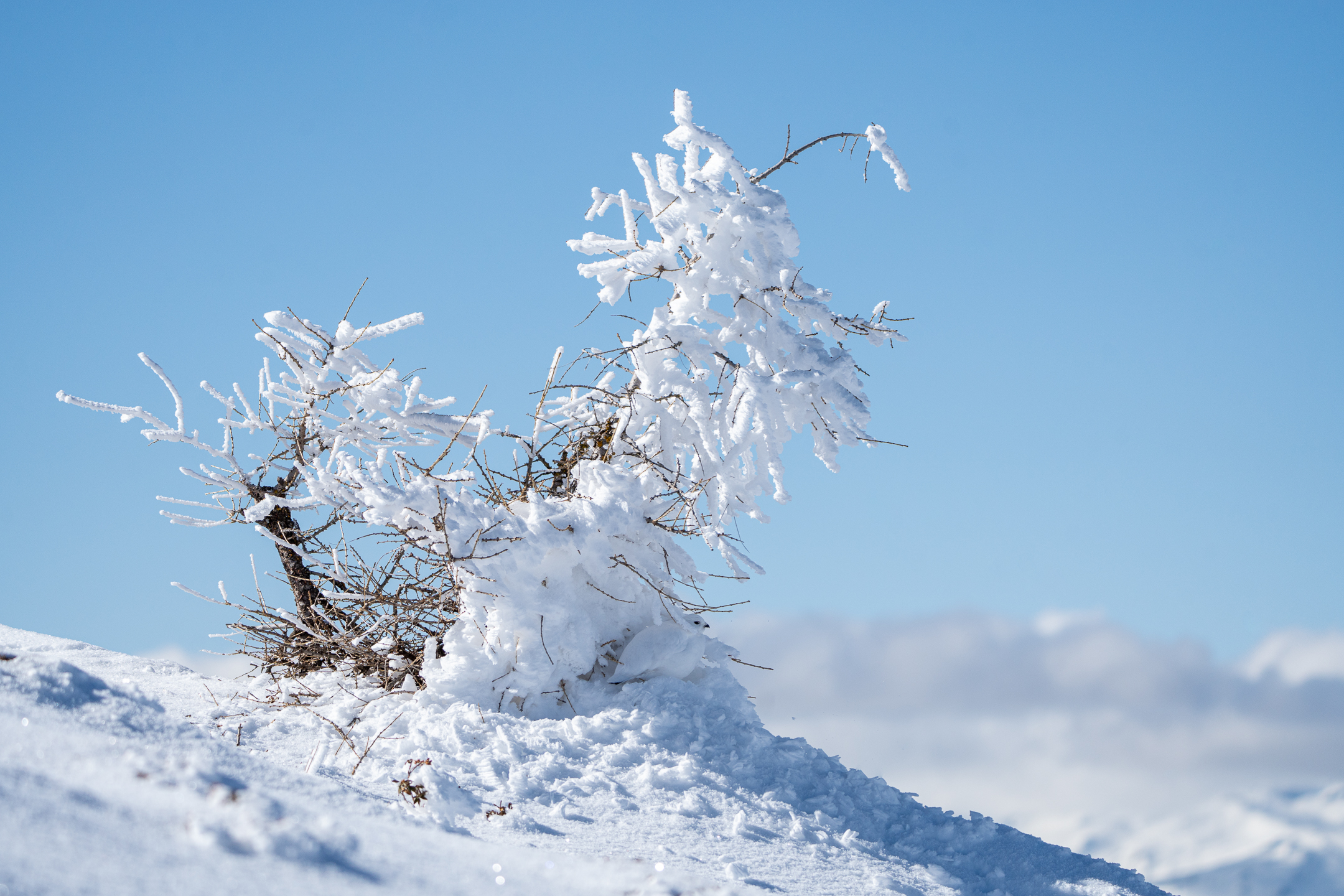
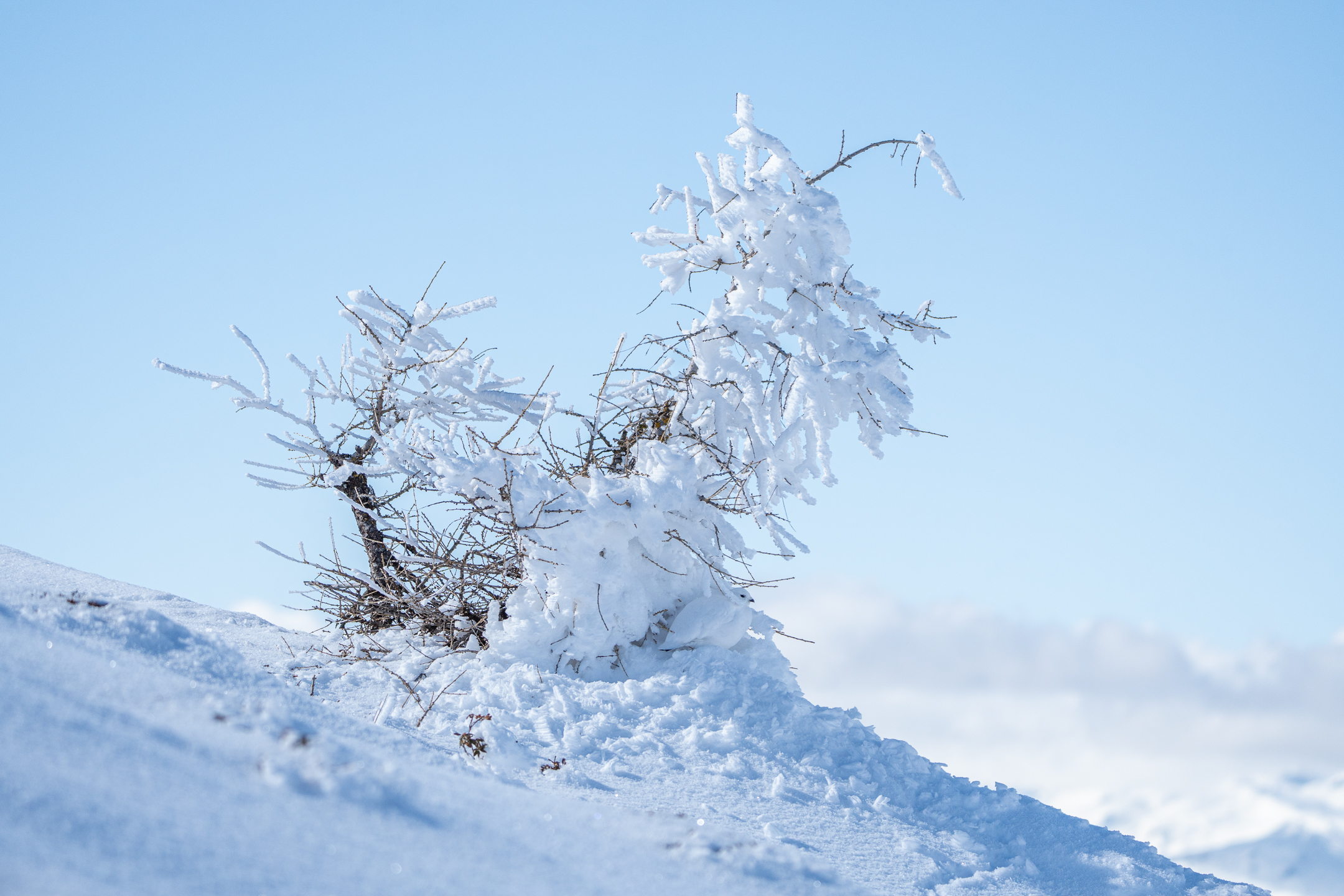
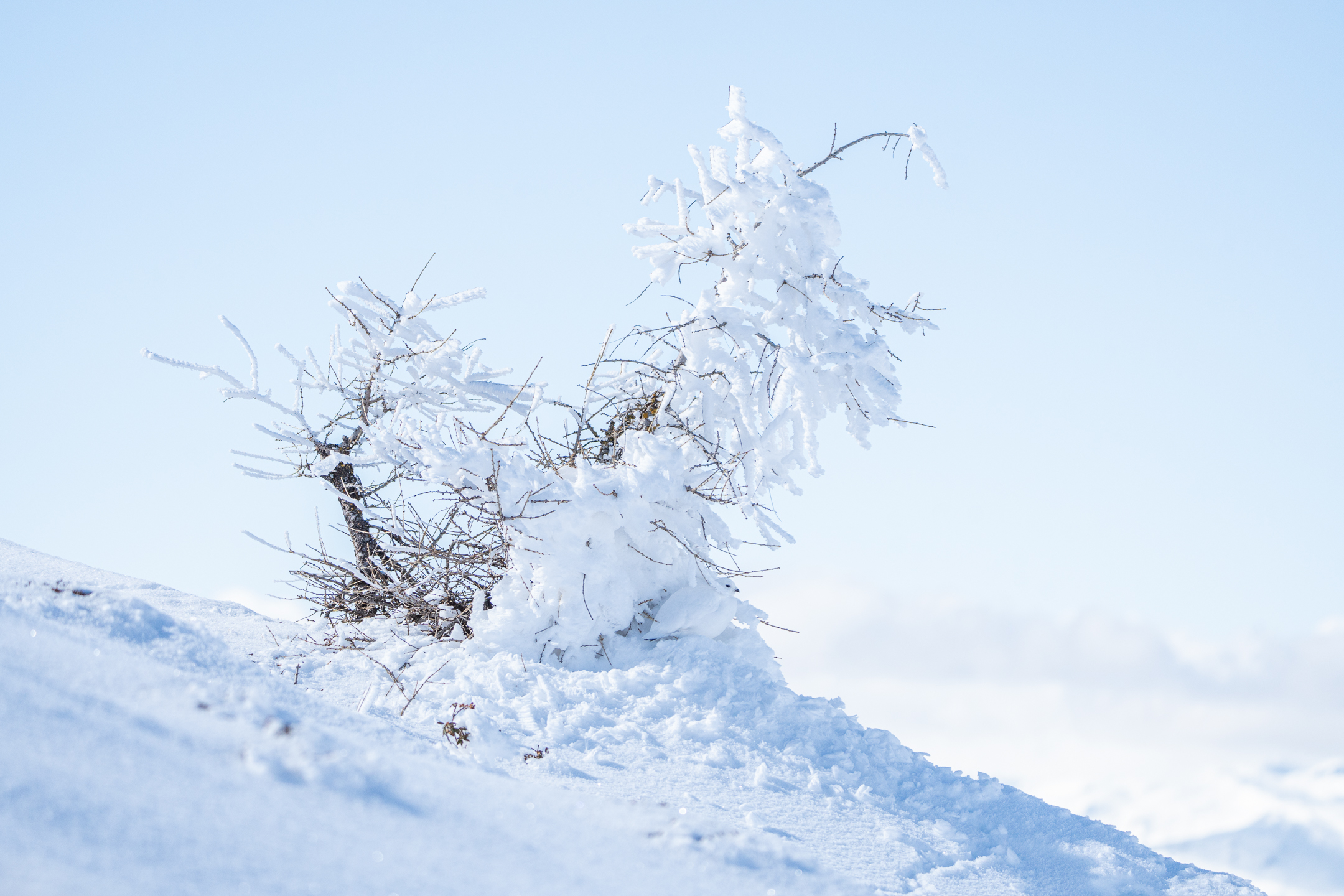
Comparison of the photos in sun (right), cloud (centre) and the transition from cloud to sun // 1/3200 sec | f/6.3 | ISO 500 | 455 mm
So I decided to lie down in the snow and took a few pictures of the Rock Ptarmigan under the larch. Depending on the lighting, very different photos were created, as the series above clearly shows. After a while the male also came out from behind the hill next to the female. Unlike the female, it has a conspicuous red comb above the eye.
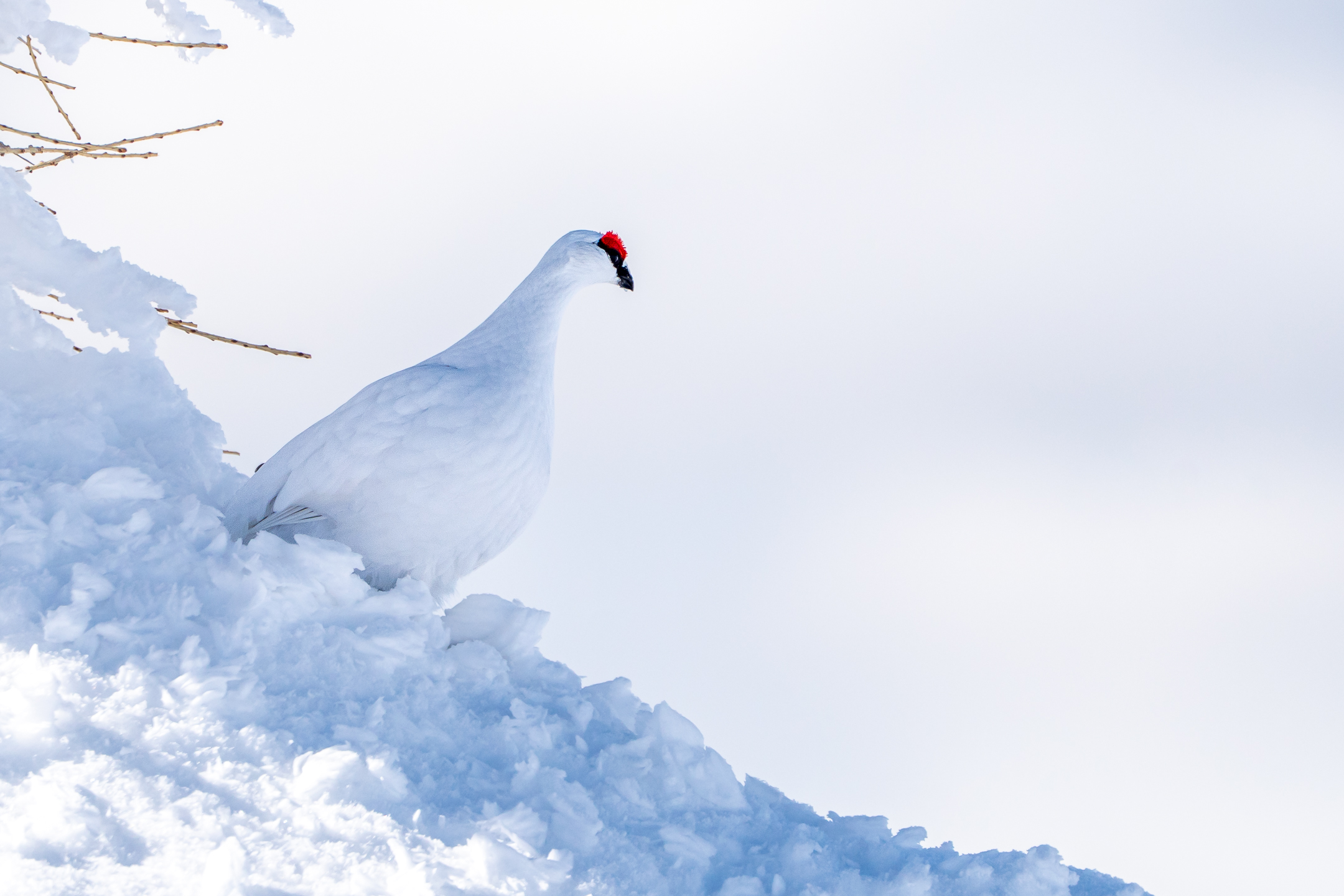
male Rock Ptarmigan (Lagopus muta) // 1/2000 sec | f/6.3 | ISO 800 | 600 mm
I used this knowledge about light in the picture above: as the sun was just about to come out from behind a cloud, diffuse light was created. In addition, the Rock Ptarmigan was in partial shade.
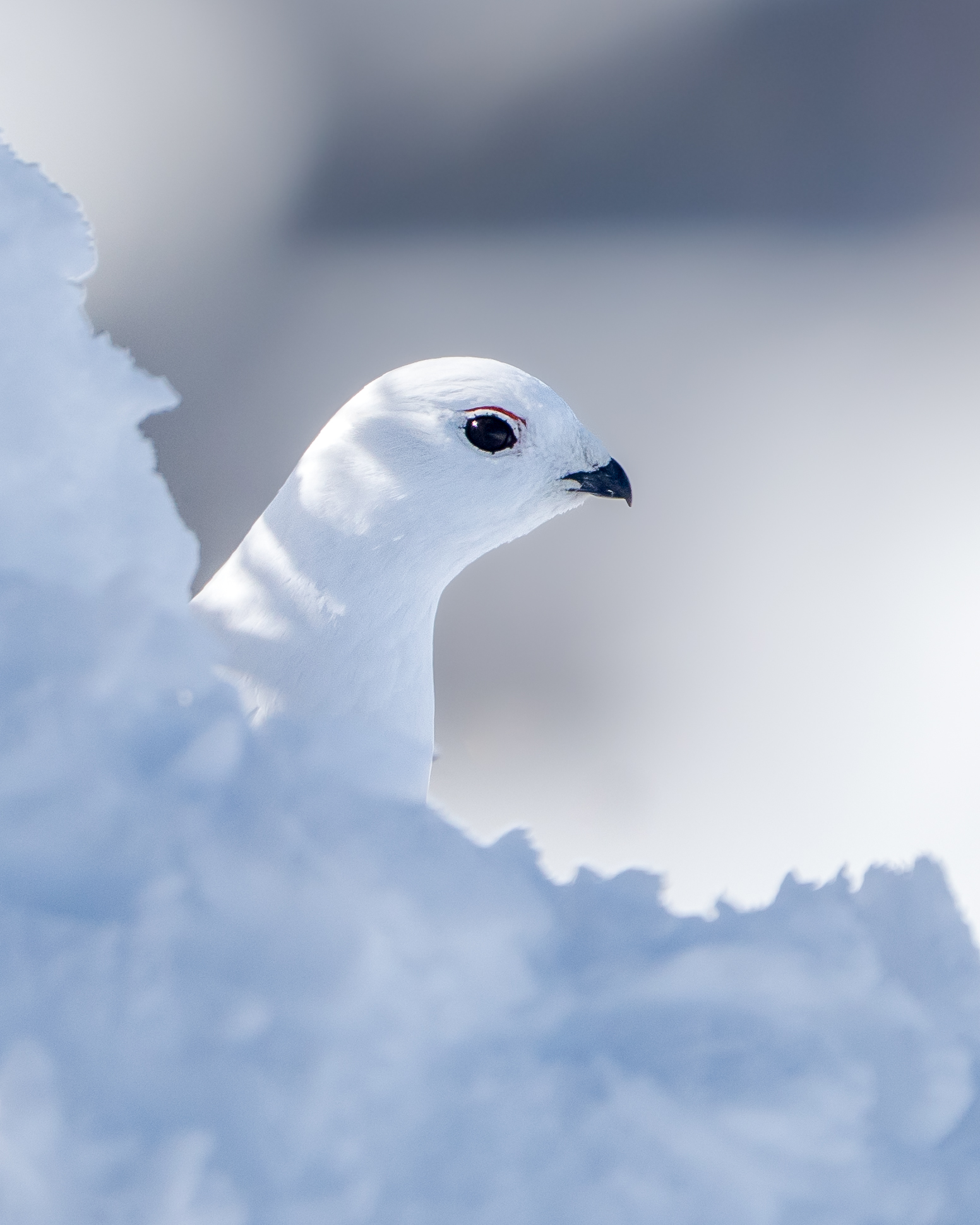
female Rock Ptarmigan (Lagopus muta) // 1/3200 sec | f/6.3 | ISO 1000 | 600 mm
Slowly I approached the Rock Ptarmigans further without being noticed. Finally I managed the portrait of the female above.
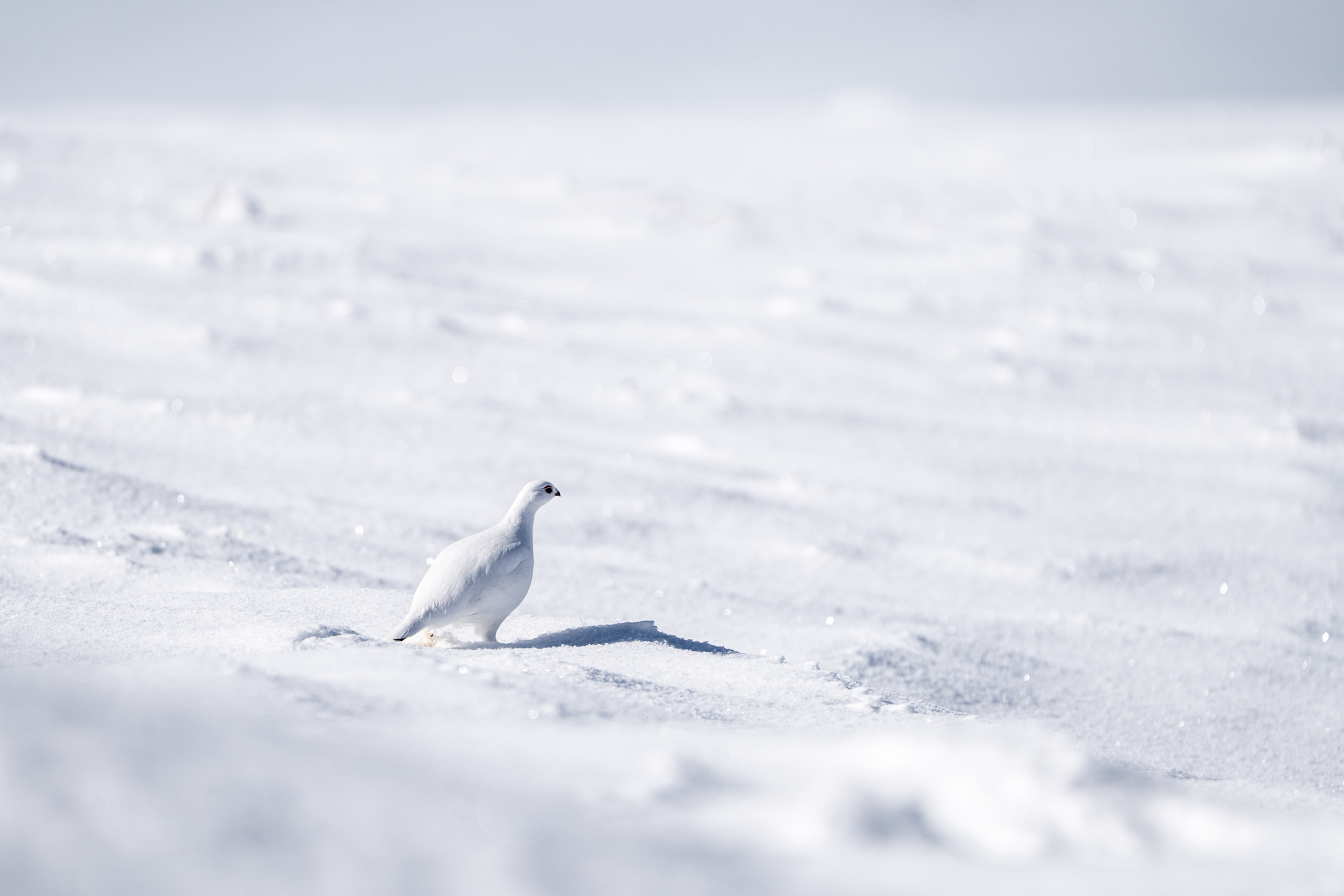
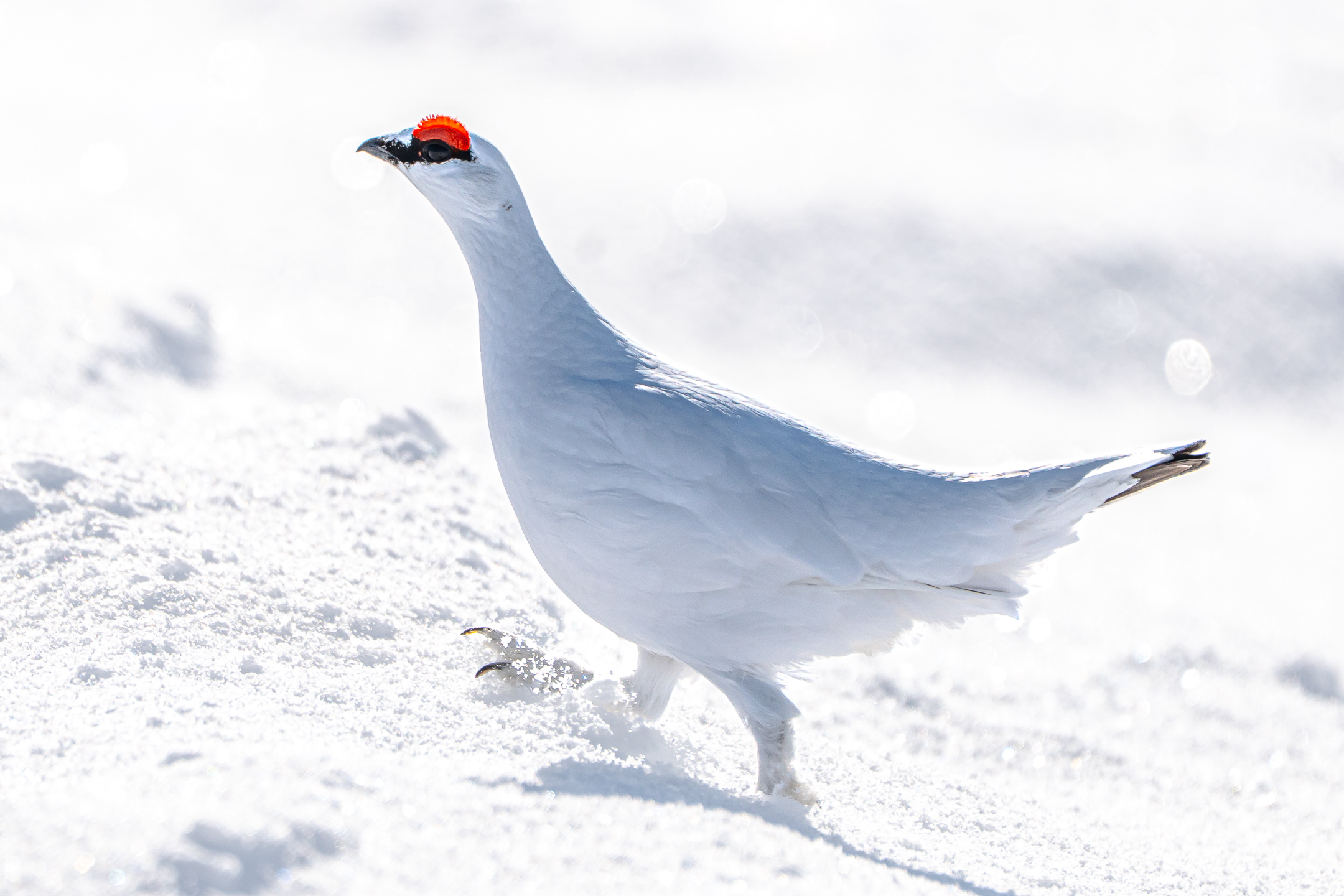
Rock Ptarmigan (Lagopus muta) // 1/3200 sec | f/6.3 | ISO 400 | 600 mm; 1/3200 sec | f/6.3 | ISO 500 | 600 mm
After a long wait, the Rock Ptarmigans moved out of their hiding place in search of food and crossed the white expanse of snow. Here it becomes especially clear once again how well camouflaged these animals really are.
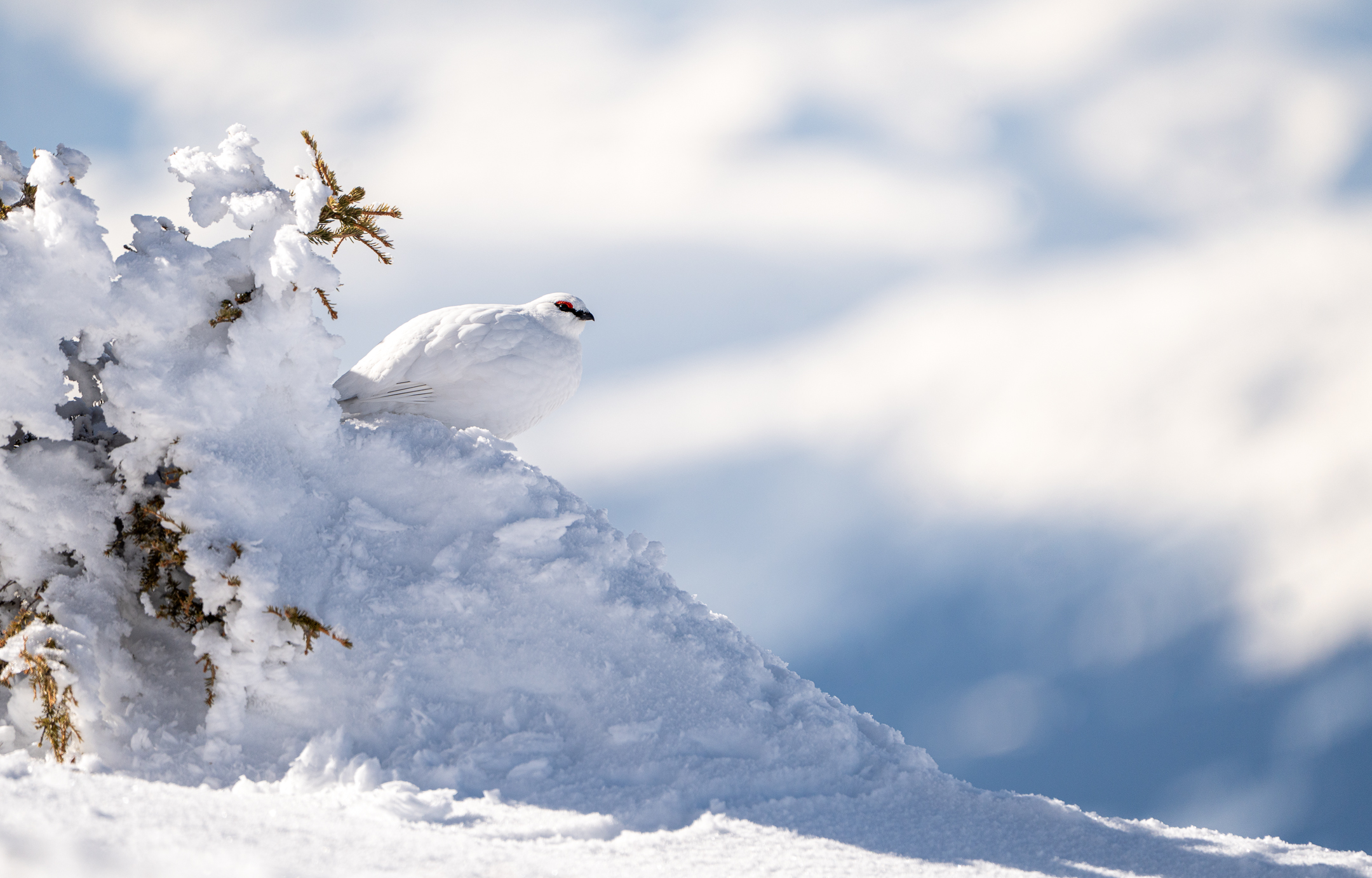
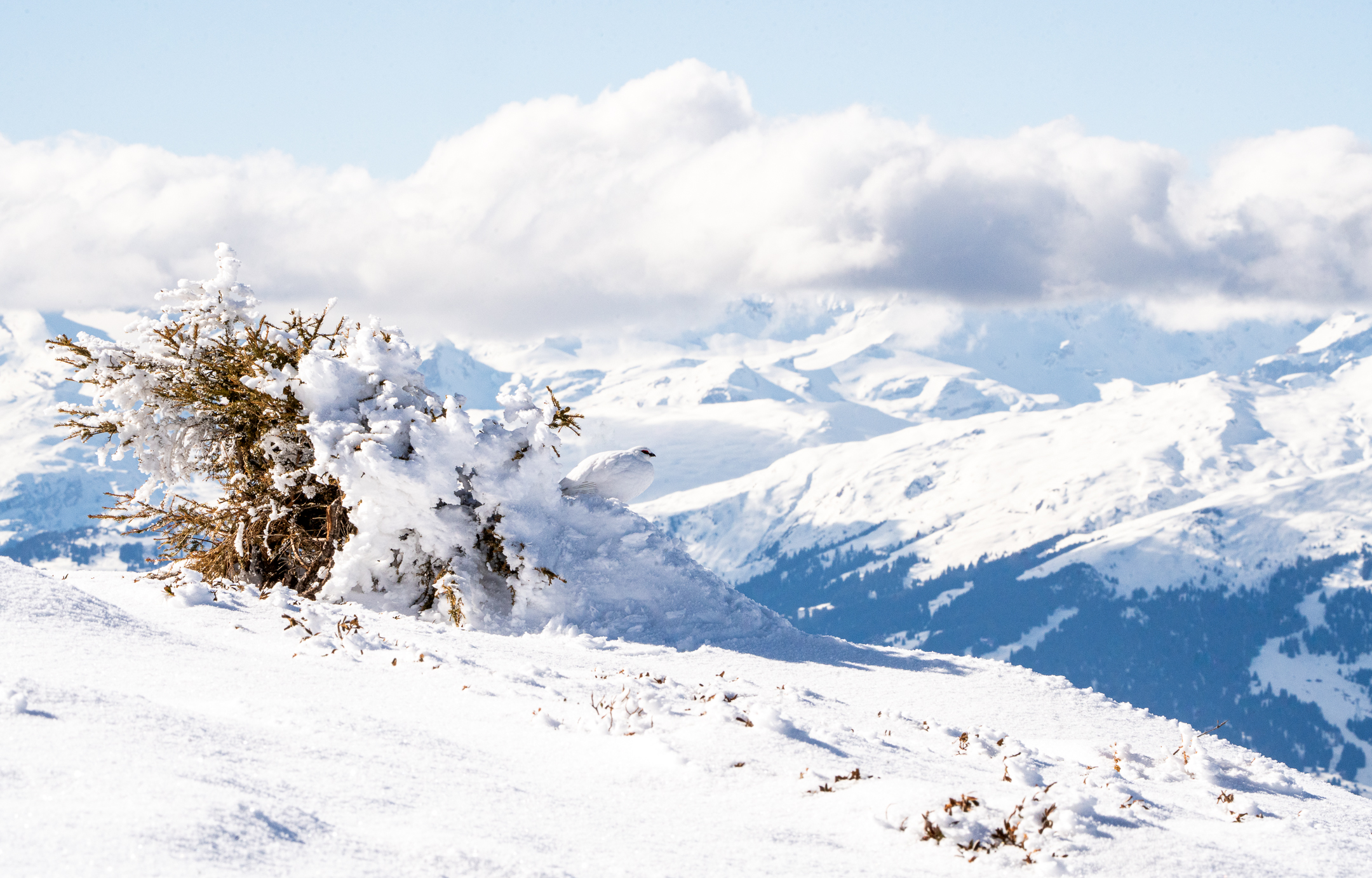
Rock Ptarmigan (Lagopus muta) // 1/2500 sec | f/6.3 | ISO 500 | 600 mm; 1/640 sec | f/25 | ISO 1600 | 215 mm
Eventually the Rock Ptarmigans withdrew into their hiding place again. This time they settled by a snow-covered little fir tree.
On another day, this time near the end of winter, I was again looking for the Rock Ptarmigans. This time, however, it was not so sunny; the light was pleasantly diffuse. Arriving at the top of the mountain, I immediately met several winter sports enthusiasts doing speed riding. In this sport you ski down the slope while using a small paraglider at the same time. Their tracks crisscrossed the snow, and somehow I felt sorry for the Rock Ptarmigans. For a moment I was worried that the skiers might have driven them far away.
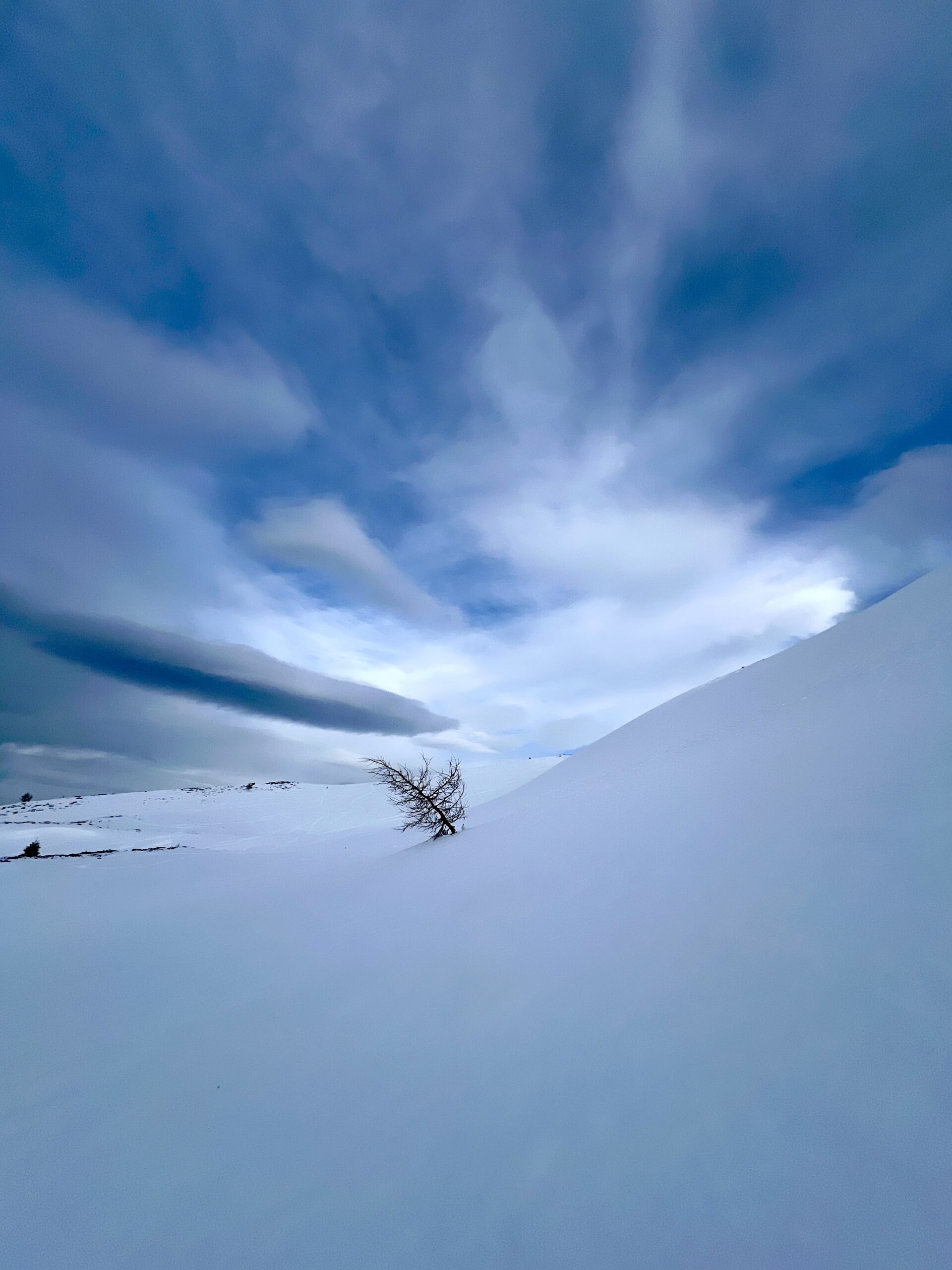
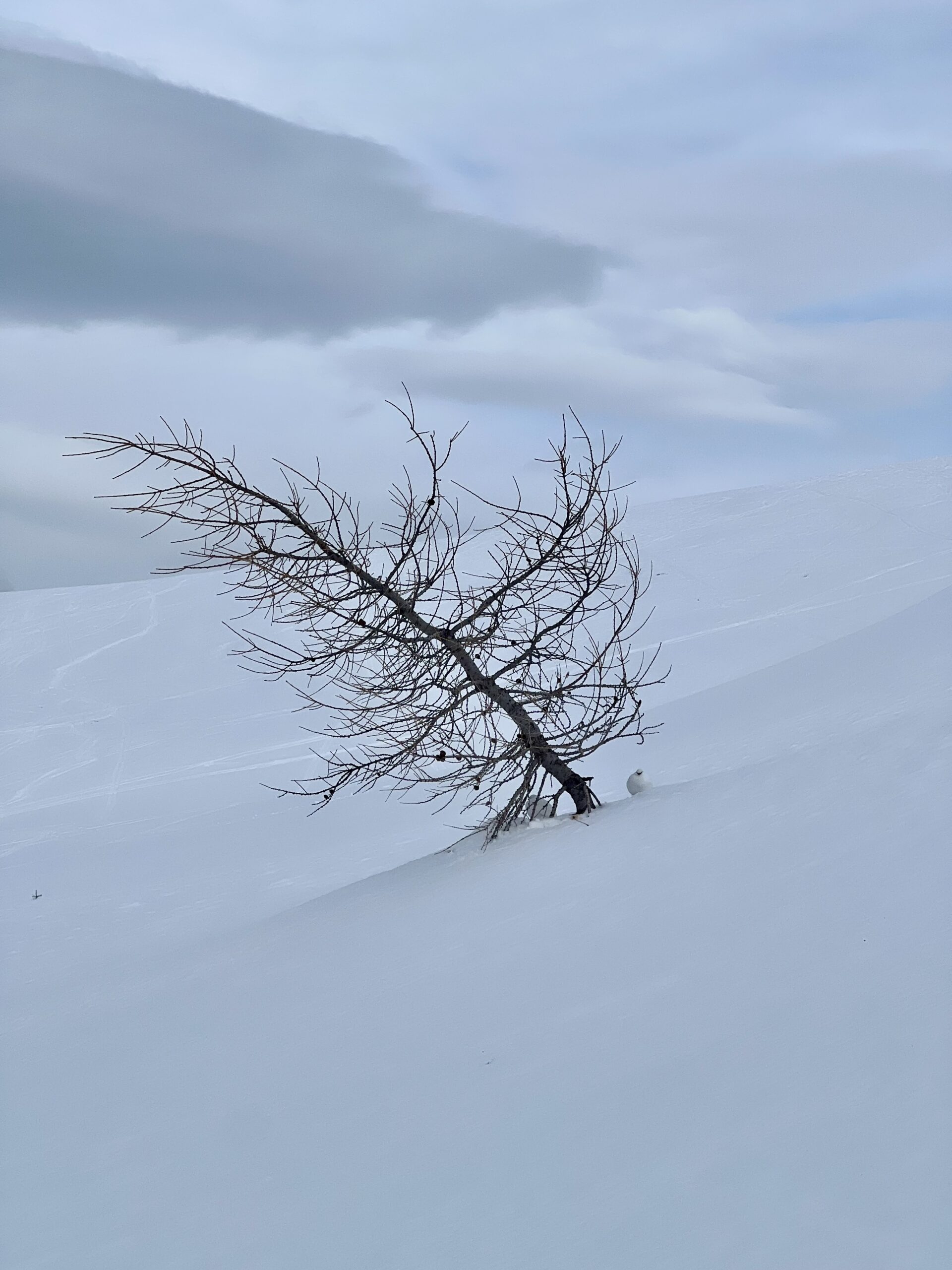
These pictures illustrate well how difficult it really is to spot the Rock Ptarmigans in the snow. If you look closely, you can make one out on the right under the larch.
But when I looked through my binoculars at the same small trees as last time, I actually found both Rock Ptarmigans there. I was overjoyed to have found them again. From the moment I spotted the Rock Ptarmigans, I took off my loudly creaking snowshoes and approached in my winter boots instead. At a safe distance I lay down in the snow again and waited until they left the shelter of the larch.
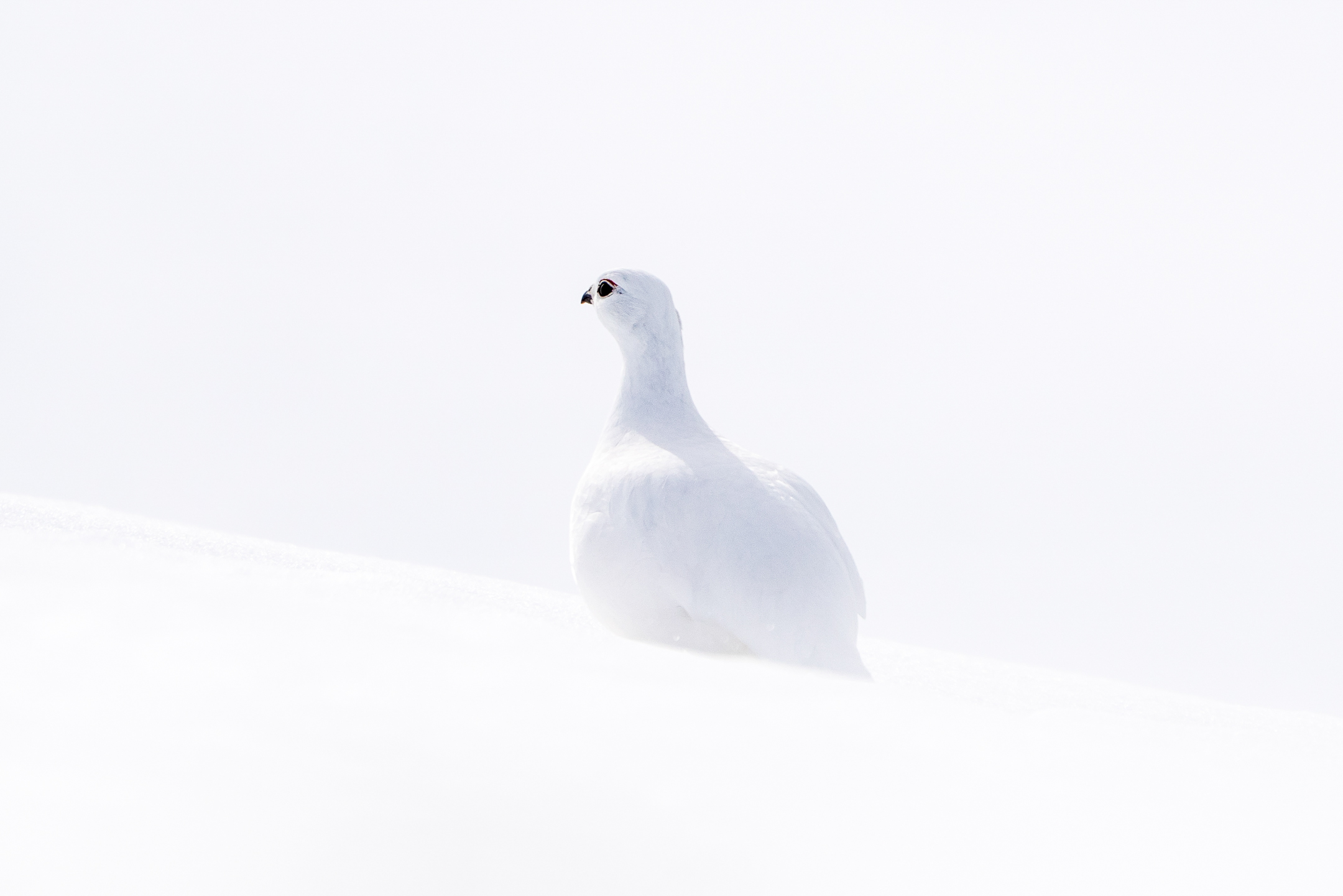
female Rock Ptarmigan (Lagopus muta) // 1/3200 sec | f/6.3 | ISO 1000 | 600 mm
It didn’t take long before one of the Rock Ptarmigans set off through the snow in search of food.
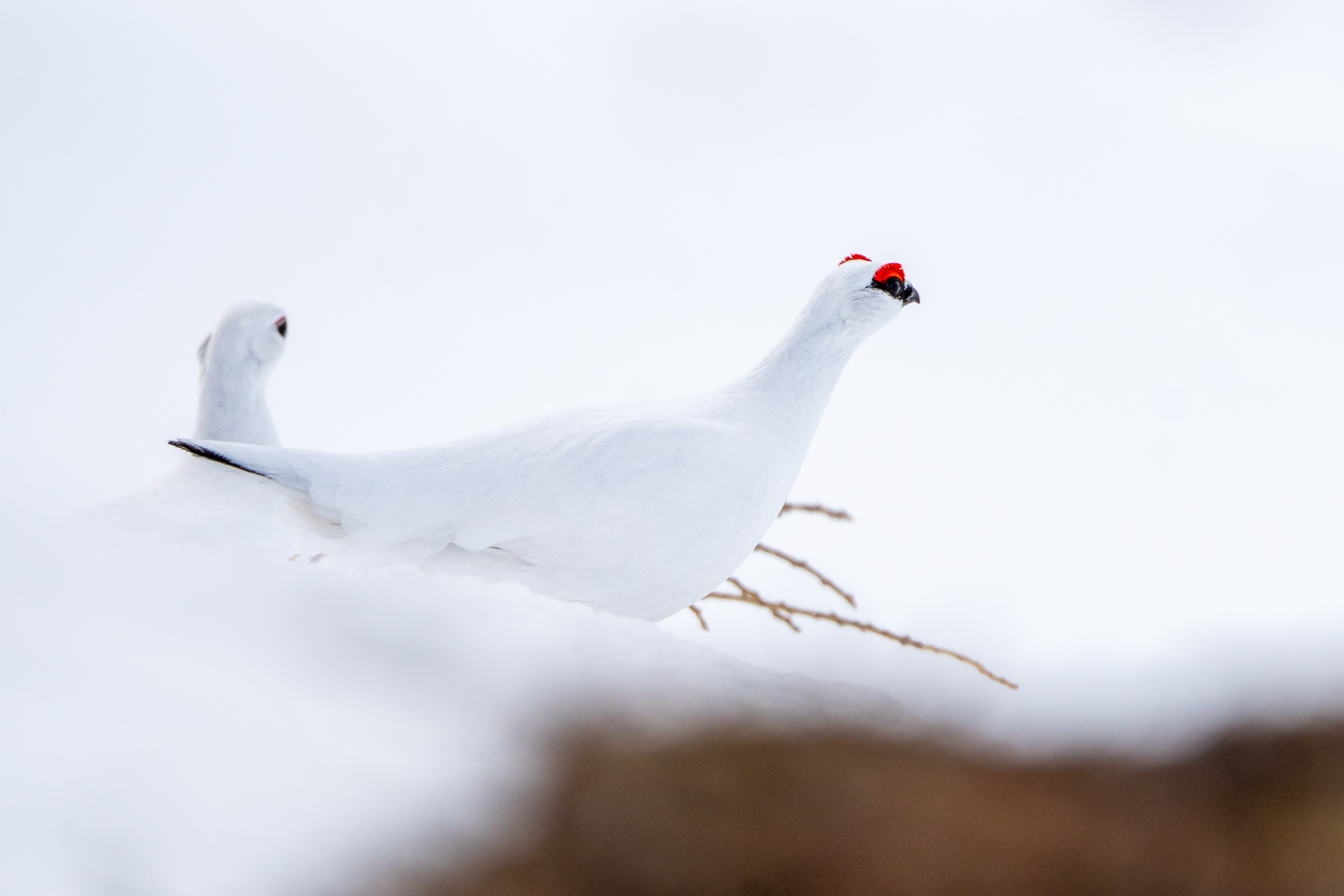
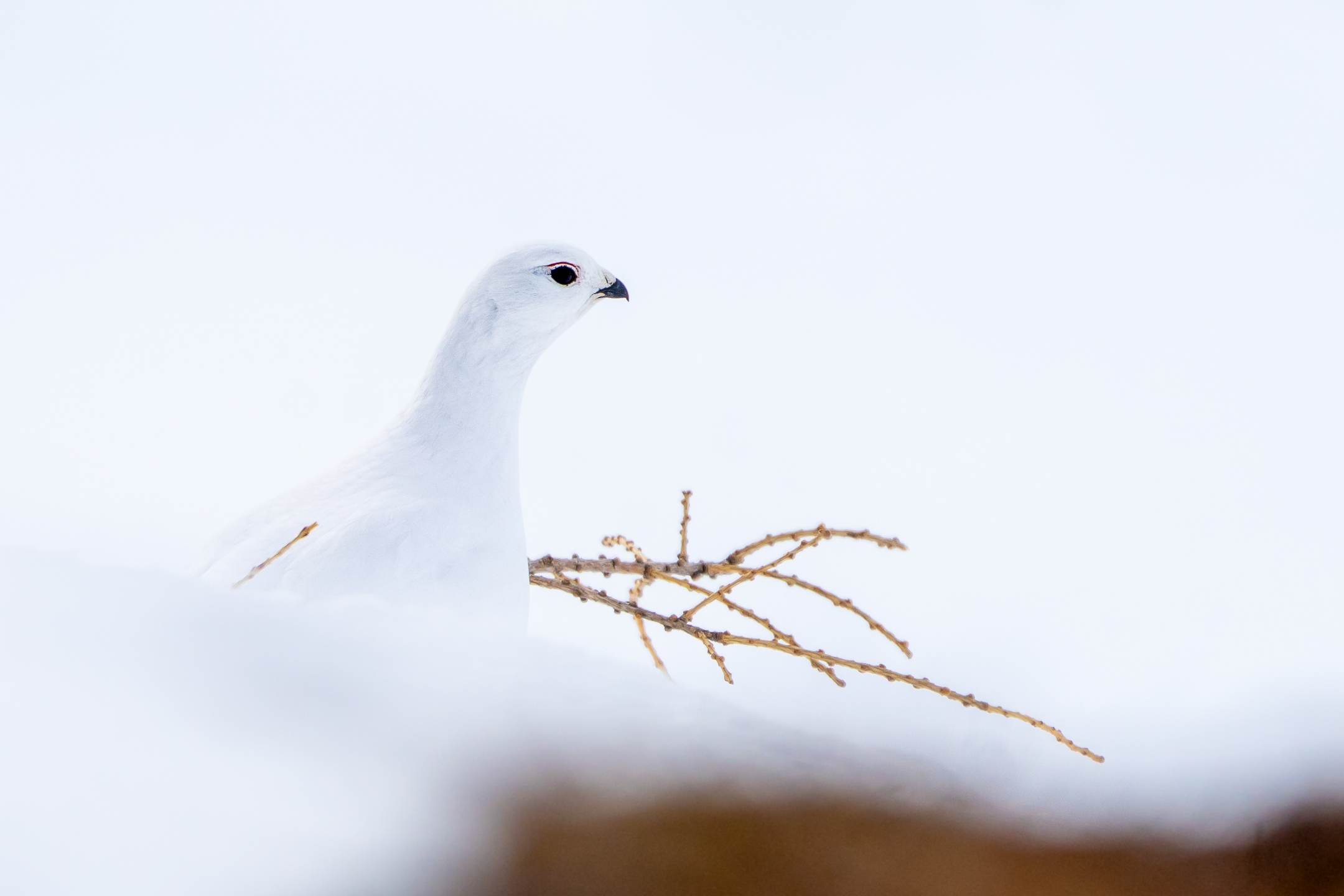
Rock Ptarmigan (Lagopus muta) // 1/2500 sec | f/6.3 | ISO 500 | 600 mm; 1/640 sec | f/25 | ISO 1600 | 215 mm
When the Rock Ptarmigans noticed me, however, they went back near the larch. To prevent this from happening again, I decided to be even quieter from now on – which is easier said than done in deep snow.
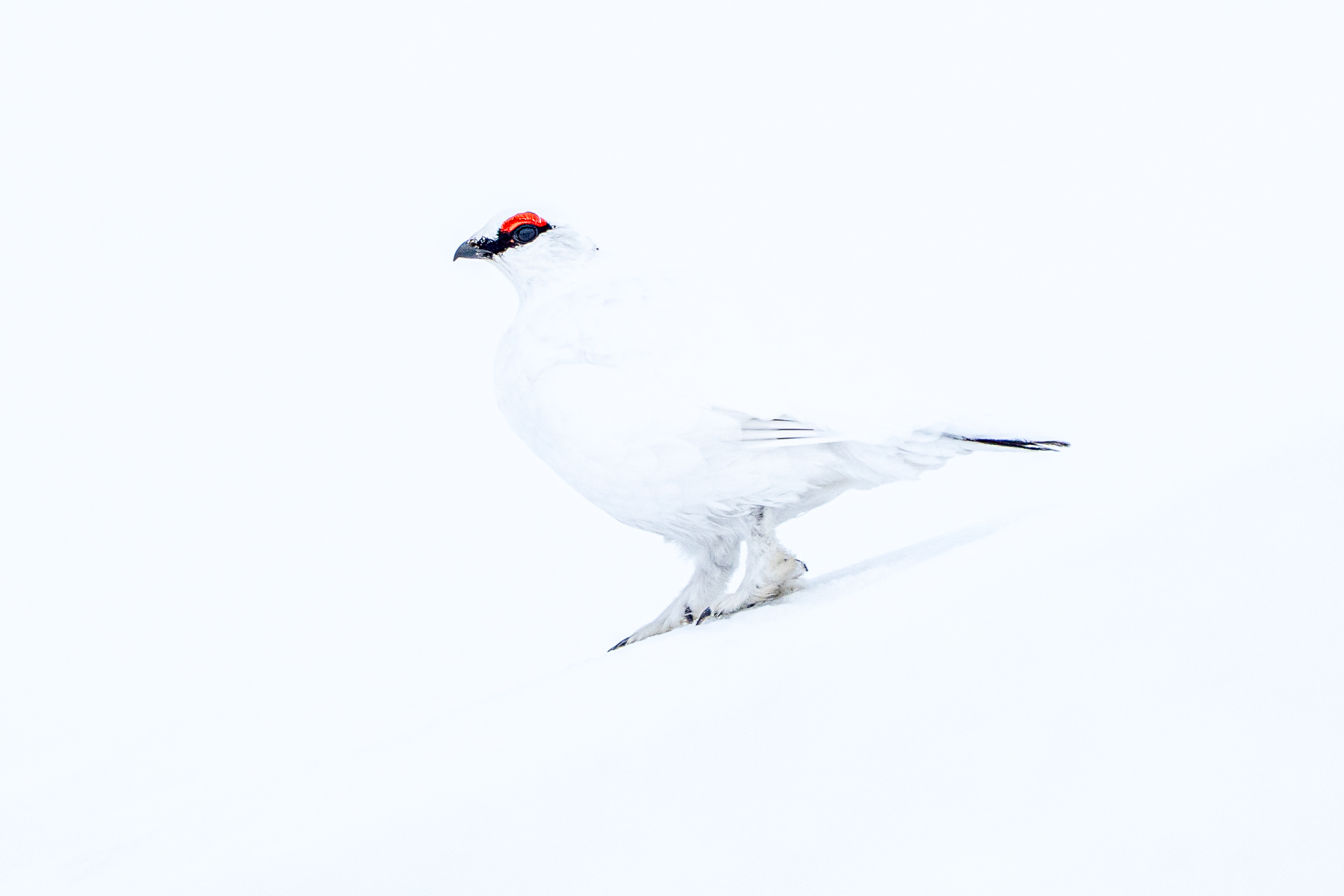
Rock Ptarmigan (Lagopus muta) // 1/2000 sec | f/6.3 | ISO 800 | 565 mm; 1/2000 sec | f/6.3 | ISO 1000 | 600 mm
My plan worked, and the male set off in search of food.
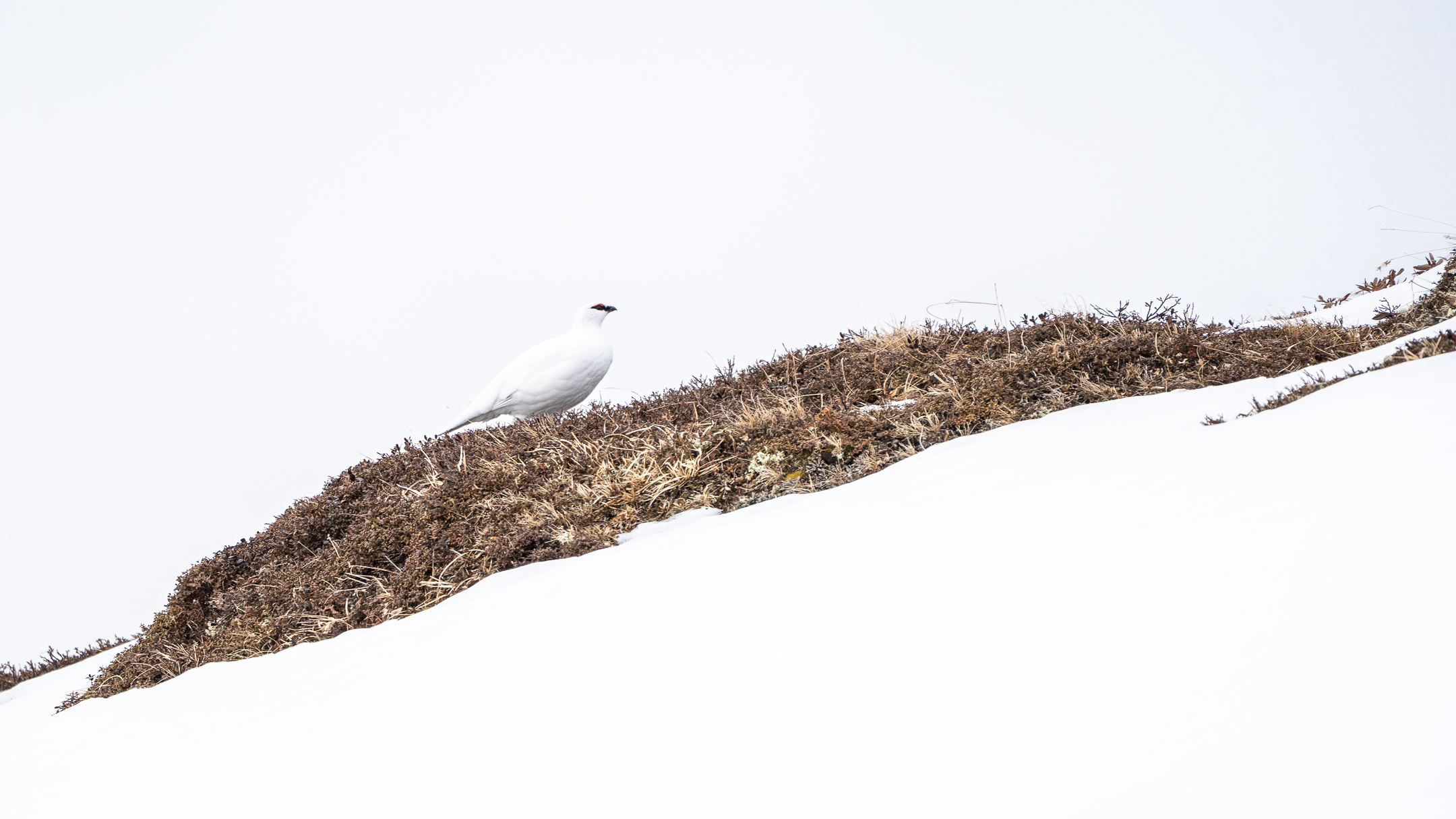
Rock Ptarmigan (Lagopus muta) // 1/1600 sec | f/6.3 | ISO 1250 | 385 mm; 1/2000 sec | f/6.3 | ISO 1000 | 600 mm
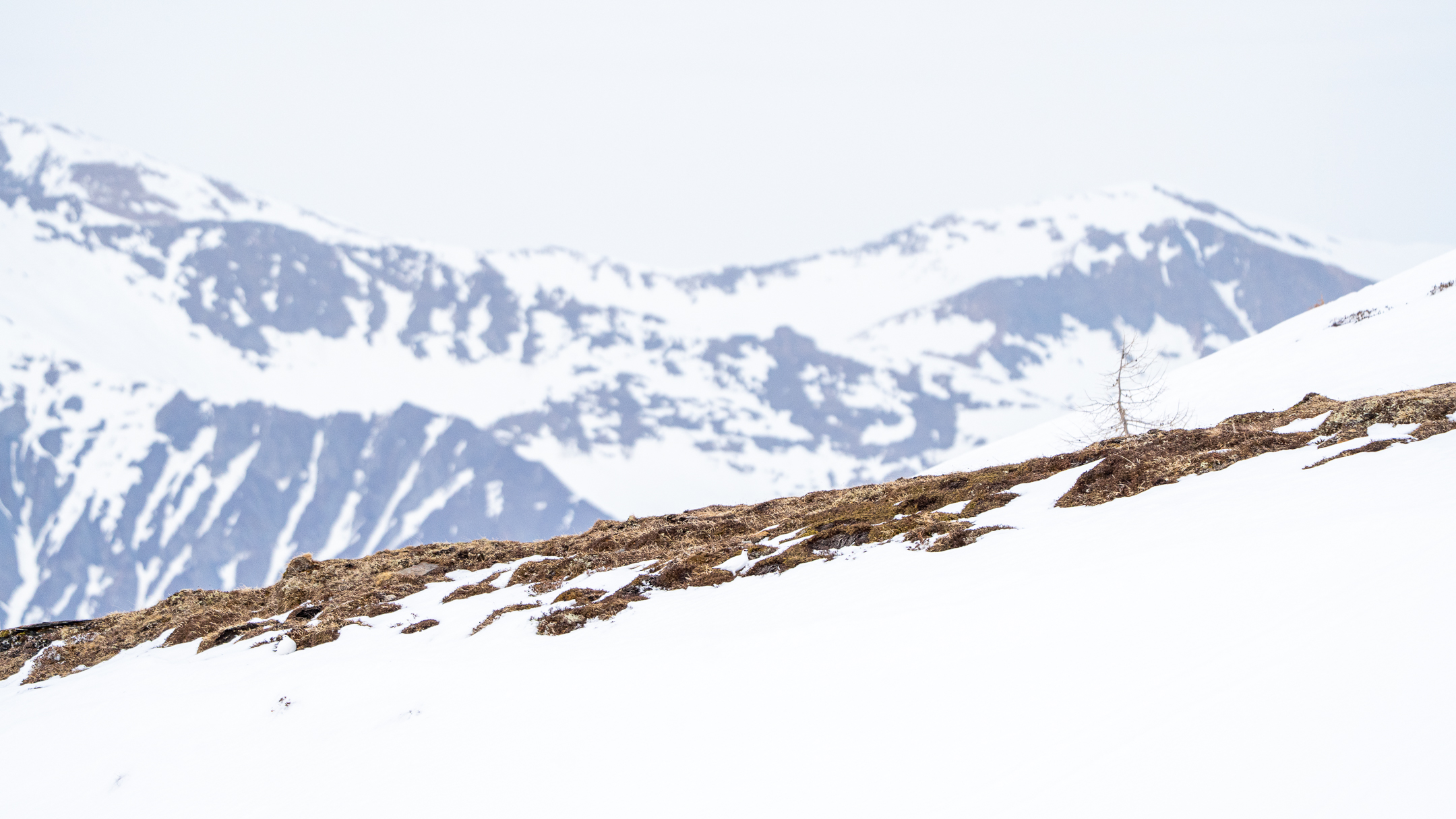
I stayed where I was and deliberately did not follow the Rock Ptarmigan – out of respect and because I wanted to disturb the animals as little as possible. Soon, however, I lost sight of the Rock Ptarmigans. Finally I found them again on an elongated ridge with snow-free patches, where they were looking for food. In winter, Rock Ptarmigans mainly feed on buds, shoots and leaves of small shrubs such as willows and bilberries. Both Rock Ptarmigans can be seen in the picture at the top left. Did you spot them too?
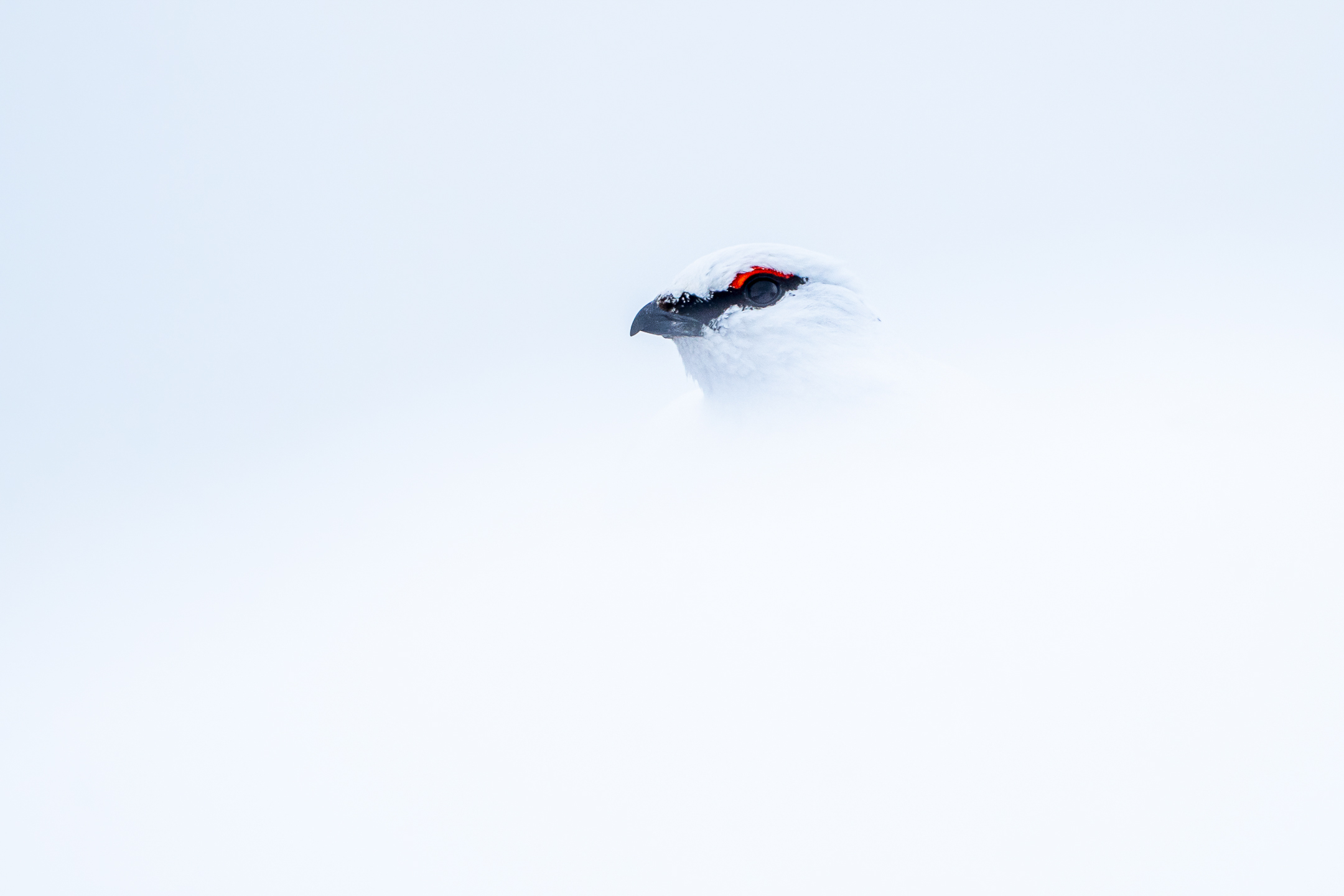
male Rock Ptarmigan (Lagopus muta) // 1/1600 sec | f/6.3 | ISO 1250 | 600 mm
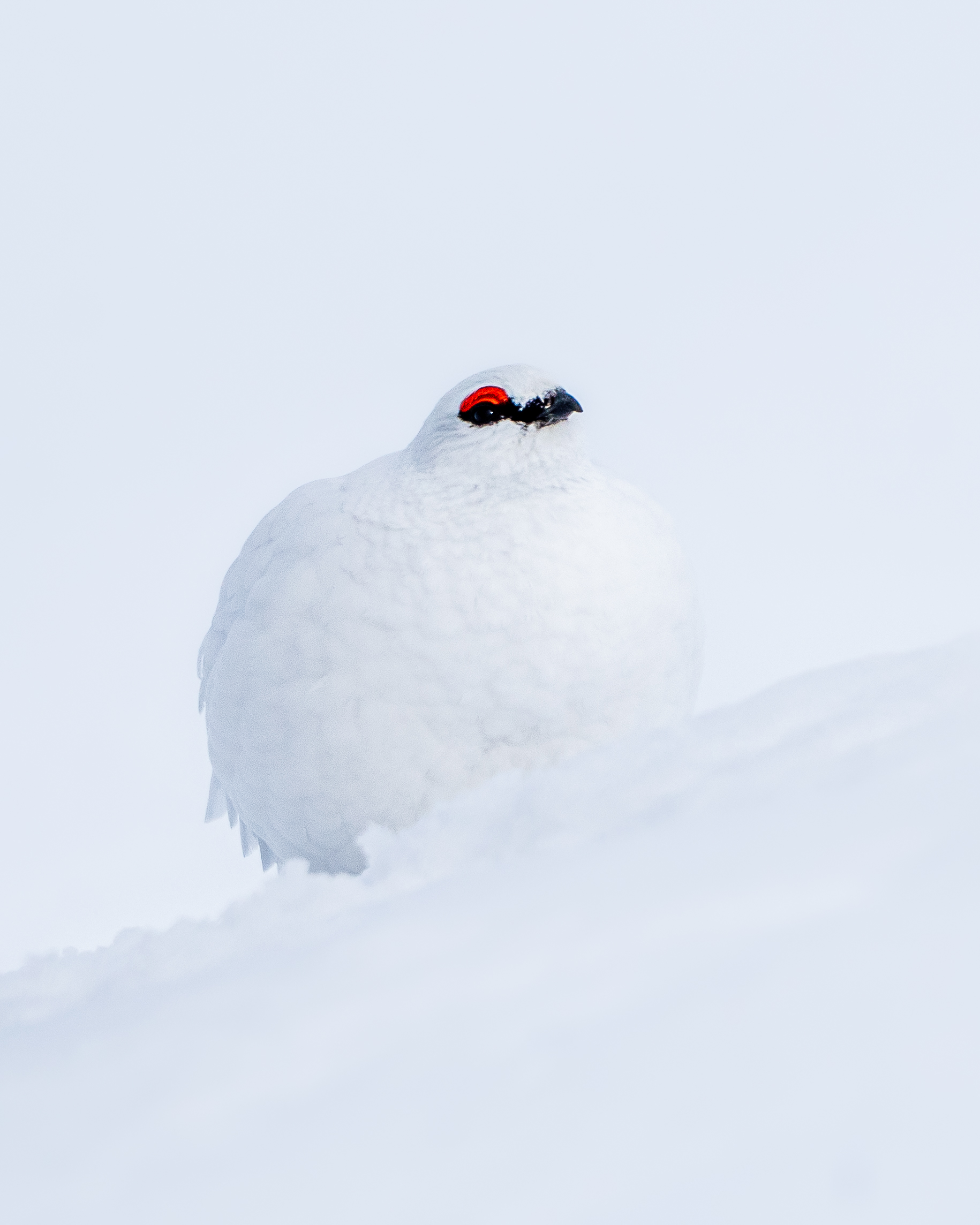
After a while I decided to head towards the ridge as well. When I got there, I suddenly found myself eye to eye with the male, as if out of nowhere. Its head was just sticking out of the snow, and this minimalist picture was created.
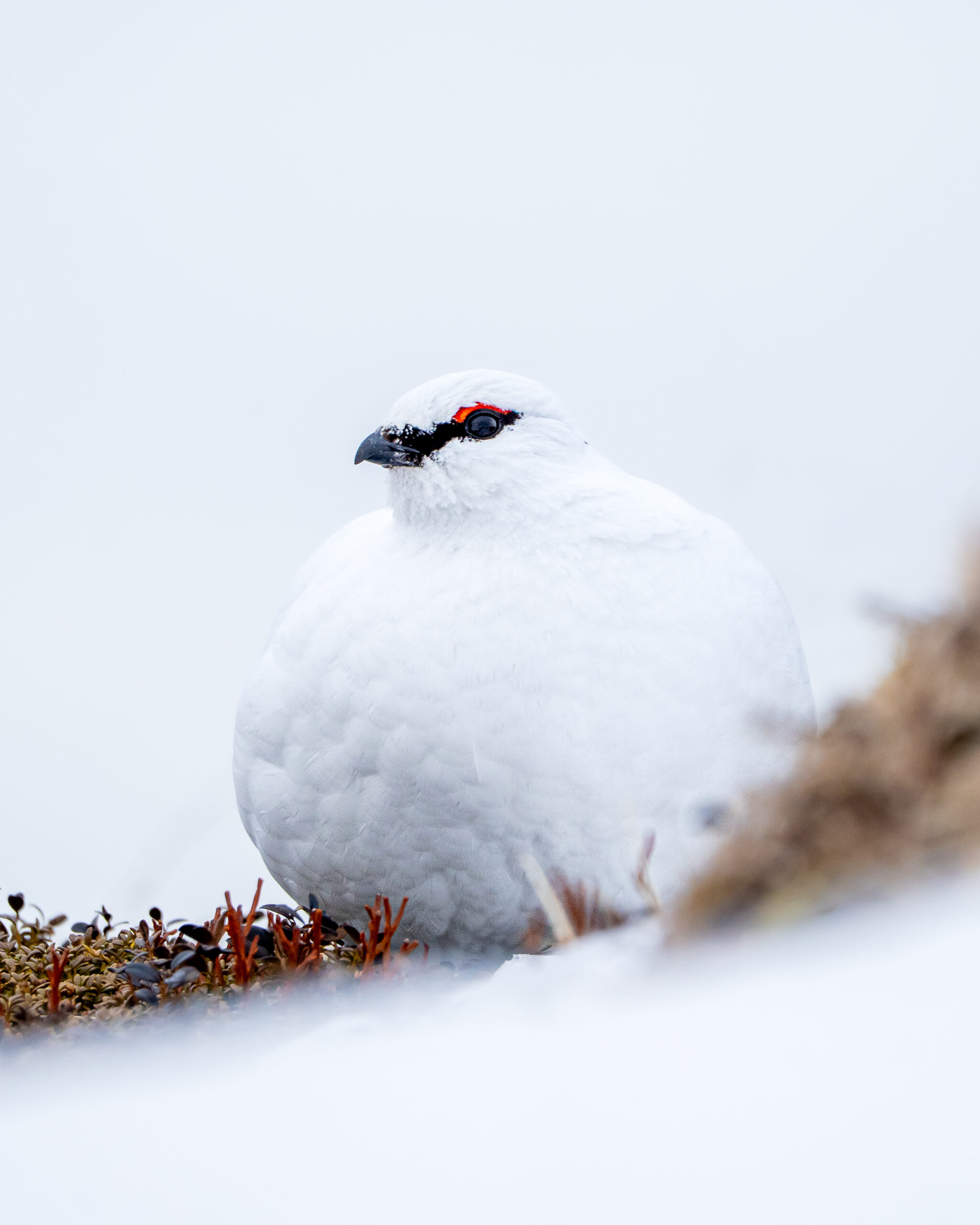
male Rock Ptarmigan (Lagopus muta) // 1/2000 sec | f/6.3 | ISO 800 | 600 mm
As I moved a little higher up the slope, I could now also capture the Rock Ptarmigan’s round upper body.
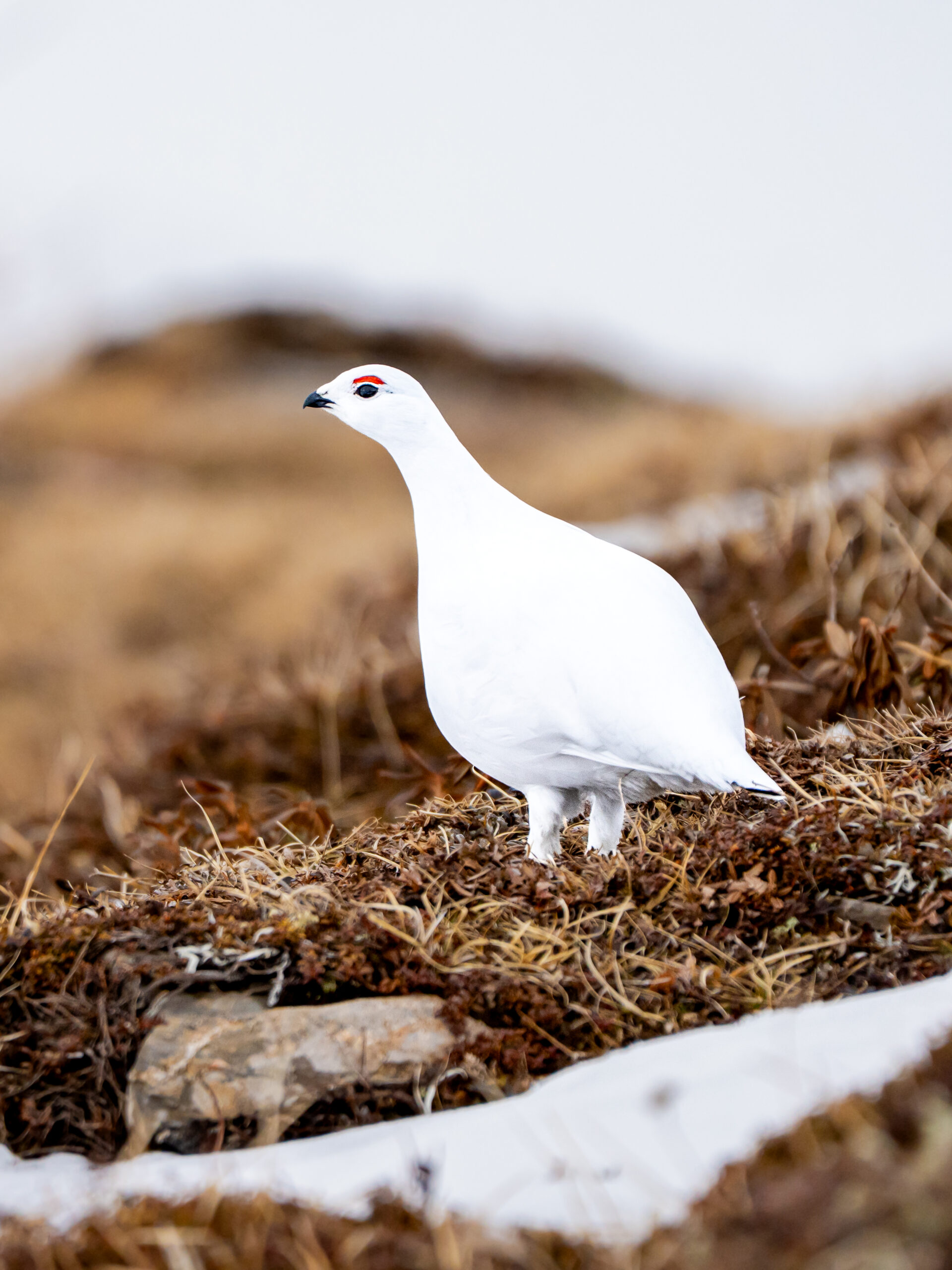
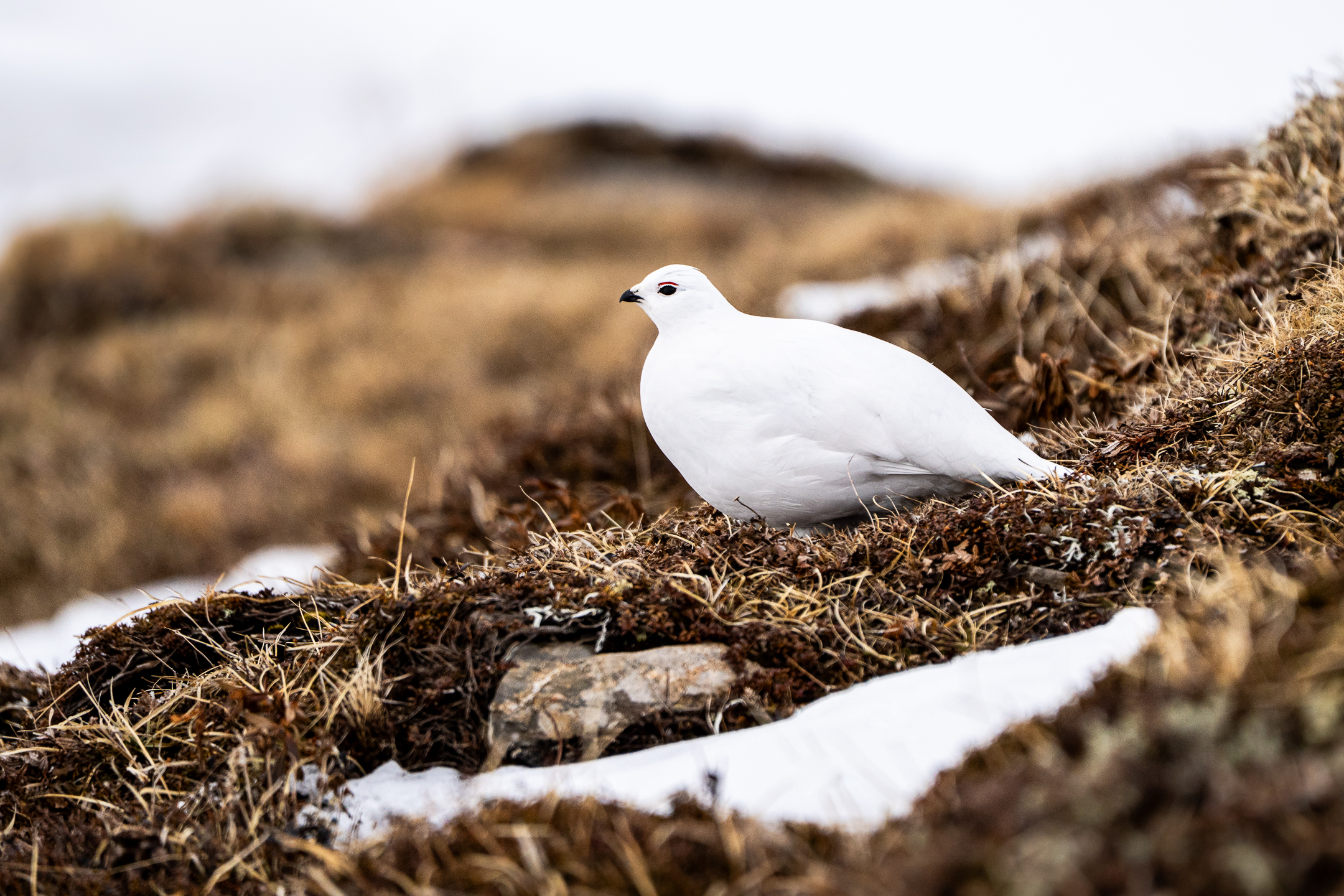
Rock Ptarmigan (Lagopus muta) // 1/1250 sec | f/6.3 | ISO 2000 | 600 mm; 1/1250 sec | f/6.3 | ISO 1600 | 600 mm
Not far away, down in the dry grass, was the female. At moments like these the birds have to be particularly on guard against predators, because their camouflage, perfect in the snow, is useless here.
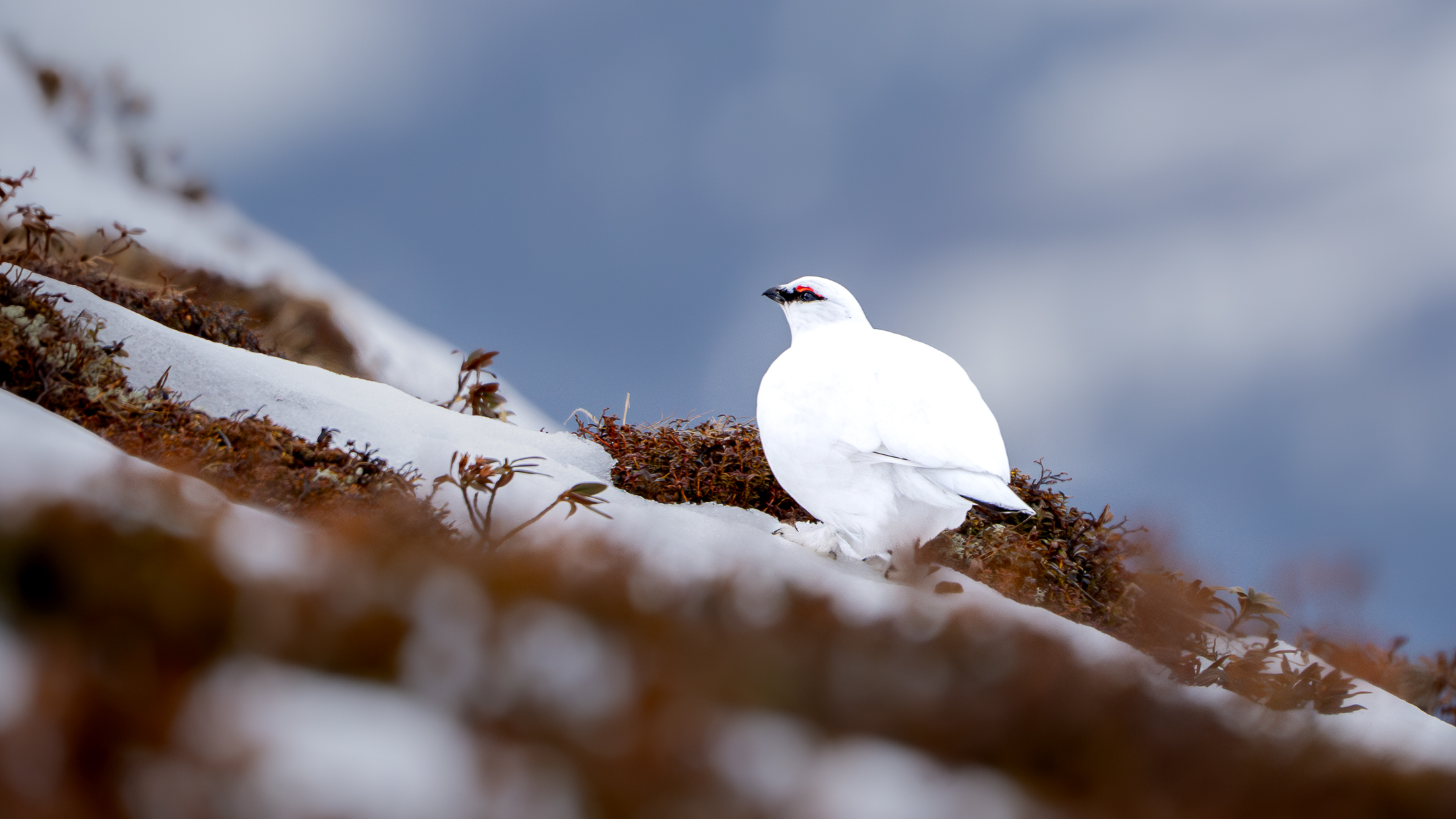
male Rock Ptarmigan (Lagopus muta) // 1/2000 sec | f/6.3 | ISO 800 | 600 mm
By now I had been out in the snow for more than four hours, and dusk was beginning to fall. But the Rock Ptarmigans fascinated me so much that the cold could not harm me. I often wonder what survival artists animals like the Rock Ptarmigans must be to survive in such cold conditions at all.
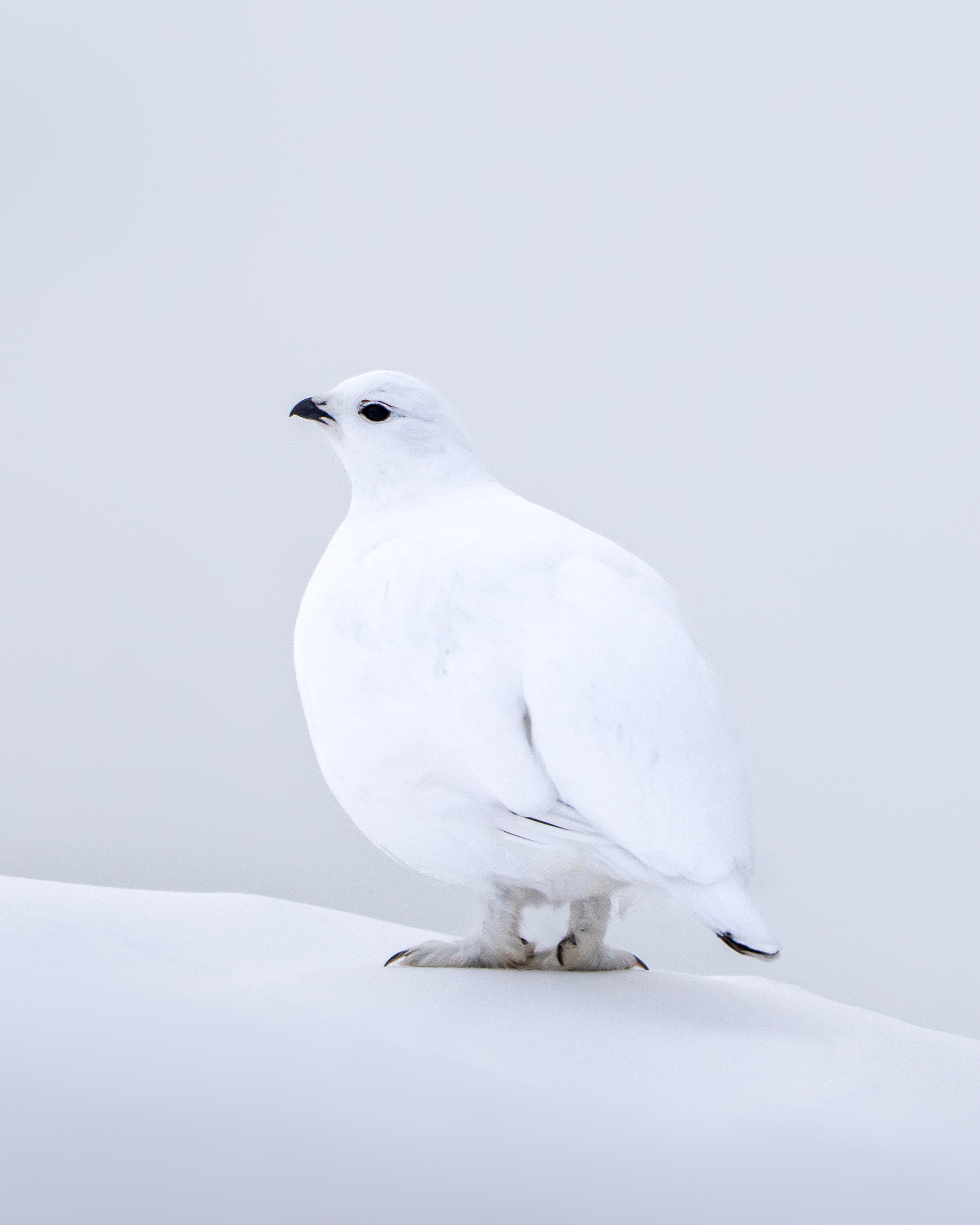
female Rock Ptarmigan (Lagopus muta) // 1/1600 sec | f/6.3 | ISO 1600 | 600 mm
Soon afterwards I made my way back down to the valley as it gradually got dark. I definitely hadn’t expected so many successful pictures that evening. I would be delighted to have more encounters with the Rock Ptarmigans in the Swiss mountains in the future.
Leave a Reply