Spring could slowly be felt, but temperatures were still close to 0 °C. On a cloudy morning I was out in the forests of Sweden looking for wildlife. I had already tried several times to photograph moose – so far without success. This morning, too, luck was not on my side. There was no moose to be seen.
When the forest opened up, I could see a field in the distance that was still partly covered by a thin layer of snow. My eyes fell on a group of roe deer at the edge of the field near the forest. I decided to approach them carefully along a path at the edge of the forest.
The closer I got, the more carefully I moved so as to remain unnoticed. Every step had to be right, because the snap of a single twig would have been enough to scare the animals away. The roe deer stayed where they were – a good sign. I watched them for a while to work out which way they were moving. And indeed, they slowly came closer to the edge of the forest.
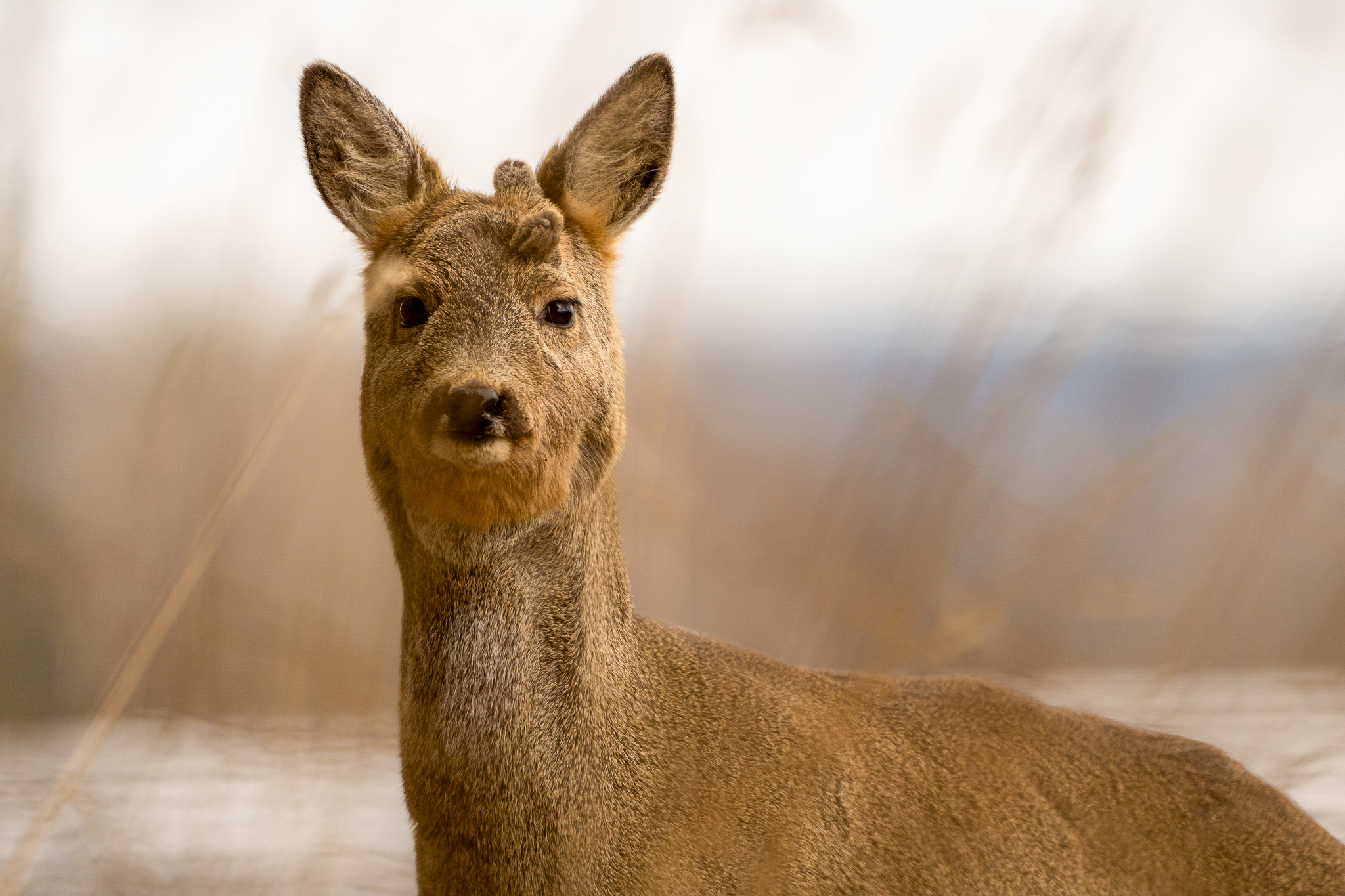
Western Roe Deer (Capreolus capreolus) // 1/1000 sec | f/6.3 | ISO 800 | 600 mm
Thanks to the trees I was well covered and could stalk closer. Finally I sank down into the grass by a pine tree, hoping that the roe deer would continue to move in my direction. And so it happened. One of the animals stepped out of the open field into the tall grass and began to eat contentedly – less than fifteen metres away from me. This was my moment. I used the opportunity to take a few photos.
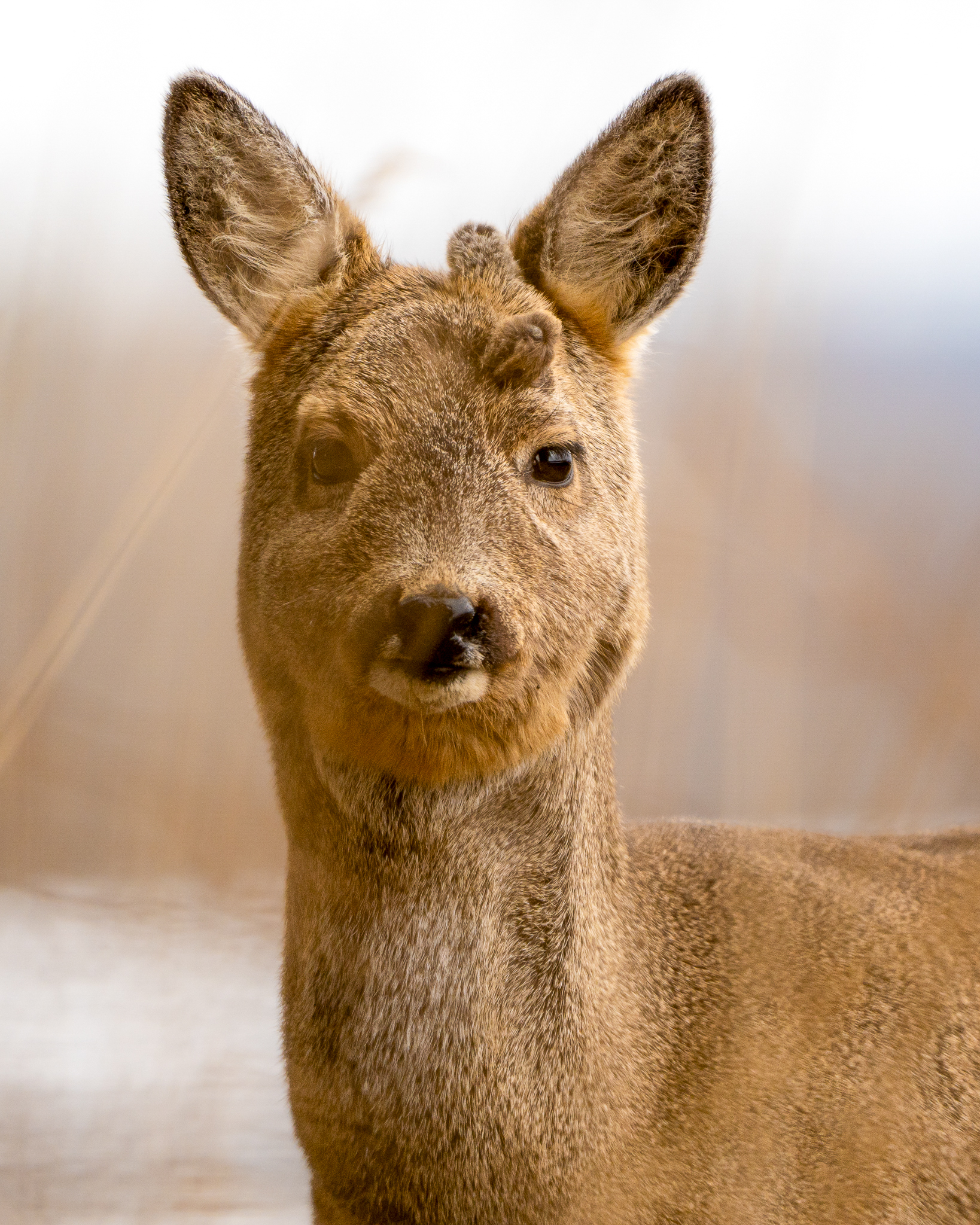
Western Roe Deer (Capreolus capreolus) // 1/1000 sec | f/6.3 | ISO 800 | 600 mm
The roe deer was a young buck, probably a yearling, with conspicuous antlers. On the left side of its head grew a short antler stump still covered in velvet. The right side, on the other hand, was empty. One-sided antlers like this occur mainly in young bucks. The cause can lie in the genes, arise from a developmental disorder or be the result of an old injury.
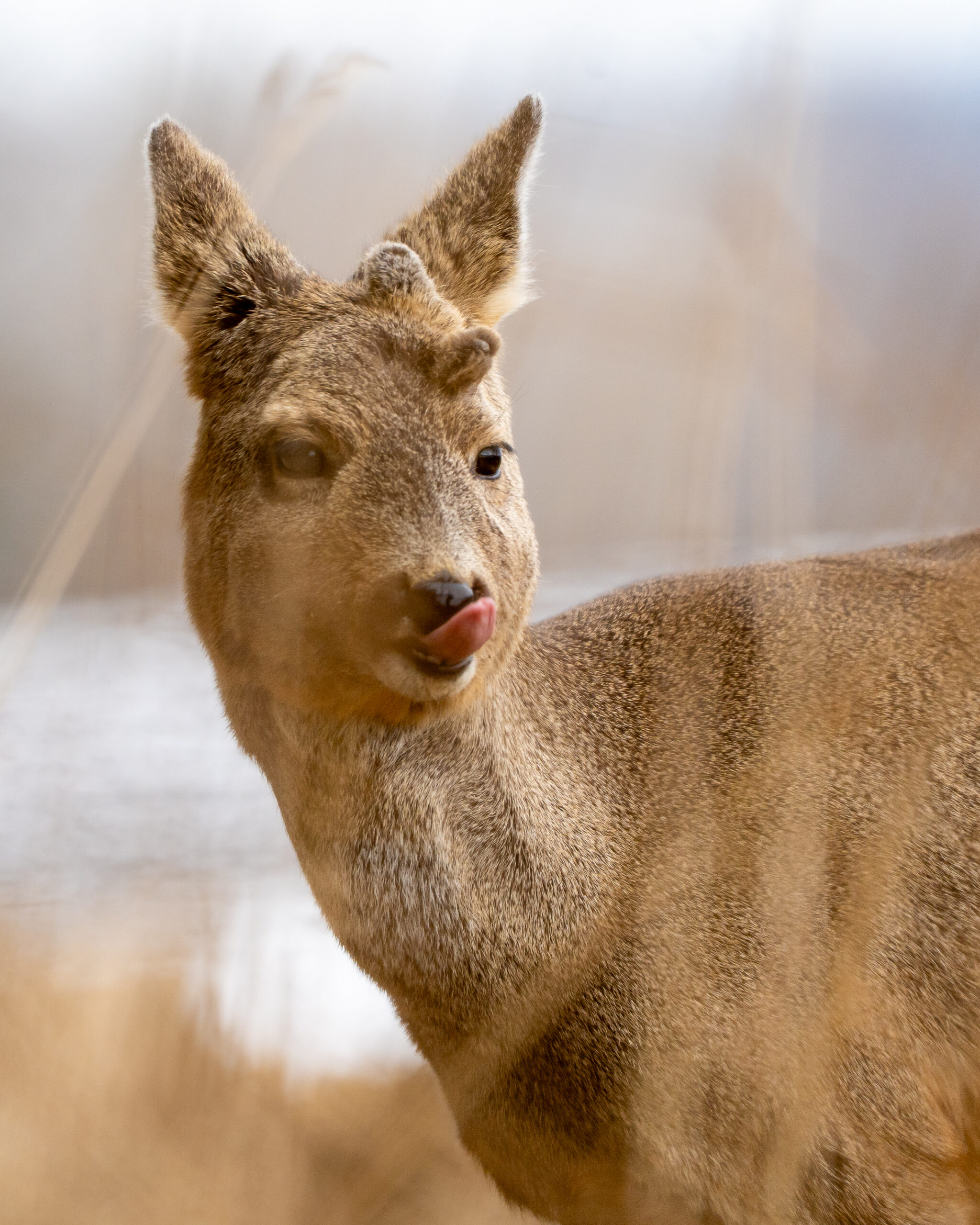
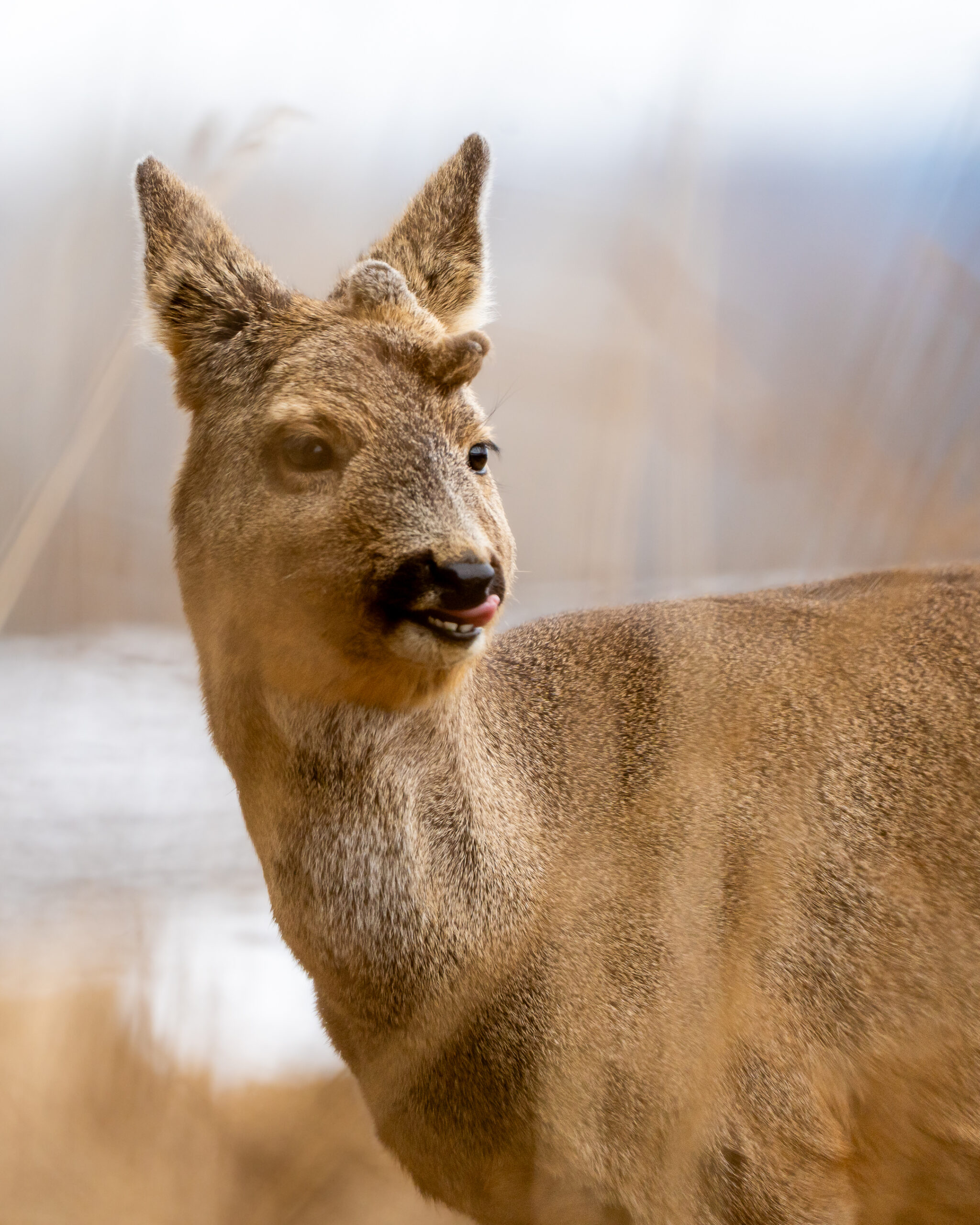
Western Roe Deer (Capreolus capreolus) // 1/1000 sec | f/6.3 | ISO 1000 | 600 mm
A brief moment in which the buck stuck out its tongue while eating was particularly impressive – a scene that looked almost a little funny.
I had never been so close to a roe deer before. It was the first time I had been able to take such impressive pictures of hoofed animals – an unforgettable experience in the Swedish wilderness.
Good to know:
Why do roe deer sometimes stick out their tongue while eating?
Briefly sticking out the tongue while eating is completely normal for roe deer. It is part of the natural movement when feeding, for example when they try to grasp a leaf or a blade of grass precisely. The tongue helps to guide the food or bring it into the right position. Sometimes it looks almost a little funny – an expression of concentration or relaxation. Unlike with some domestic animals, in healthy roe deer this behaviour is not a sign of stress or illness, but simply a natural part of their feeding behaviour.
Sources:
- Wikipedia authors. (2003, August 25). Roe deer [in German]. https://de.wikipedia.org/wiki/Reh
Leave a Reply