Early in the morning, at exactly 2:30 a.m., my alarm clock rings. I haven’t slept for long, but for photography I am always ready to get up a little earlier. Tired, I get out of bed, put on my hiking clothes, pack the last important things into my backpack and set off on my next adventure.
By now it is already 3:00 a.m. I hop on my bike and set off in the dark. The sky seems to be clear – a good sign for beautiful, photogenic light.
While cycling to the start of the hike, I imagine how I will finally be able to photograph ibex in the mountains again later. But that is still uncertain, because nature is known to be unpredictable. Nevertheless, as always, I remain optimistic, even though my last two attempts at this location did not work out as hoped.
After a good two hours of cycling I park my bike. Now I continue on foot. It feels good to breathe in the fresh morning air and hike through the darkness. During the day the heat and the blazing sun can make hiking exhausting. As always when I photograph animals at sunrise, I aim to climb the mountain quickly so that I have enough time to find the animals and – if everything fits – photograph them in the golden light.
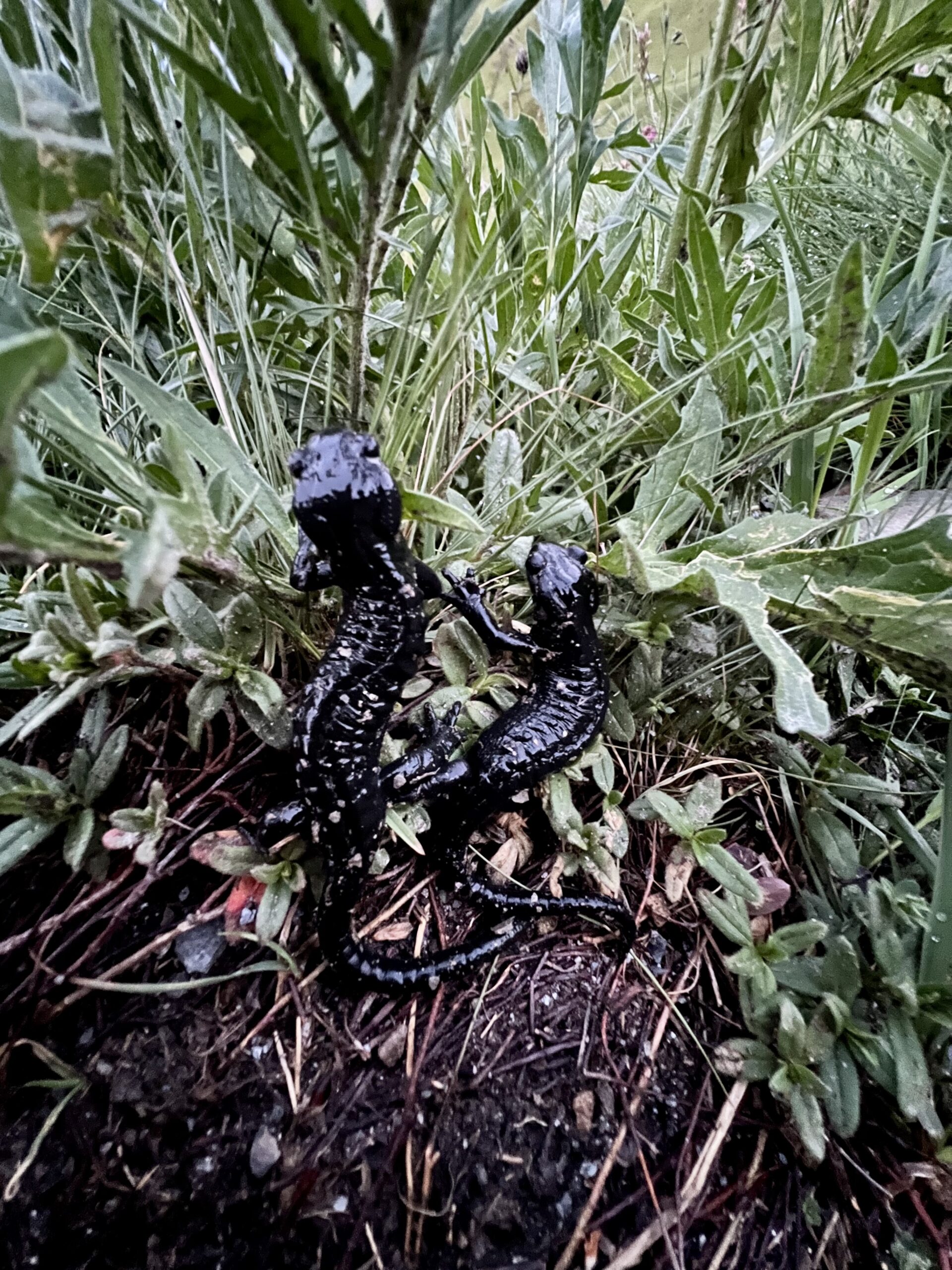
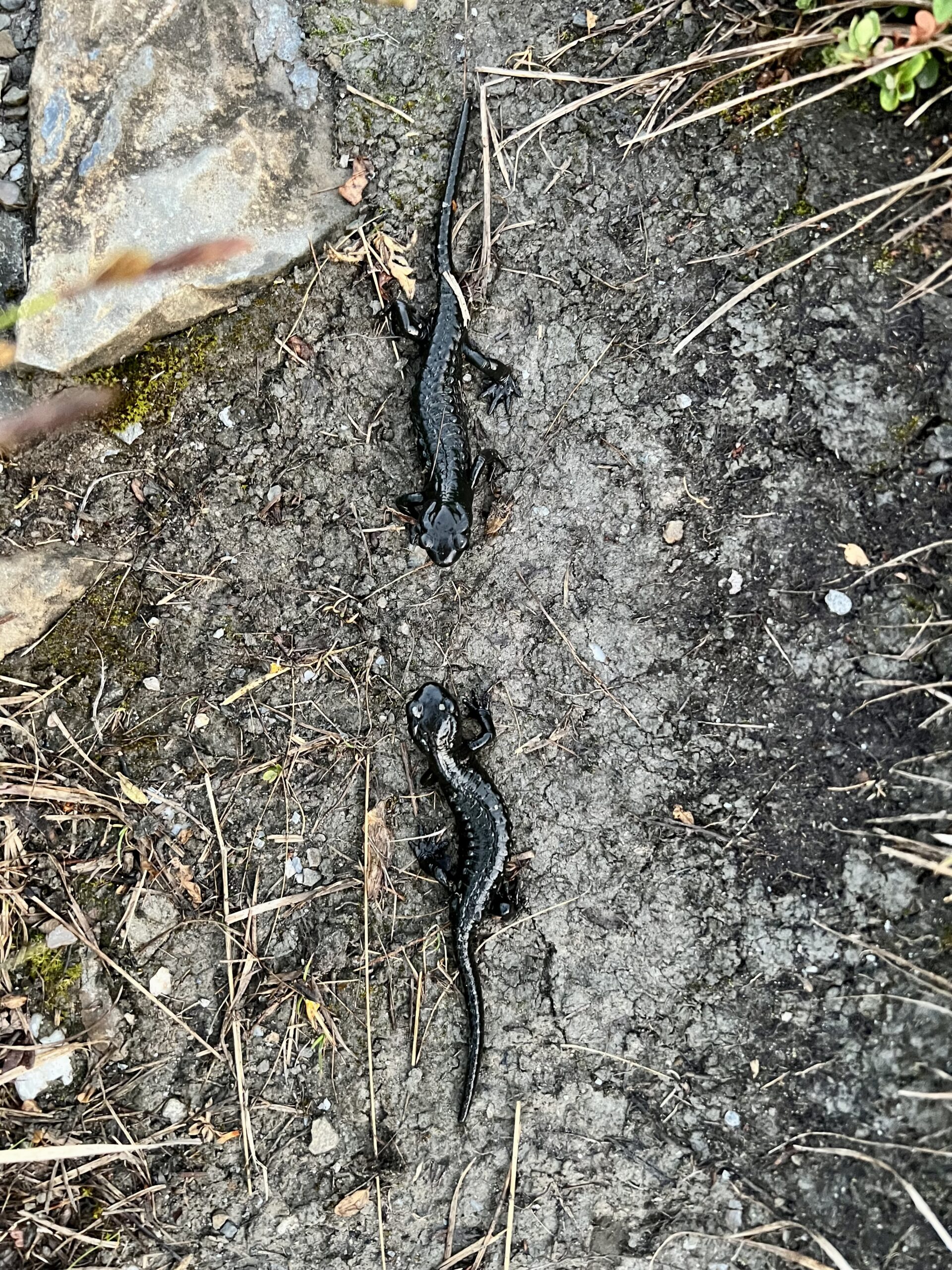
The hiking trail is lined with Alpine salamanders.
Soon I reach the tree line. The path leads further and further up the mountain over alpine meadows. On the hiking trail I come across numerous Alpine salamanders. It’s amazing how many I can spot this morning. With every step I have to be careful not to tread on one. I can even watch some salamanders mating. The moisture from the previous day’s rain shower seems to have done them good.
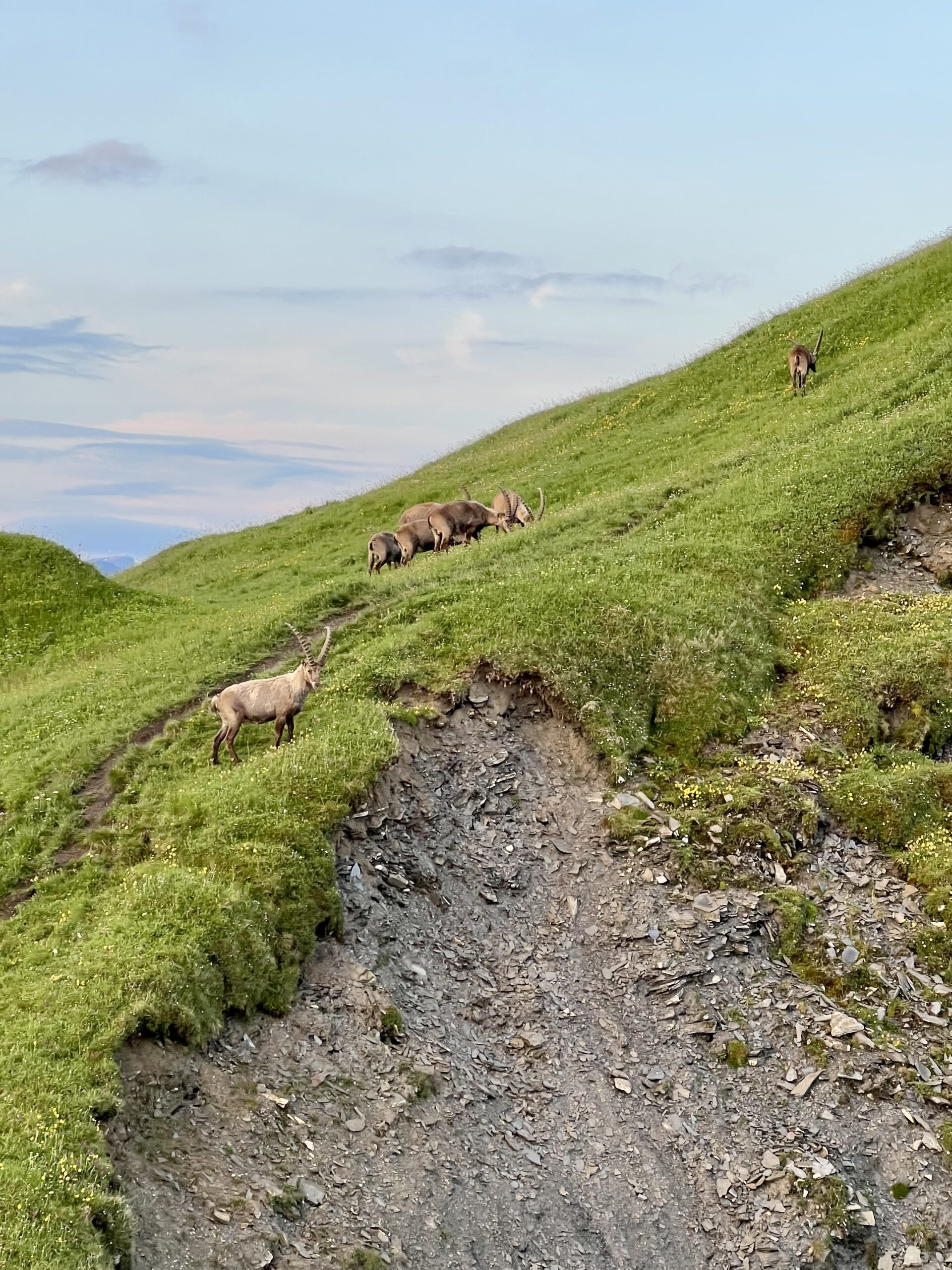
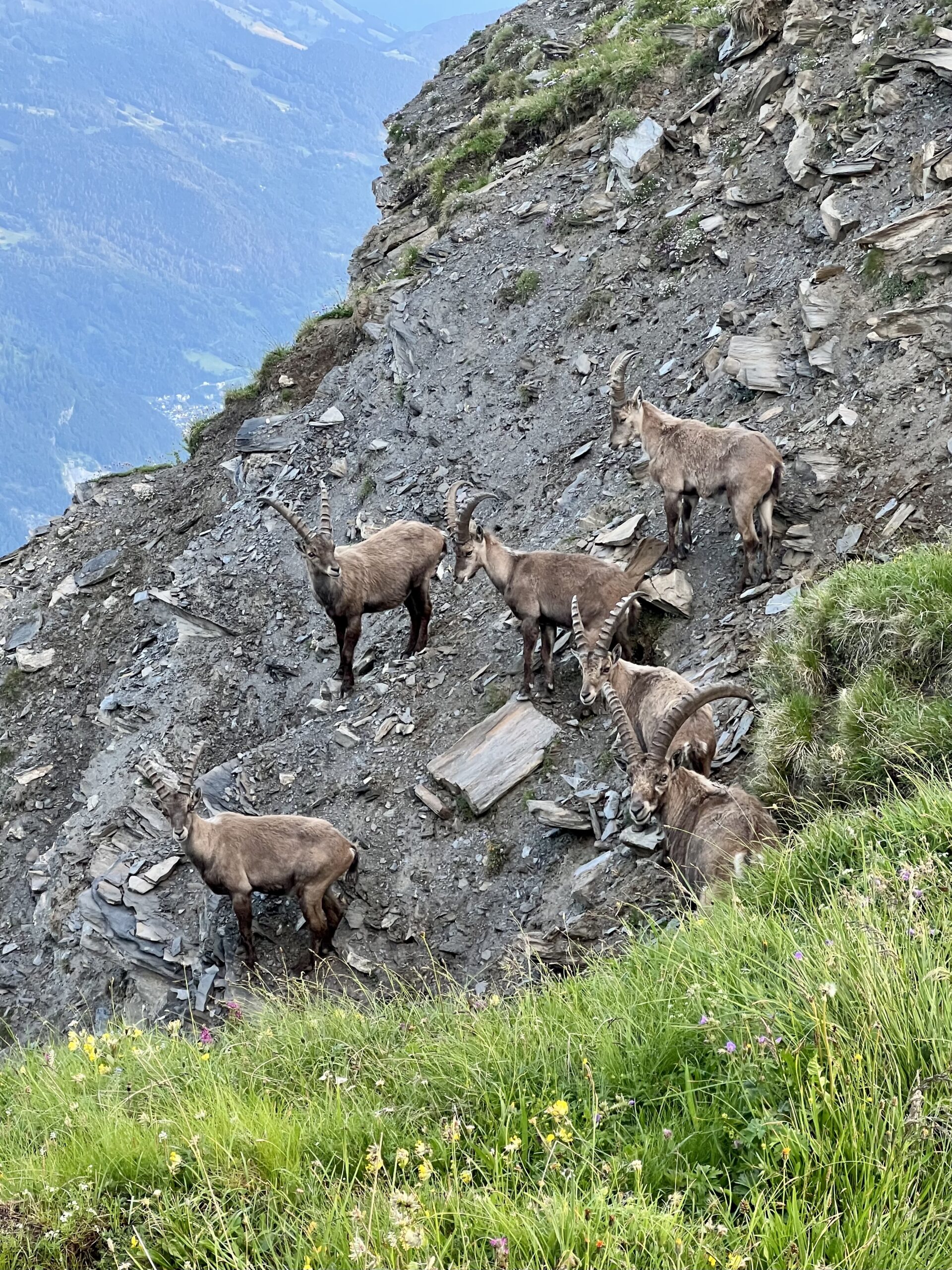
Carefully I approach the ibex.
Once at the top of the ridge, I take out my binoculars and scan the surroundings. And indeed – in the distance I can make out a group of at least a dozen ibex. I am overjoyed. At this point the effort has definitely been worth it for me.
Slowly I approach the animals. On the way I hear the call of rock ptarmigans – a lovely moment, even if I cannot spot them in the dawn light.
Finally I reach a suitable spot from which to watch the ibex from a safe distance. They have already noticed me. Now it’s a matter of treating them with respect and not walking towards them, so that they don’t flee. Although ibex usually react calmly to people, I wait patiently until they have got used to my presence.
And indeed: my plan works. The ibex come closer – a sign that they don’t see me as a threat. Now I can devote myself entirely to photographing these magnificent animals.
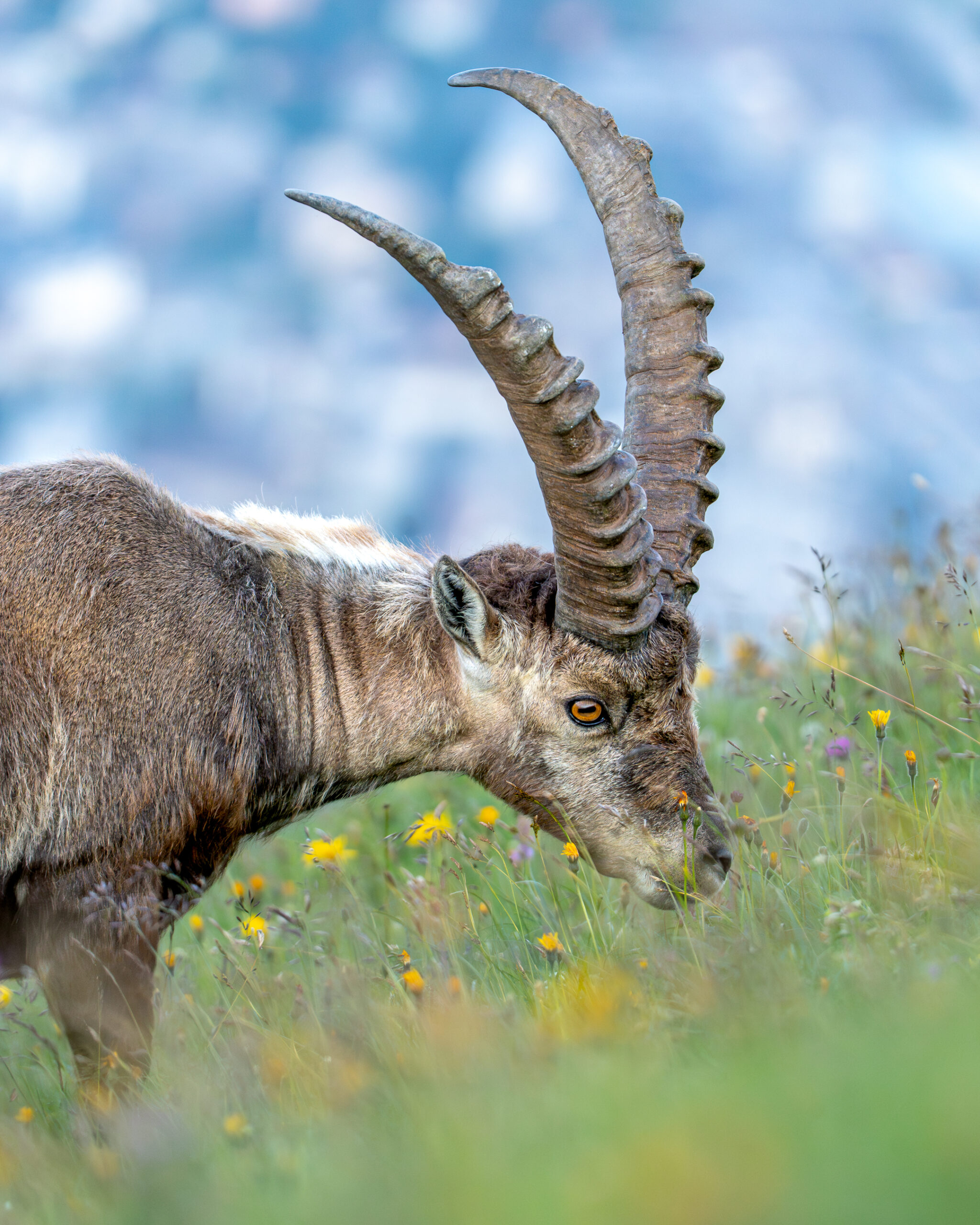
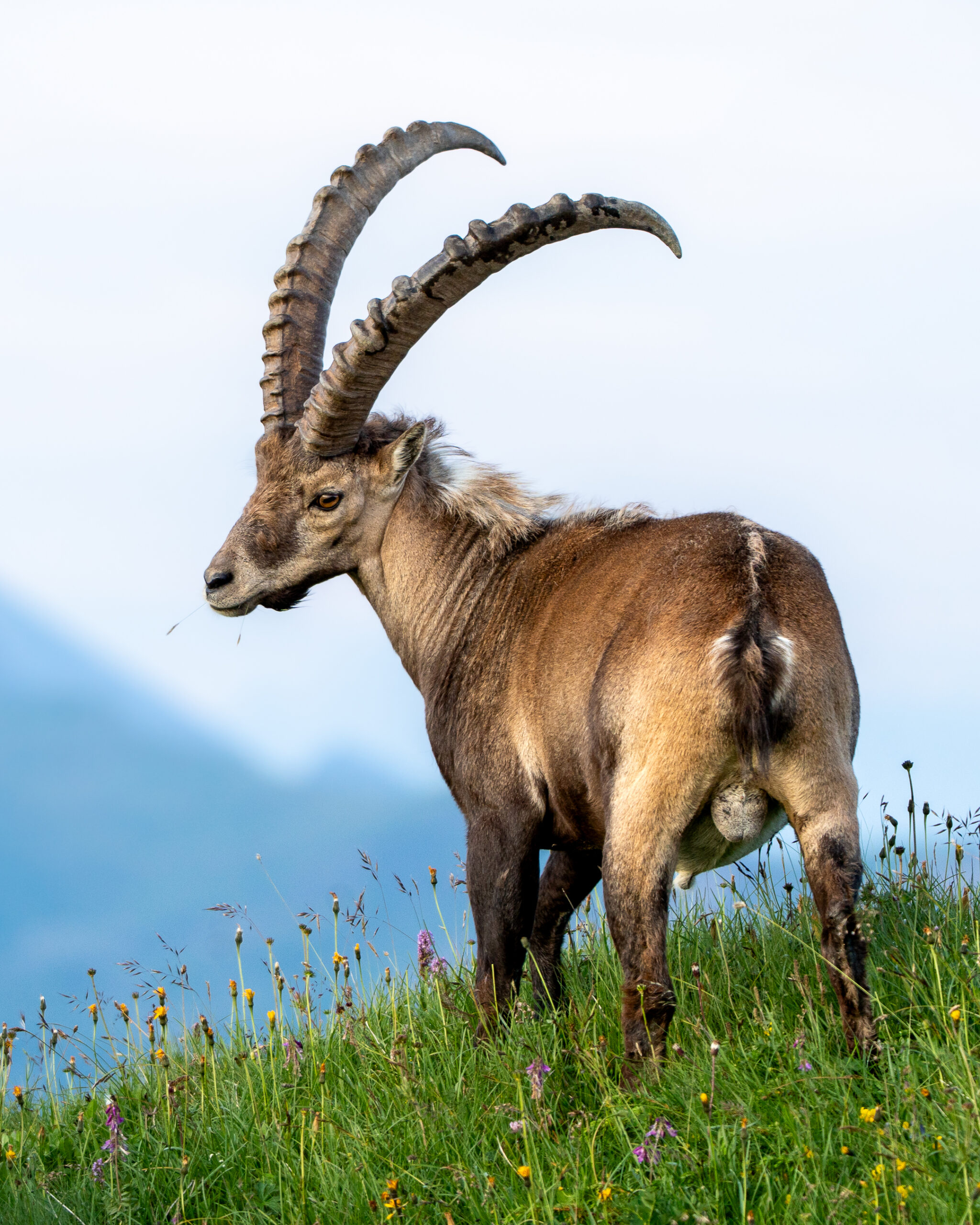
Alpine Ibex (Capra ibex) // 1/800 sec | f/6.3 | ISO 4000 | 400 mm; 1/320 sec | f/6.3 | ISO 320 | 350 mm
My aim this morning is to try out as many angles as possible in order to realise a wide variety of picture ideas. The lighting conditions are almost perfect for this – at least as long as the sun doesn’t stay hidden behind a thick cloud. When it finally shines through a thin veil of cloud, the light becomes diffuse. This beautifully softens the textures and colours of the ibex and brings out lovely details.
A few veils of cloud or light wisps of mist are even an advantage at such moments, because they let you photograph the animals for longer without the light becoming too harsh, as it does under a cloudless sky. Otherwise the kitschy golden-light effect often appears at sunrise.
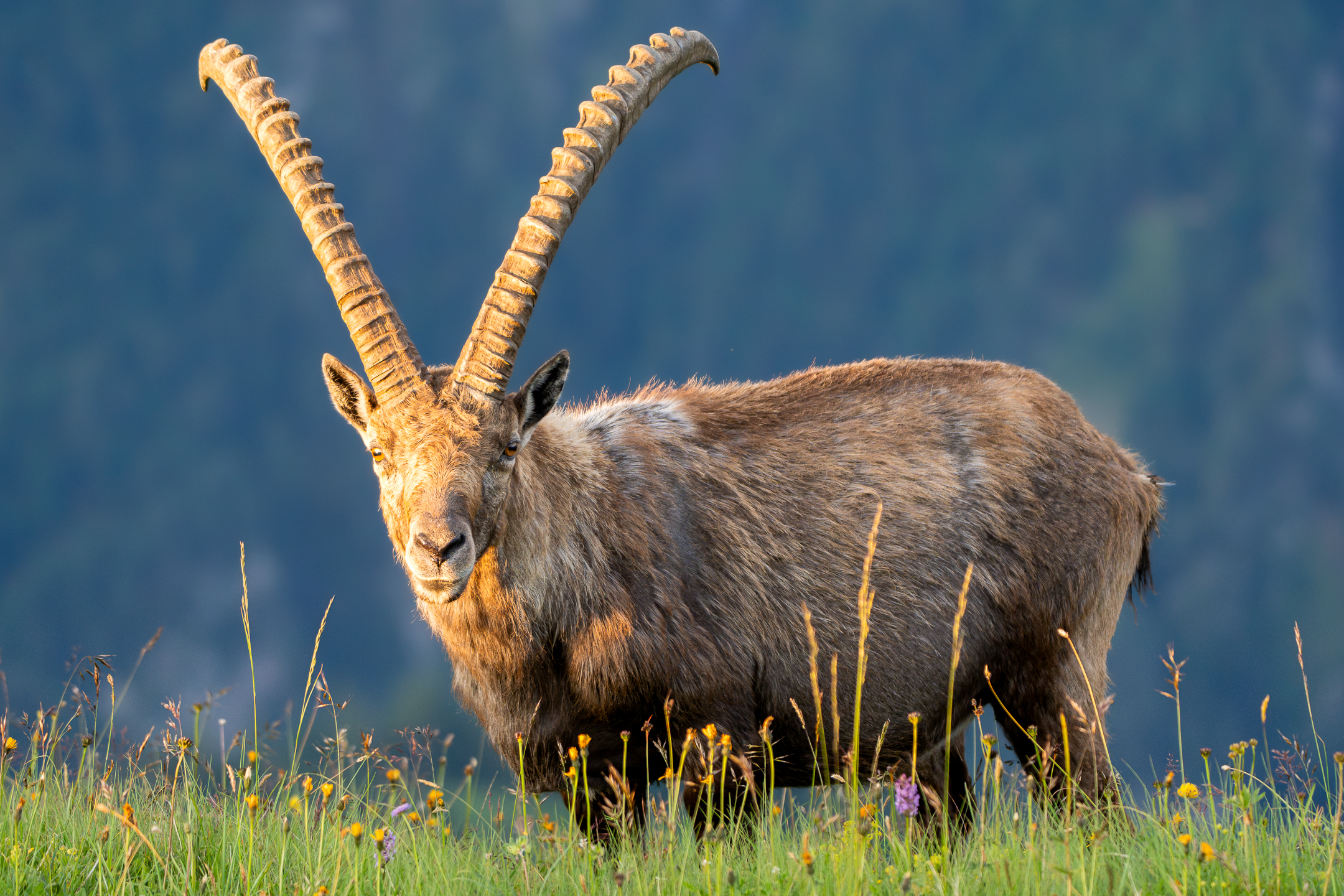
Alpine Ibex (Capra ibex) // 1/800 sec | f/5.6 | ISO 2000 | 260 mm
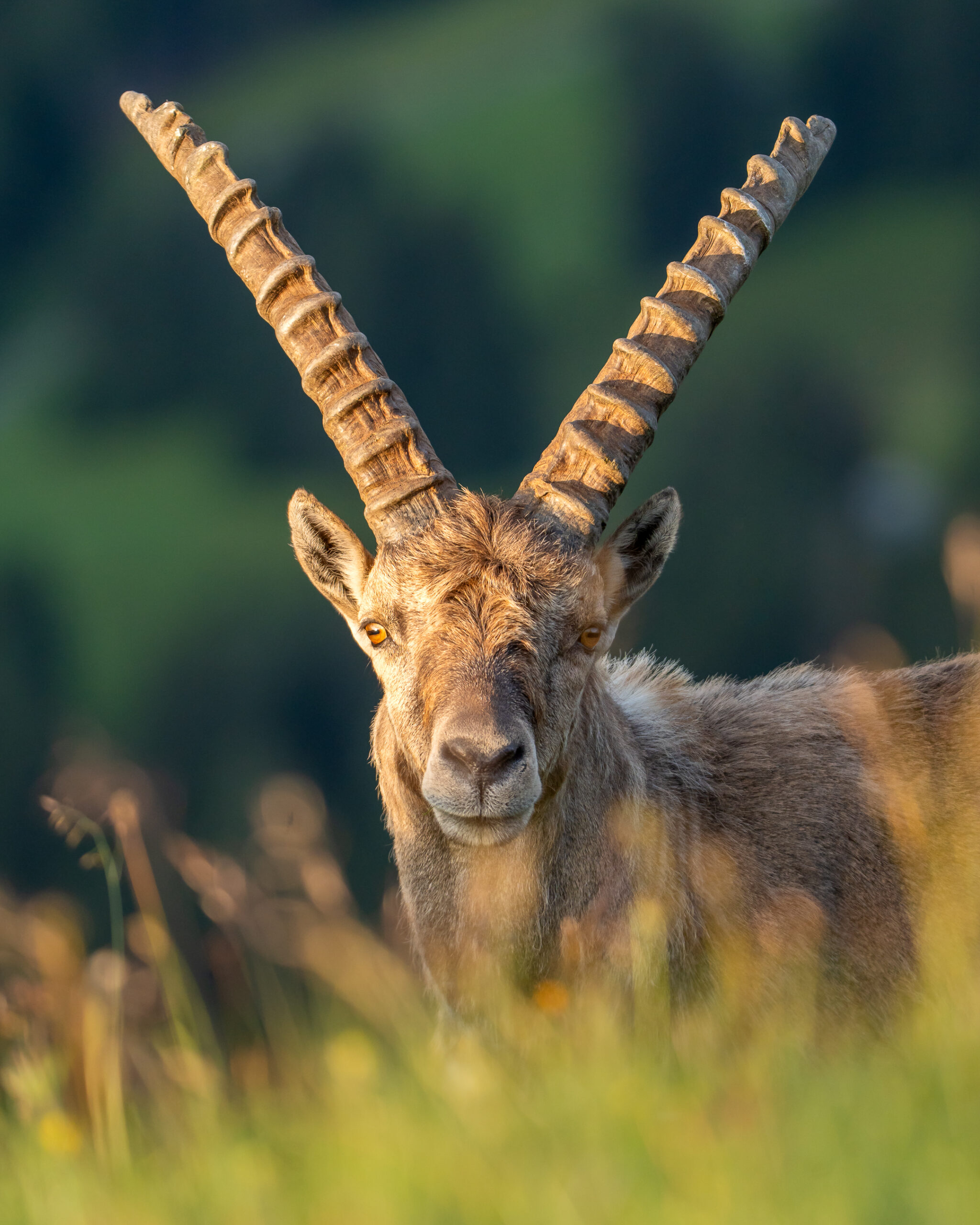
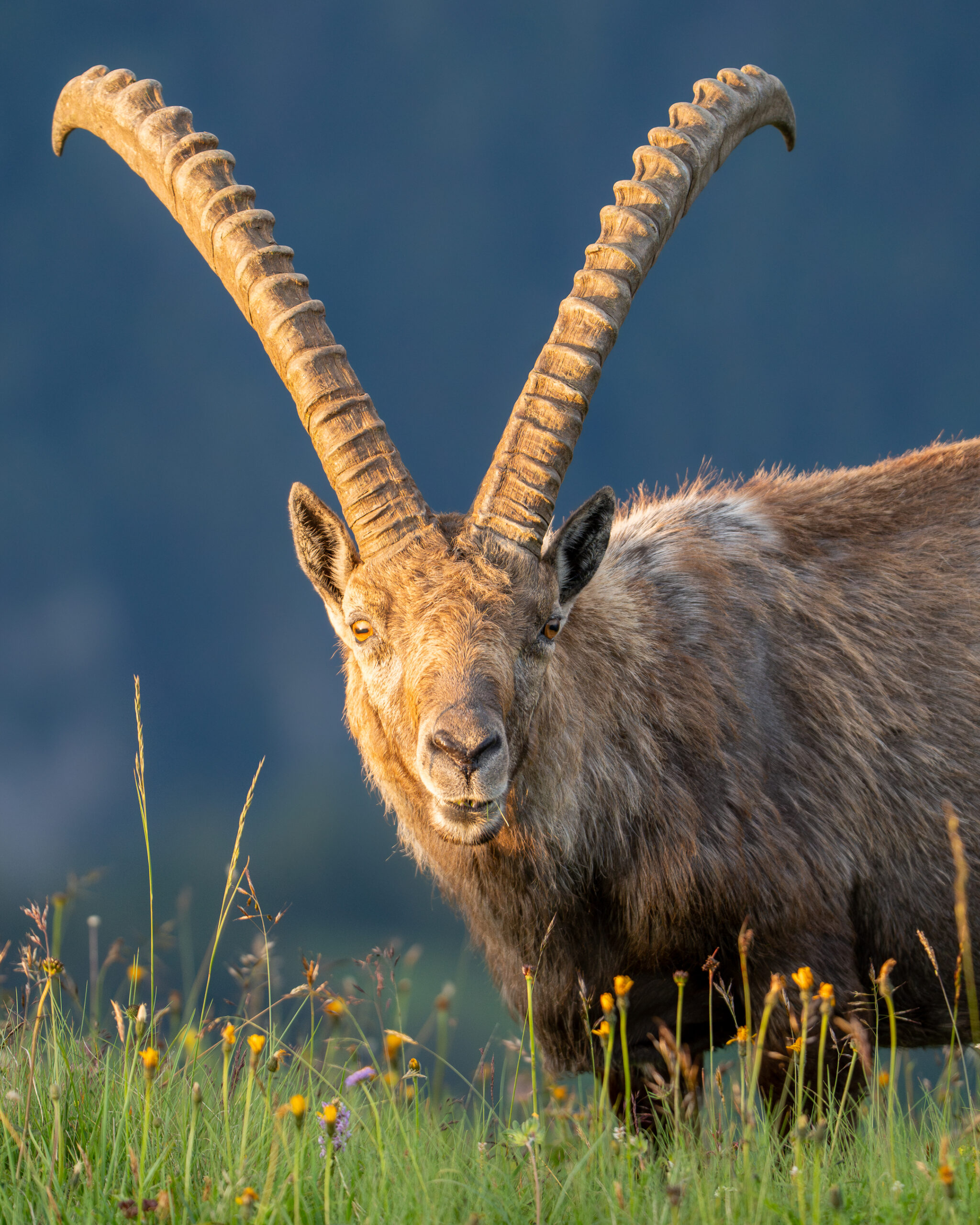
Alpine Ibex (Capra ibex) // 1/1000 sec | f/6.3 | ISO 1600 | 400 mm; 1/800 sec | f/6.3 | ISO 2500 | 400 mm
Some of the animals are in direct sunlight, which of course I want to take advantage of. I have never taken such atmospheric pictures before.
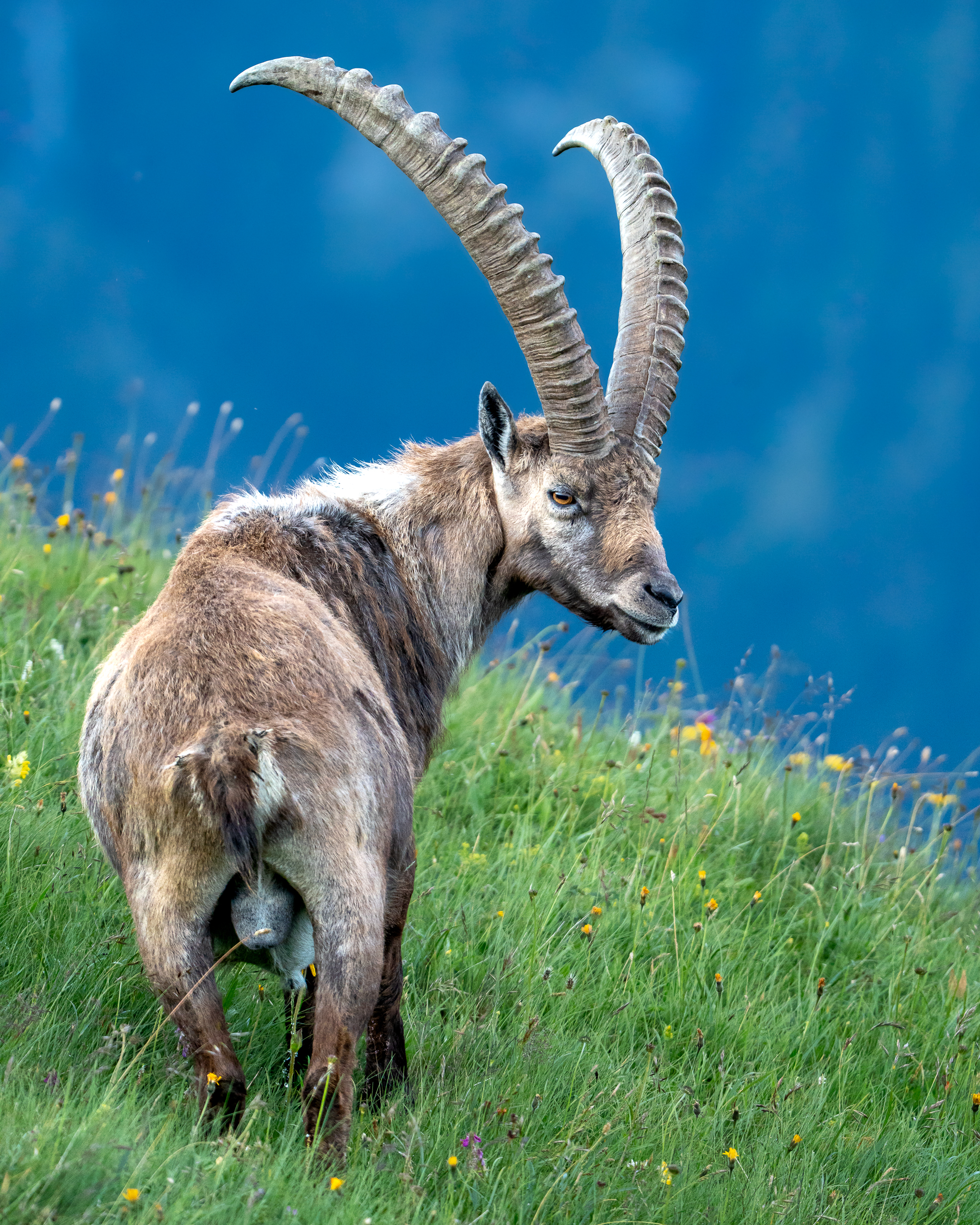
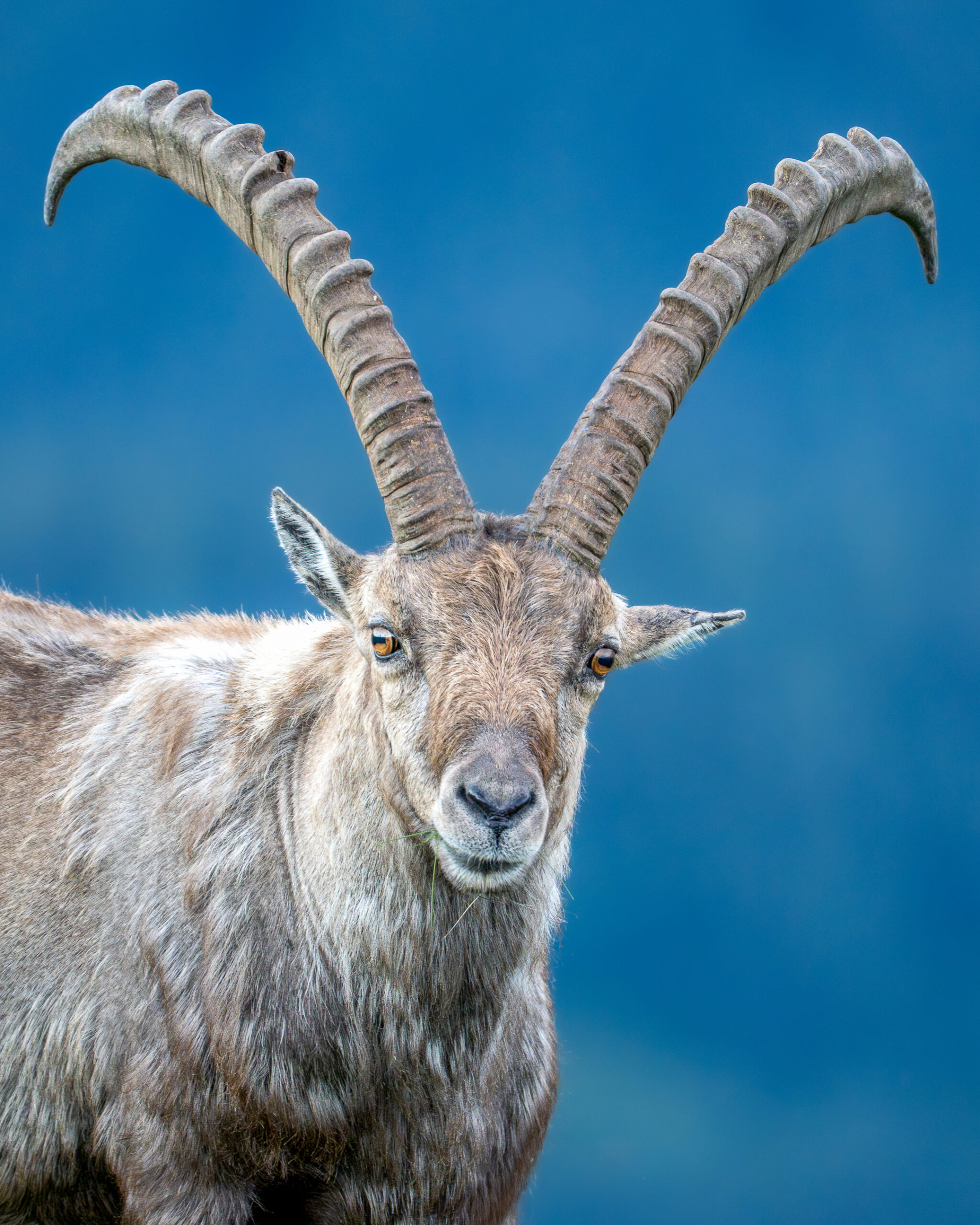
Alpine Ibex (Capra ibex) // 1/800 sec | f/6.3 | ISO 3200 | 405 mm; 1/800 sec | f/6.3 | ISO 4000 | 600 mm
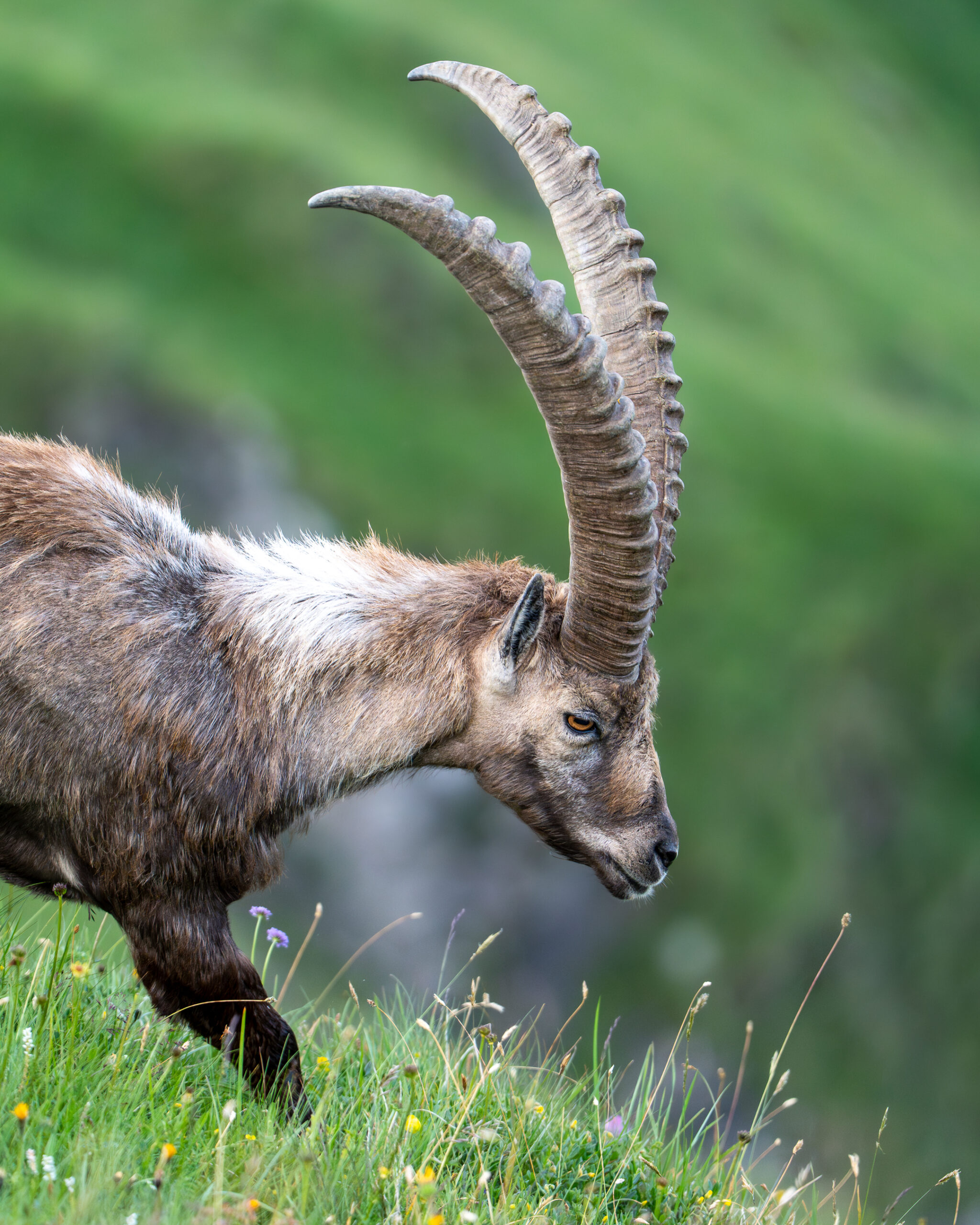
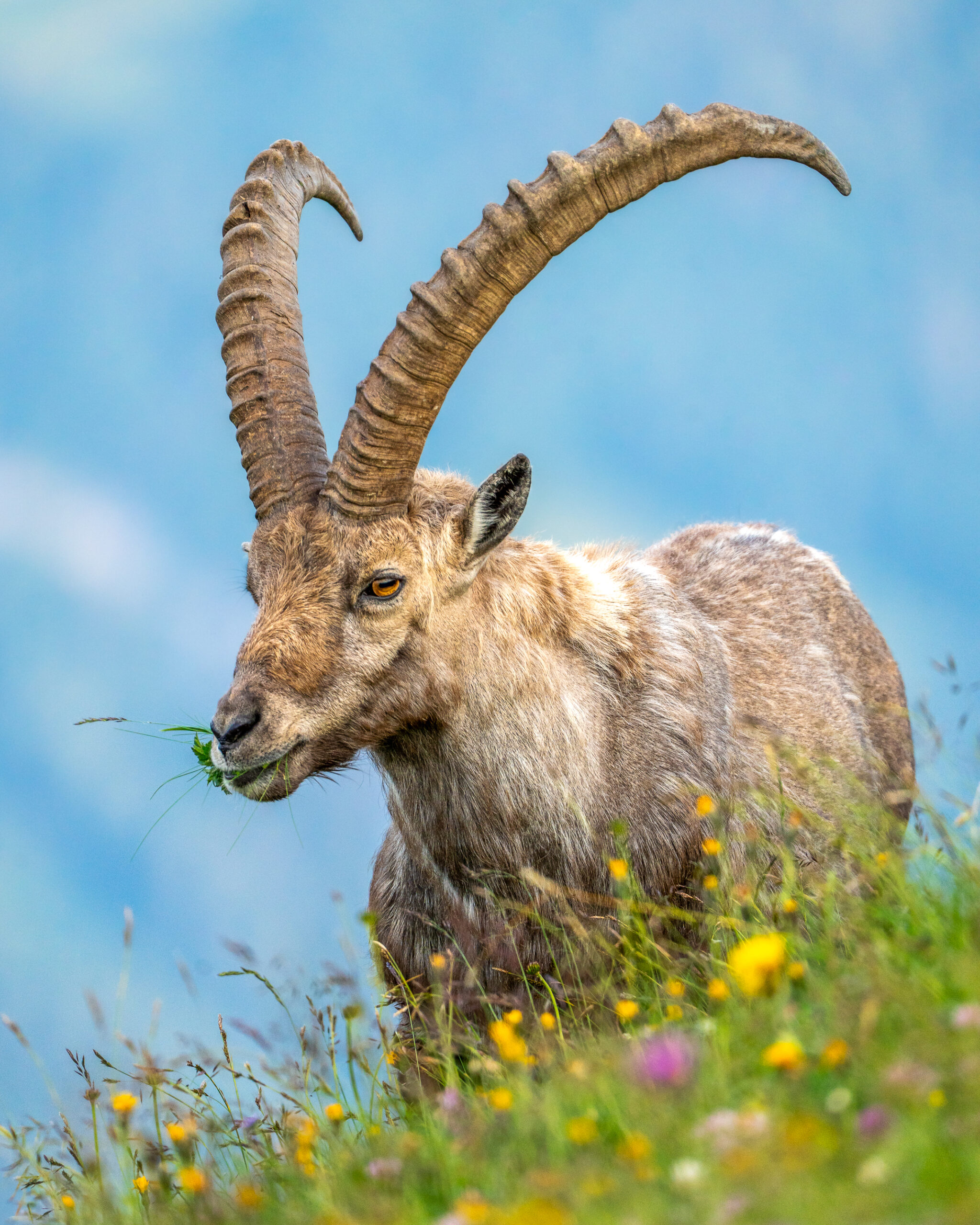
Alpine Ibex (Capra ibex) // 1/800 sec | f/6.3 | ISO 4000 | 425 mm; 1/800 sec | f/6.3 | ISO 1250 | 600 mm
Before this morning I had mostly only been able to photograph ibex in partial shade. Today I deliberately try it again, because many animals stay exactly there. The light in partial shade is somewhat weaker, but the effect of the picture is clearly different from that in direct sunlight.
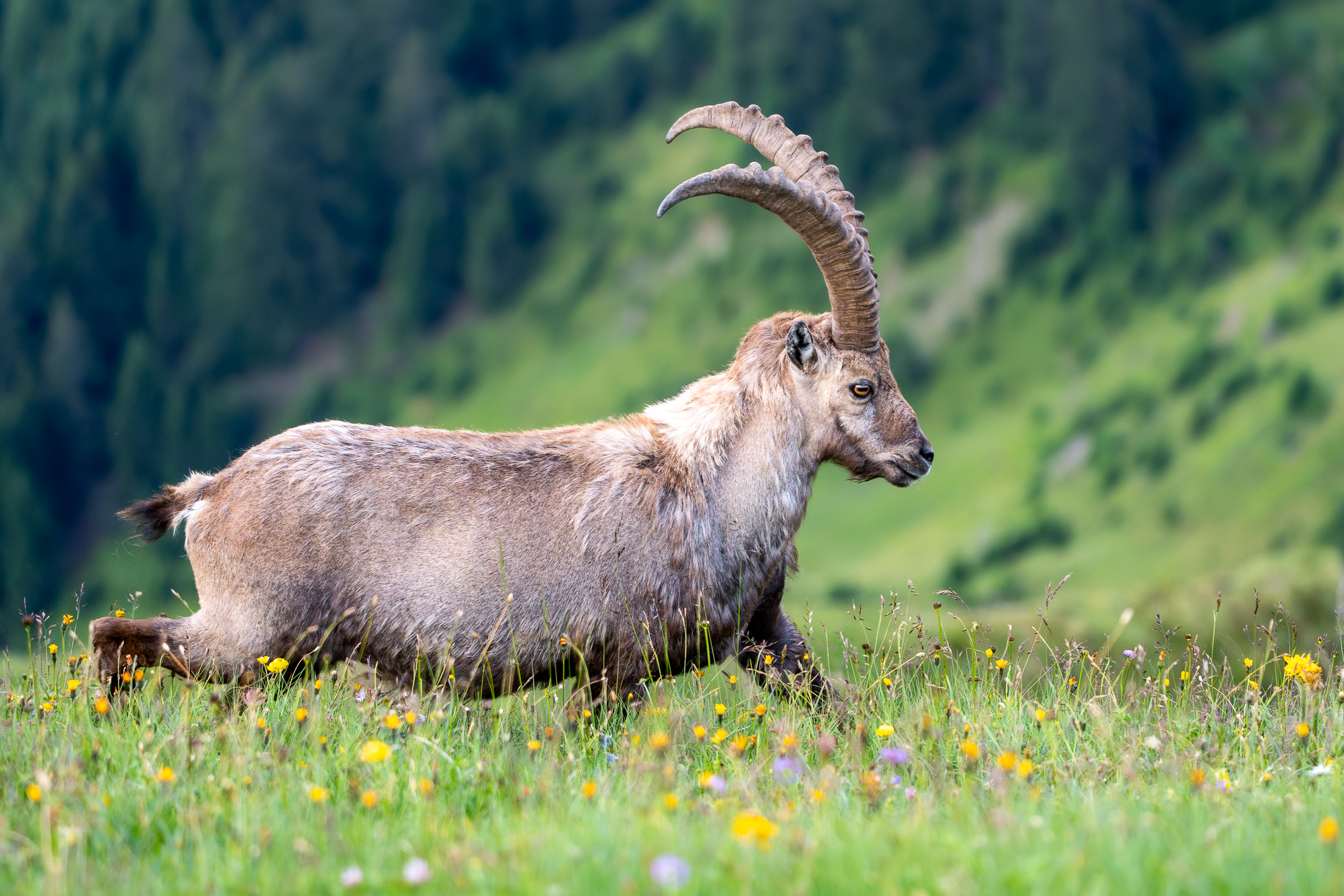
Alpine Ibex (Capra ibex) // 1/640 sec | f/5.6 | ISO 3200 | 260 mm
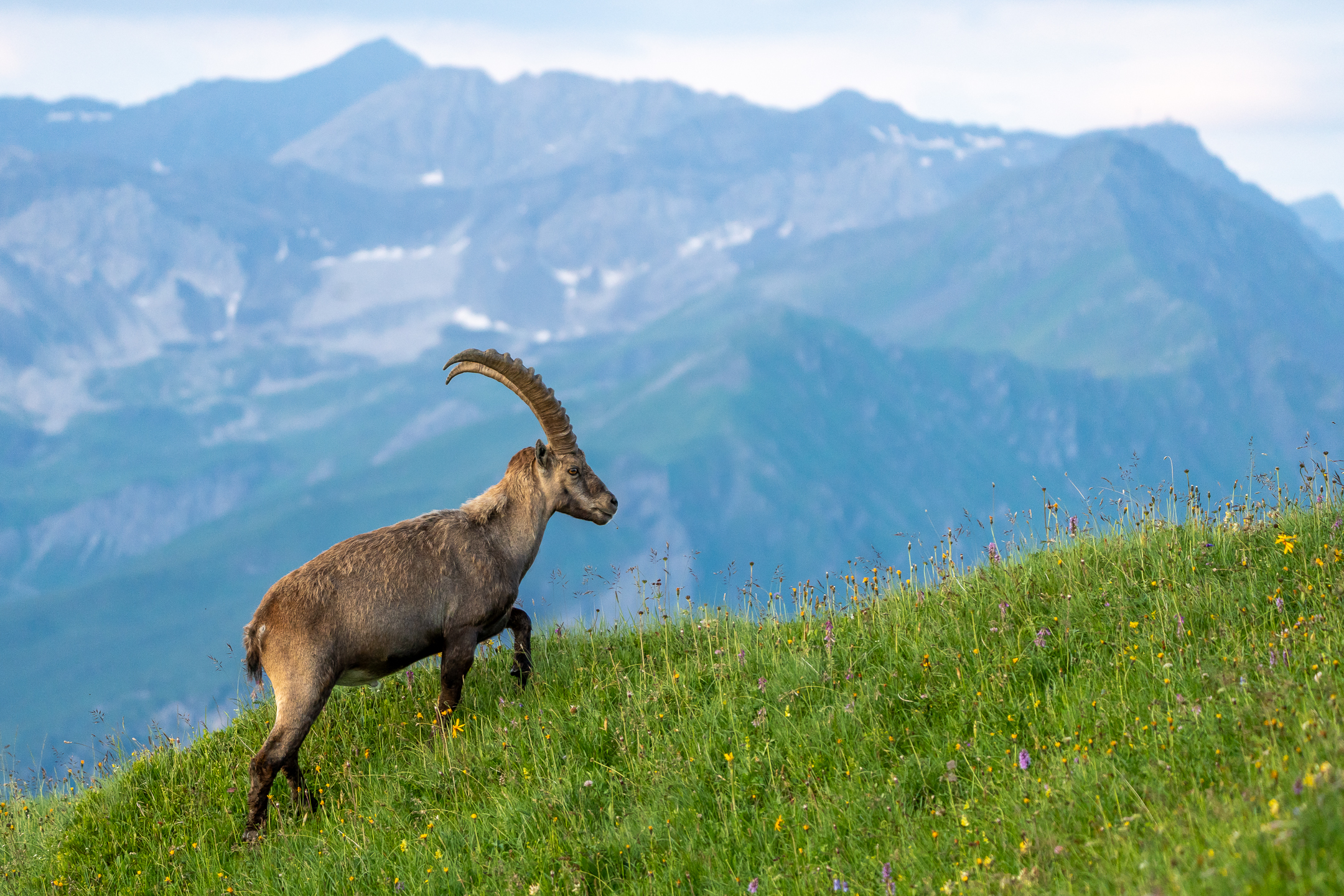
Alpine Ibex (Capra ibex) // 1/1000 sec | f/5.6 | ISO 1600 | 200 mm
I experiment with different compositions – once with the mountain forest in the background, another time with a mountain range. When the light gets harsher, I try a few video shots. For this I use my macro tripod, which is only partly suitable, and mount my disproportionately large lens on it. In the past my video footage was often shaky – so a stable tripod is essential here, unless you have a very steady hand. I really enjoy watching the ibex graze and trying my hand at videography. It isn’t quite that easy, though. Again and again I have difficulty focusing on the animals, and often they move too hastily for me to keep up with the camera.
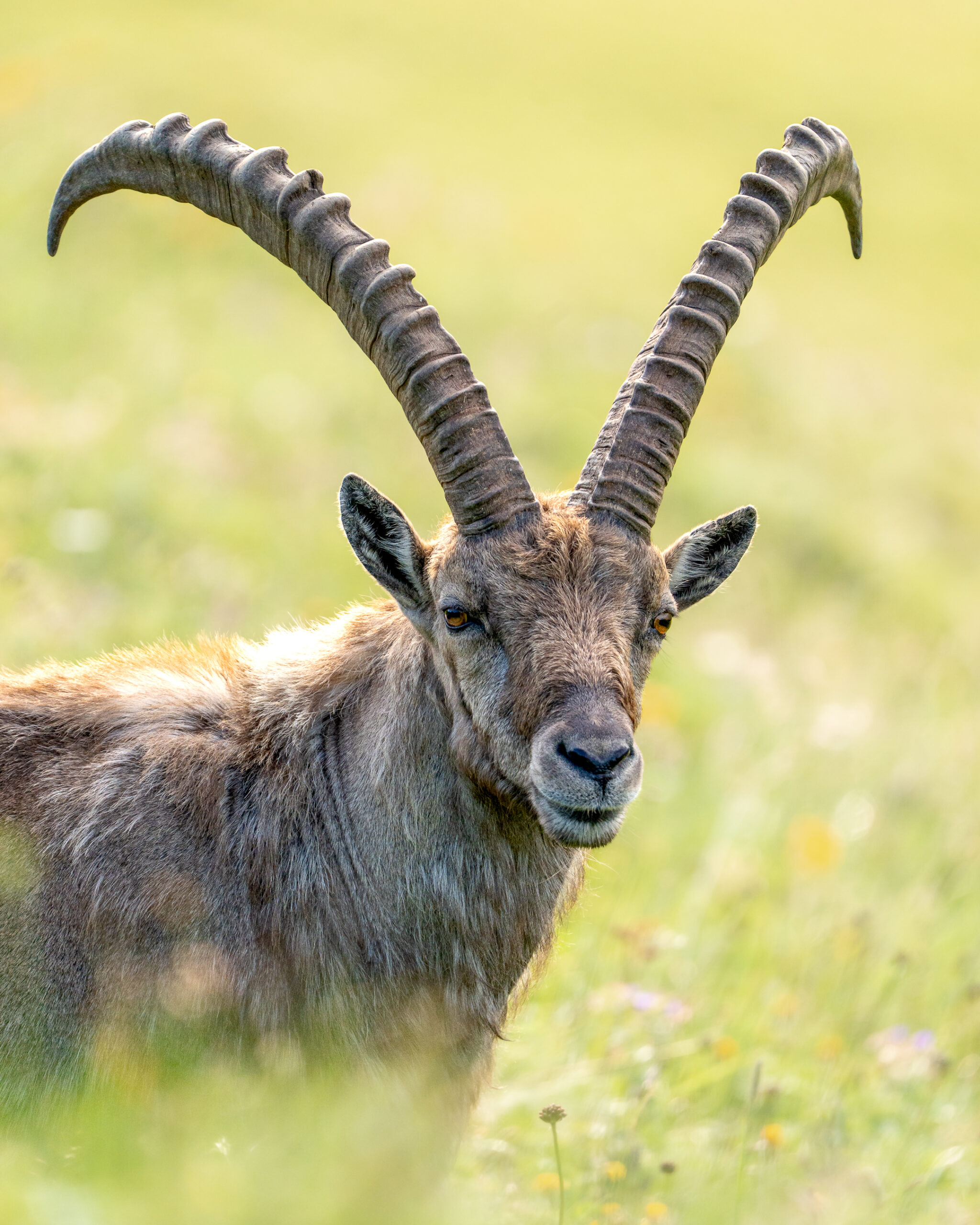
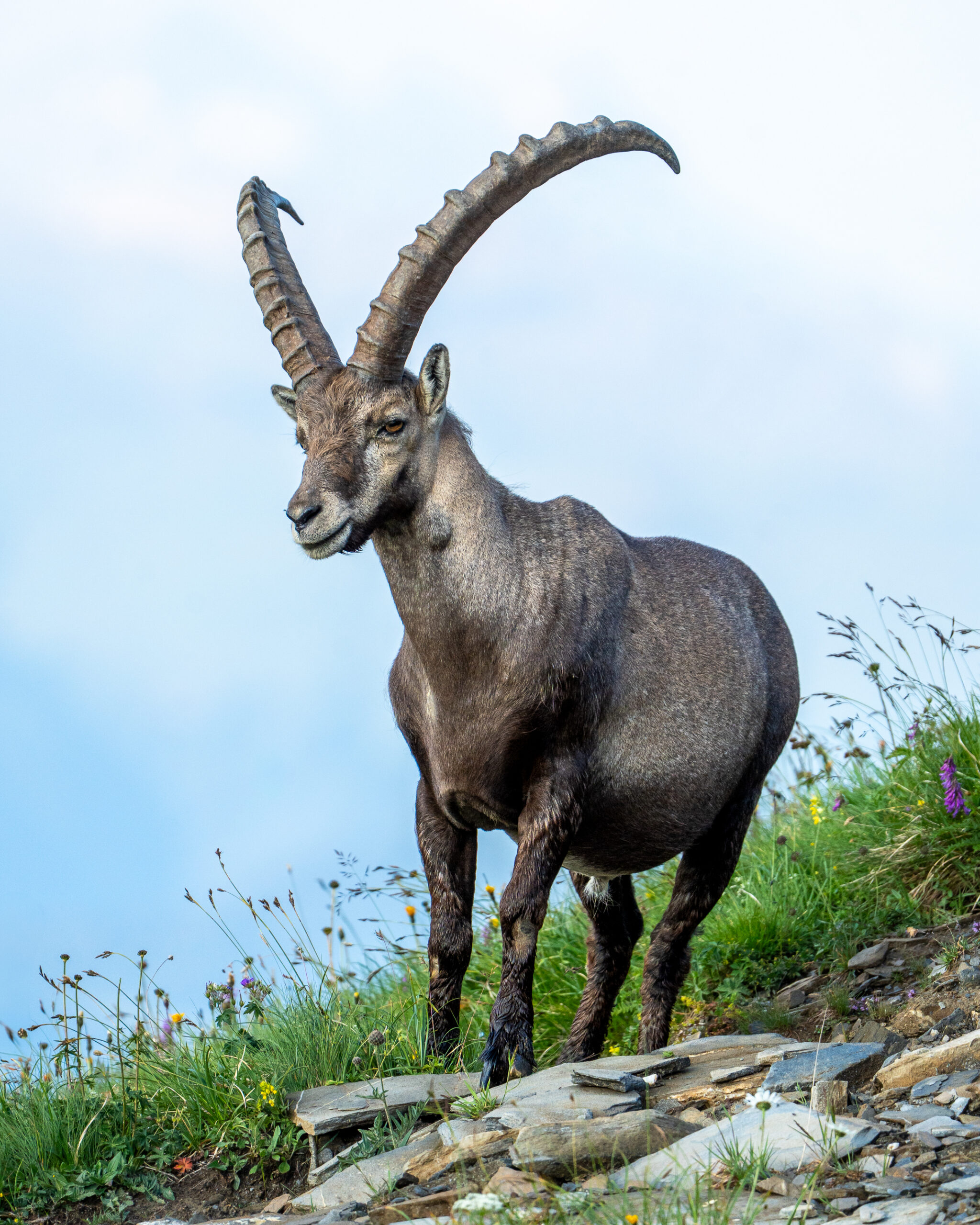
Alpine Ibex (Capra ibex) // 1/1250 sec | f/6.3 | ISO 1600 | 540 mm; 1/1000 sec | f/6.3 | ISO 1000 | 550 mm
Every now and then – especially when the light becomes more diffuse again – I return to photography, this time in the tall grass to create a yellow-green background in the picture. At some point hunger makes itself felt. I move a little away from the animals to have a quick snack at my backpack. The light is now too harsh anyway to take appealing photos. The break doesn’t last long, however, because a larger cloud moves in front of the sun – and in the distance I spot an ibex on a rock, which of course I don’t want to miss. So I pack up my equipment and set off.
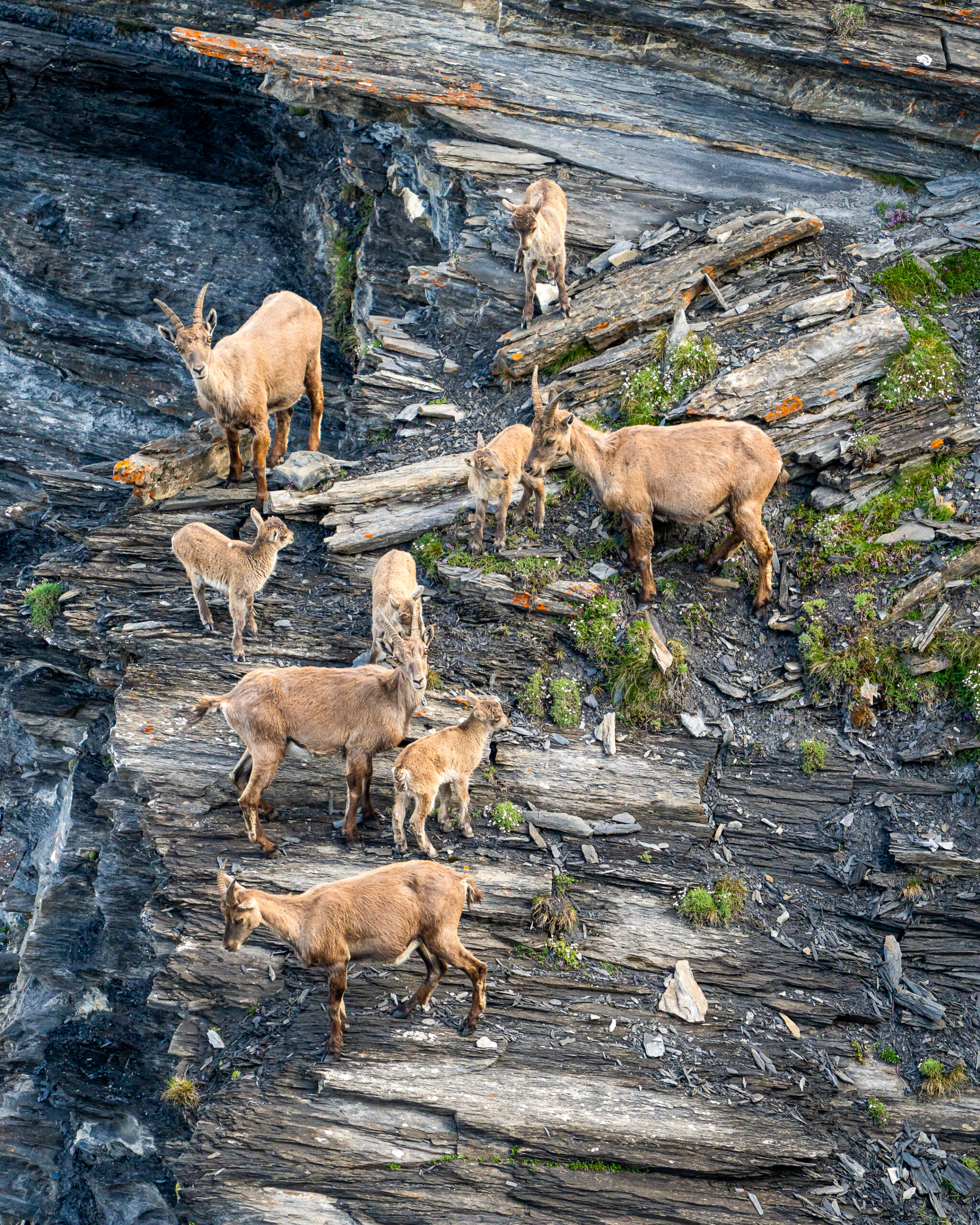
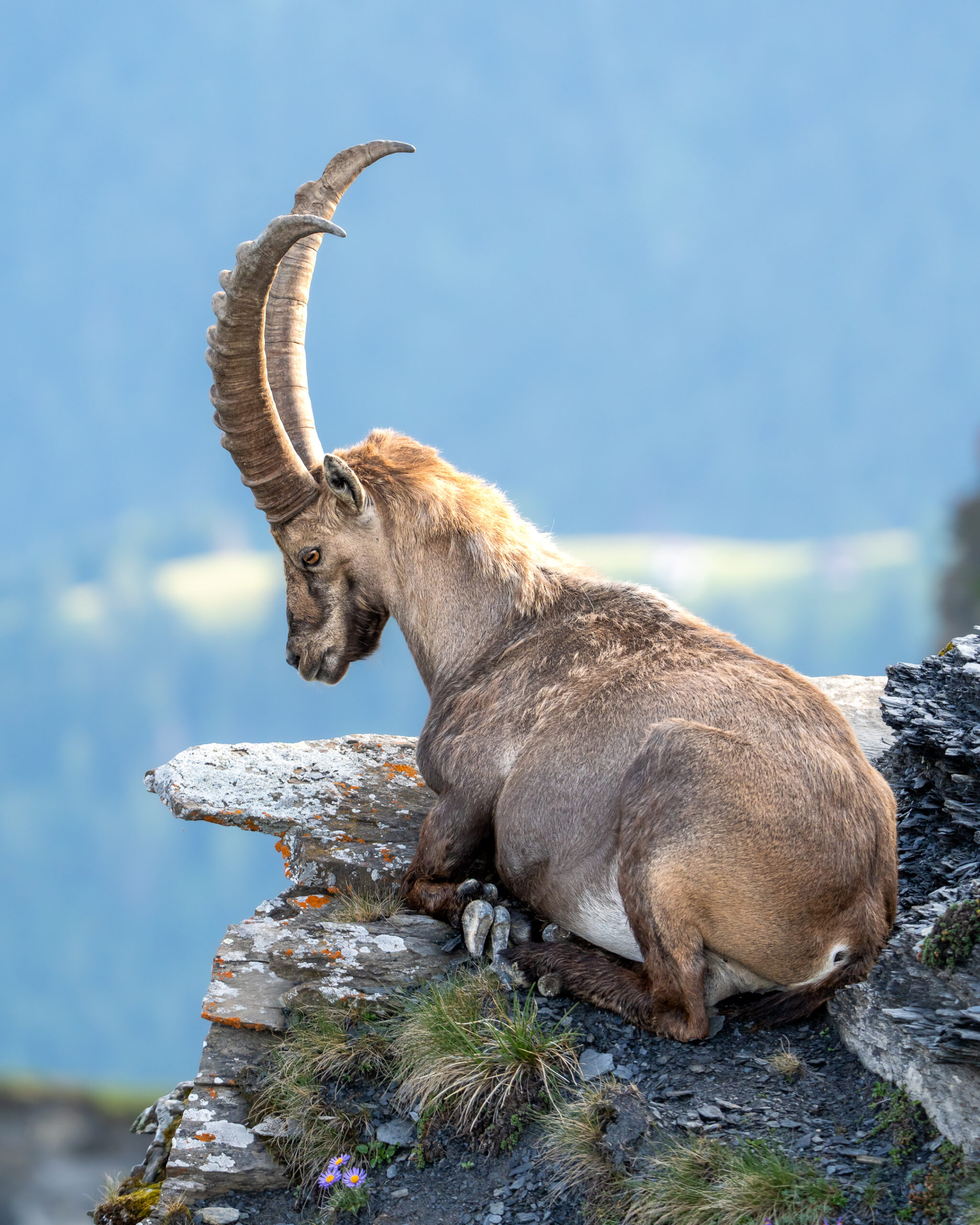
Alpine Ibex (Capra ibex) // 1/1000 sec | f/6.3 | ISO 2000 | 600 mm; 1/1000 sec | f/6.3 | ISO 2000 | 330 mm
Then I approach the animal further and take a classic portrait, until I spot three female ibex with five kids on a distant rock. They are much shyer and always keep a close eye on me. Soon I end my photo session and watch as the last ibex return from grazing and withdraw into the steep rock faces to spend the rest of the day in the cool shade.
On the way back I admire – as always – the beautiful alpine flowers and the many butterflies. Now I still have a long bike ride ahead of me and time to reflect on the morning and think about this blog post.
I often ask myself: what would the Alps be without the ibex? I would certainly miss this fascinating inhabitant of the mountains. Then I remember that the ibex was almost wiped out in the past by intensive hunting. We can consider ourselves lucky that this species has not disappeared completely. And hopefully we will still be able to admire the ibex in the future.
Leave a Reply