The days are getting longer and longer. On this evening at the end of May, the sun won’t set until after nine o’clock. Summer is approaching and the temperatures are already pleasantly warm. Full of anticipation, I set off for a new location. A few days ago I was able to watch some brown hares in a field. And that is exactly where I am cycling now, hoping that they will appear again. As I approach the field, I suddenly notice a roe deer grazing in front of me. Amazing that I spot it before it notices me. Normally wild animals notice people from a greater distance and flee immediately. This time I must have been moving particularly quietly and inconspicuously. Unfortunately, at that moment I don’t have my camera at the ready. Carefully I take a few steps backwards and hide behind a bush.
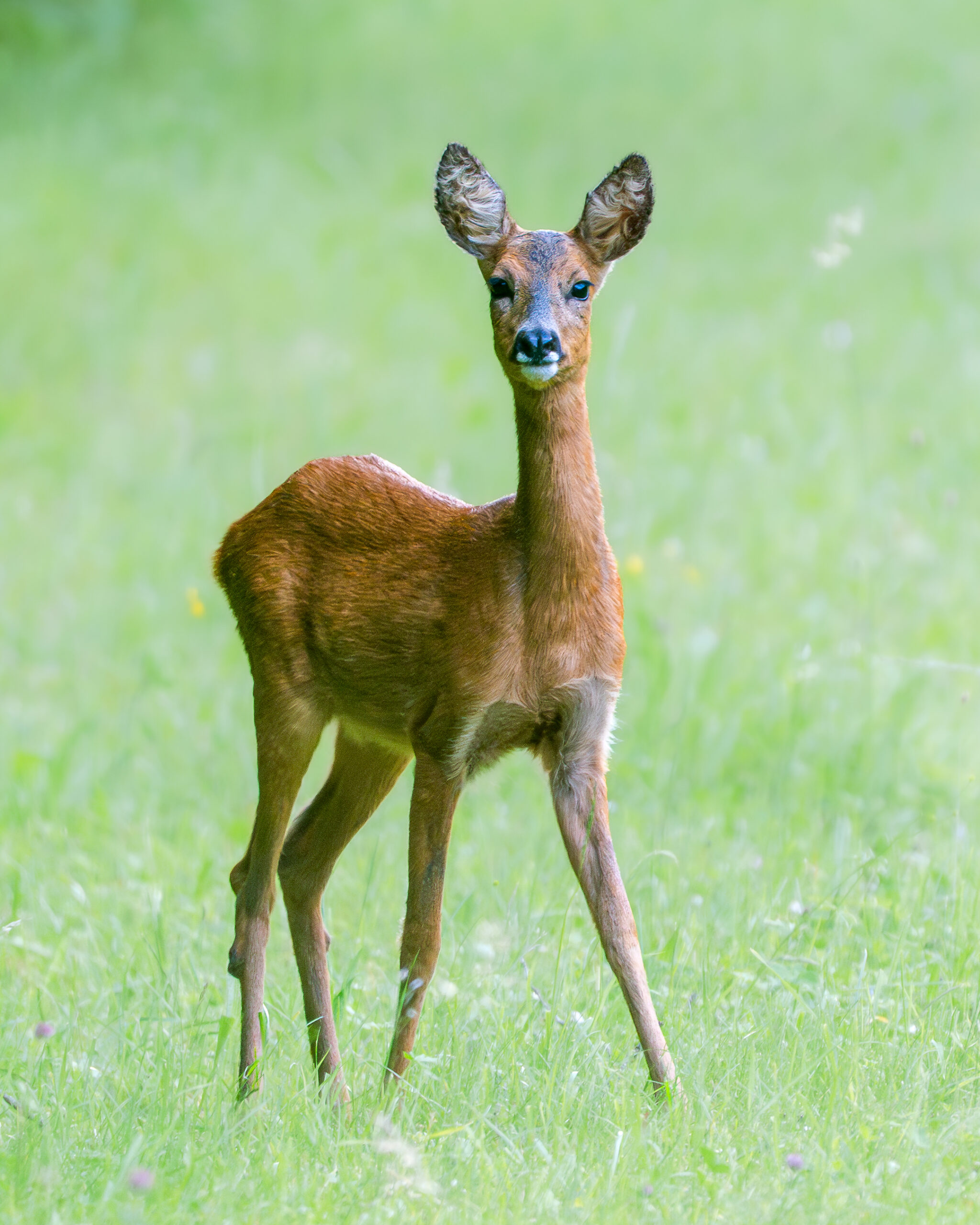
Western Roe Deer (Capreolus capreolus) // 1/640 sec | f/6.3 | ISO 3200 | 600 mm
As quietly as possible I take the camera out of my backpack – hoping that the roe deer has not already disappeared. But I am lucky. When I lean slightly out of the bush, I can see it still contentedly eating the fresh green grass. I approach slowly, step by step, and can take some beautiful pictures. After a while the deer does spot me. It looks curiously in my direction, seems to size me up – and finally withdraws leisurely into a nearby patch of forest.
I walk on and look for a suitable spot where I can settle down to wait for the brown hares. It is not late yet, but the sun is slowly approaching the horizon behind the mountains. Now the active time of the brown hares begins. They can be seen particularly often about two hours before sunset or at sunrise.
I lie low on the ground among dense undergrowth at the edge of the forest, next to the field. The camera lies ready in front of me. And now the long wait begins. In nature photography it is often these moments – patience, perseverance and a little luck – that decide whether a picture succeeds.
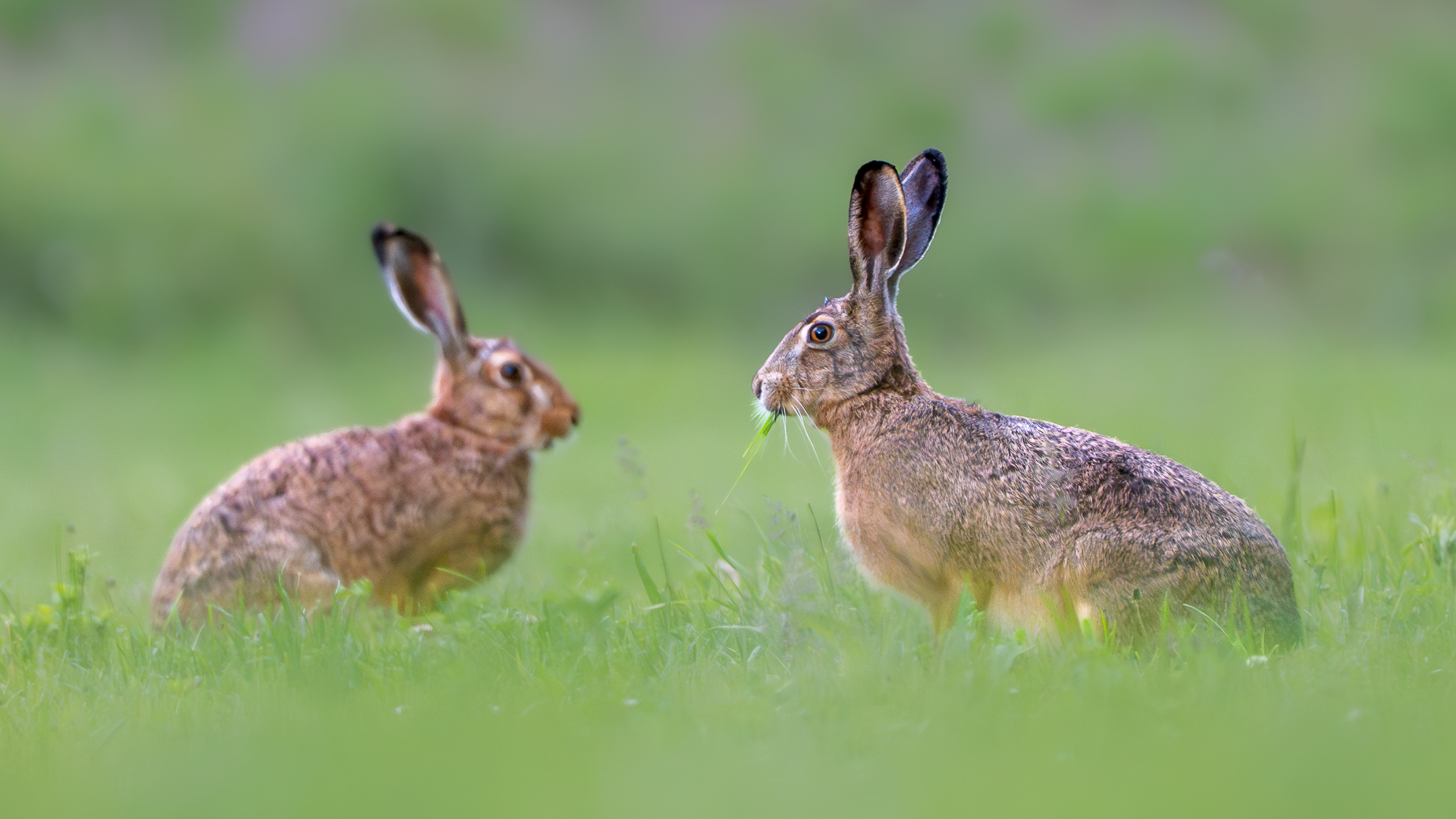
Brown Hare (Lepus europaeus) // 1/800 sec | f/6.3 | ISO 4000 | 600 mm
After a while, during which countless mosquitoes torment me, I dare to stick my head a little further out of the bush. And there – completely surprisingly and unexpectedly – two brown hares are sitting right in front of me in the field. At first they don’t notice me. But when I turn the camera in their direction, I realise that they spotted me long ago. They stay calm, though – on the contrary, they seem curious.
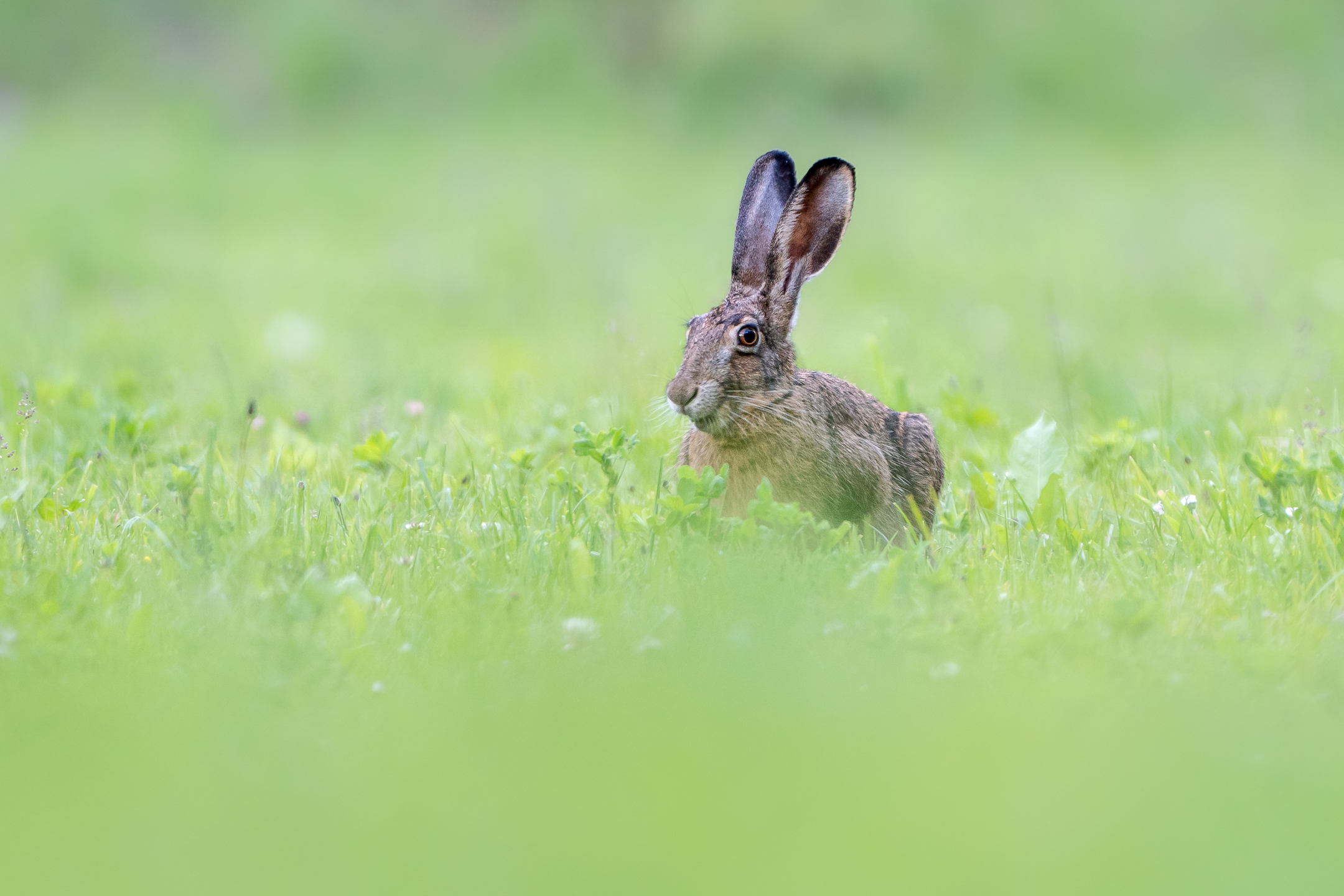
Brown Hare (Lepus europaeus) // 1/125 sec | f/6.3 | ISO 1000 | 600 mm
One of the hares pricks up its ears and listens attentively. Can it hear my breathing?
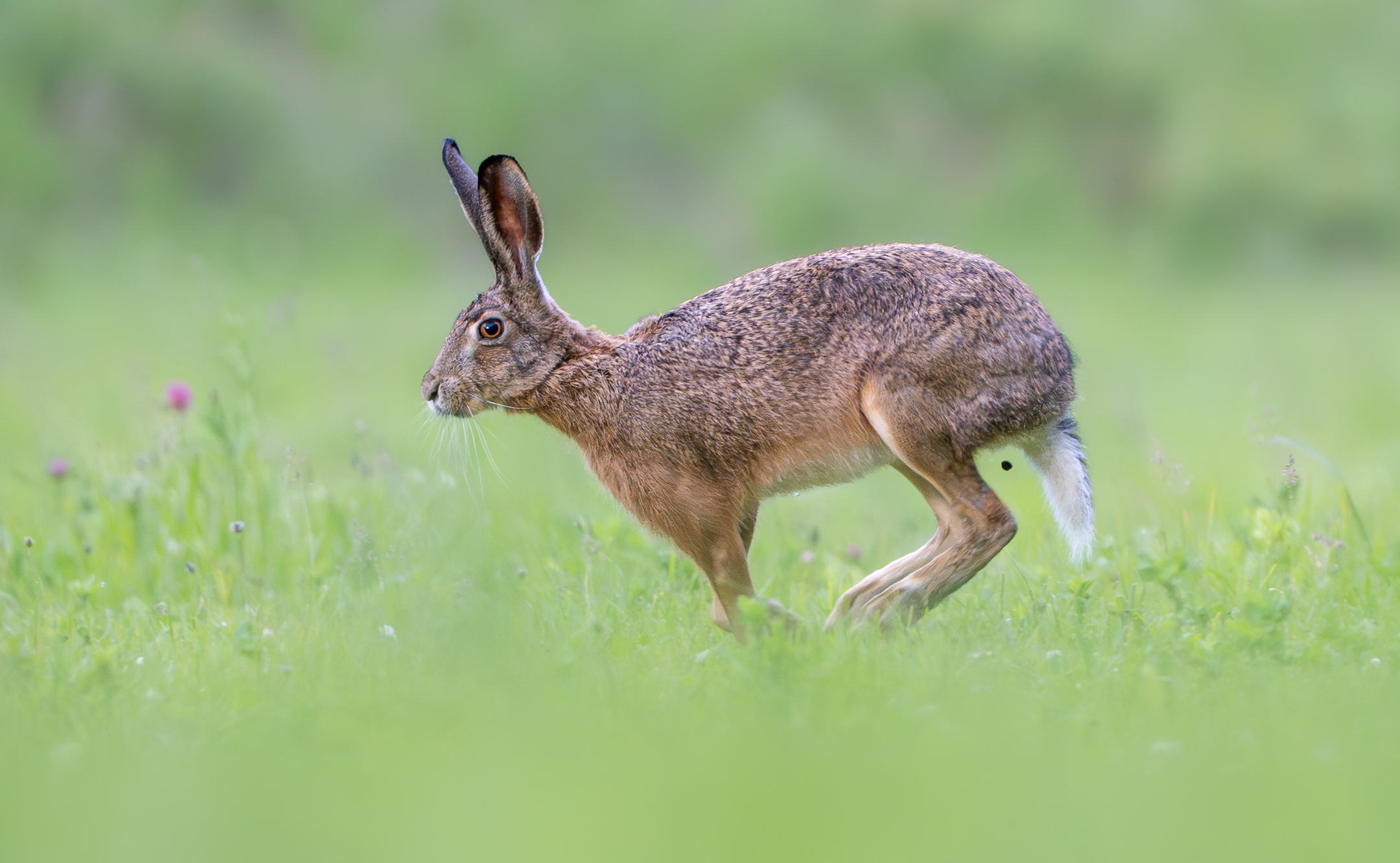
Brown Hare (Lepus europaeus) // 1/800 sec | f/6.3 | ISO 4000 | 600 mm
Finally it hops a few steps towards me. When it recognises my face, it seems tense for a moment, but does not appear to see me as a threat. Almost carefree, it lets itself be photographed. Again and again the two glance at me briefly, probably to make sure nothing has changed.
It is fantastic to be able to watch this rather rare species in my home region. In recent years brown hares have spread more widely in Switzerland again – a pleasing trend after years of decline.
Brown hares prefer open landscapes such as fields, meadows and farmland. In Switzerland they were severely endangered for a long time – intensive agriculture, monocultures and the loss of refuges had taken their toll. Meanwhile, structurally rich landscapes and targeted protection measures are helping the populations to recover slowly. Nevertheless, the brown hare remains an endangered species and still depends on consideration and protection.
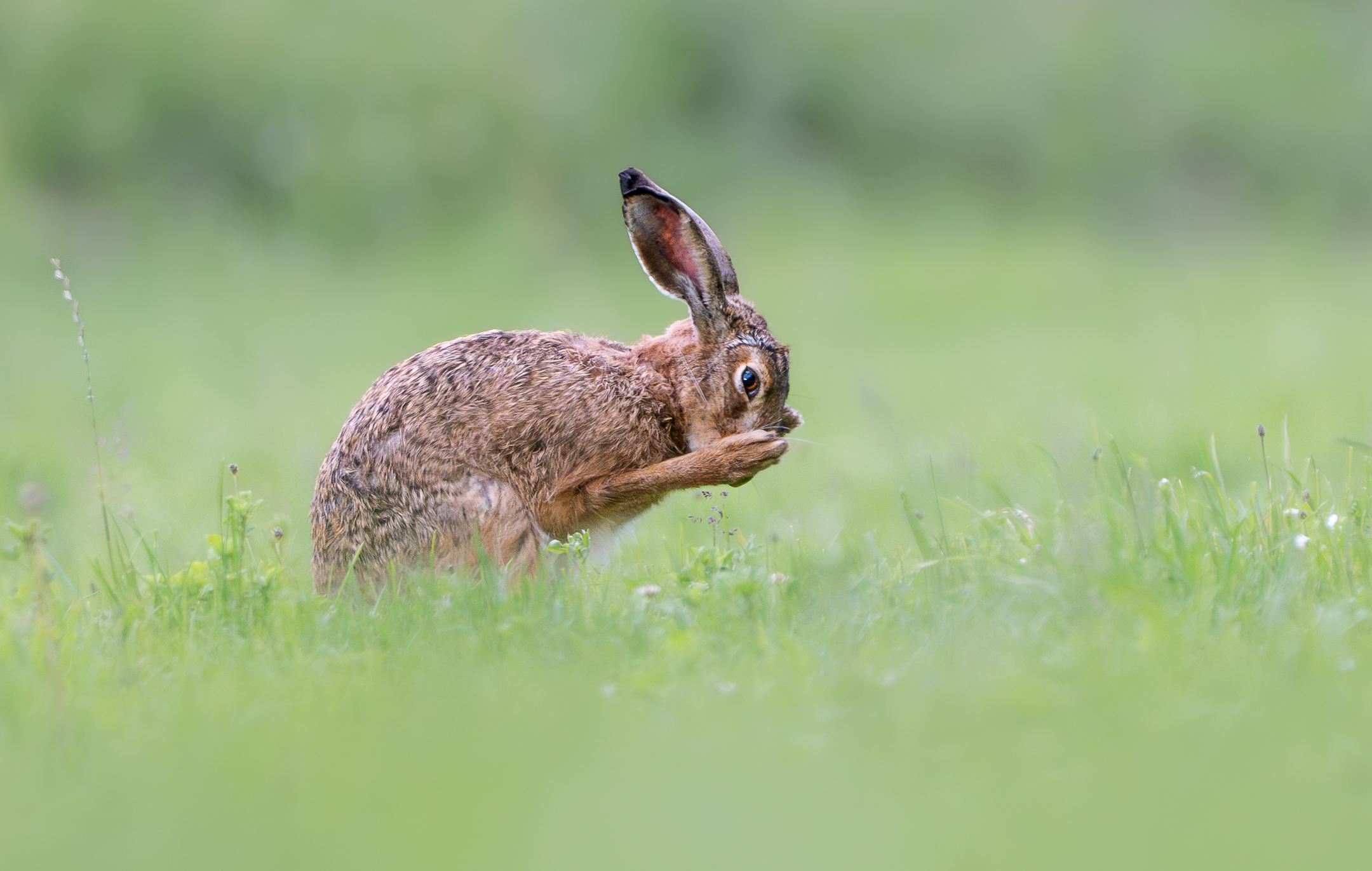
Brown Hare (Lepus europaeus) // 1/500 sec | f/6.3 | ISO 2500 | 600 mm
One of the hares rubs its face with its front paws – perhaps to clean itself or to scratch an itchy spot. I can capture this unique moment with my camera.
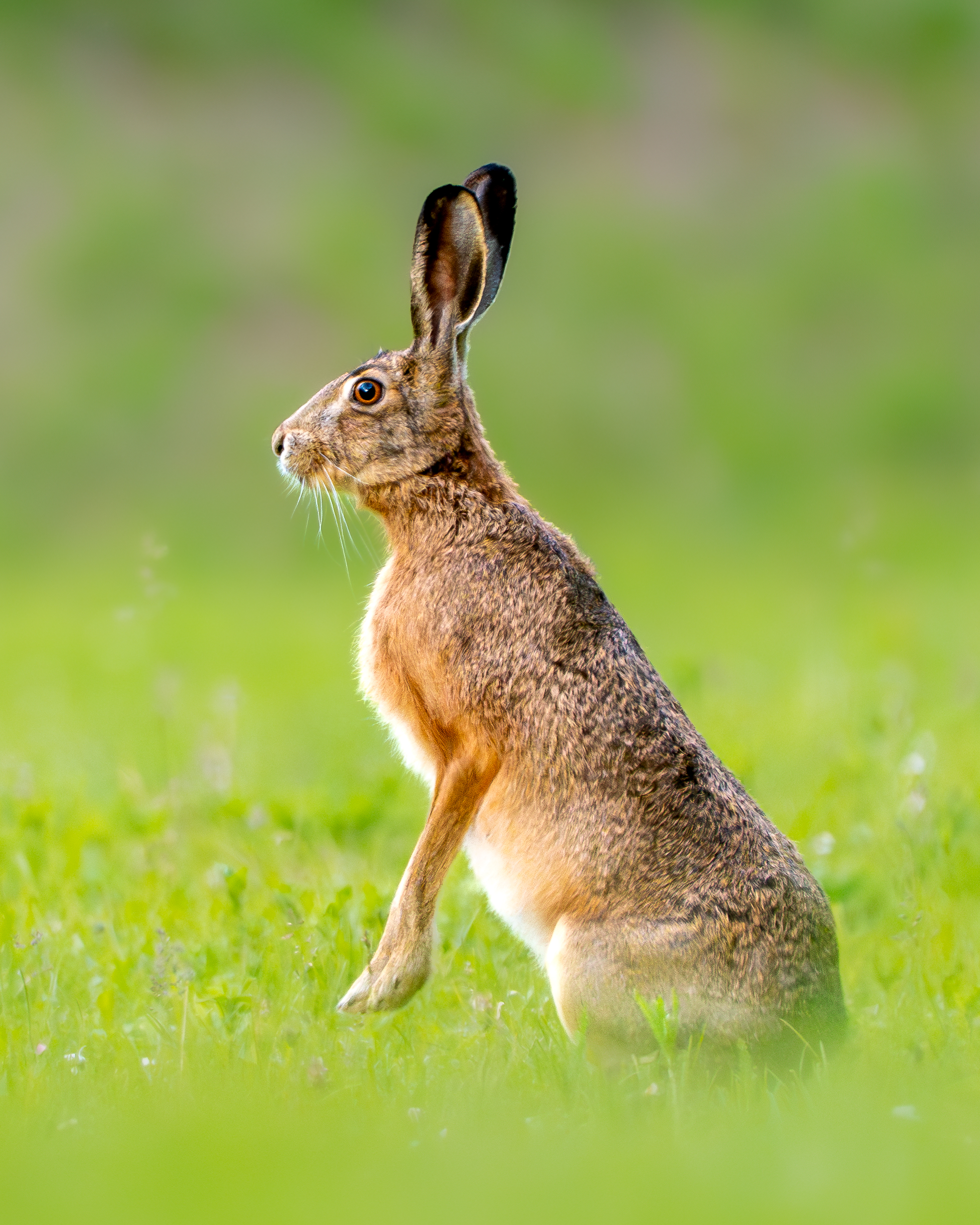
Brown Hare (Lepus europaeus) // 1/800 sec | f/6.3 | ISO 4000 | 600 mm
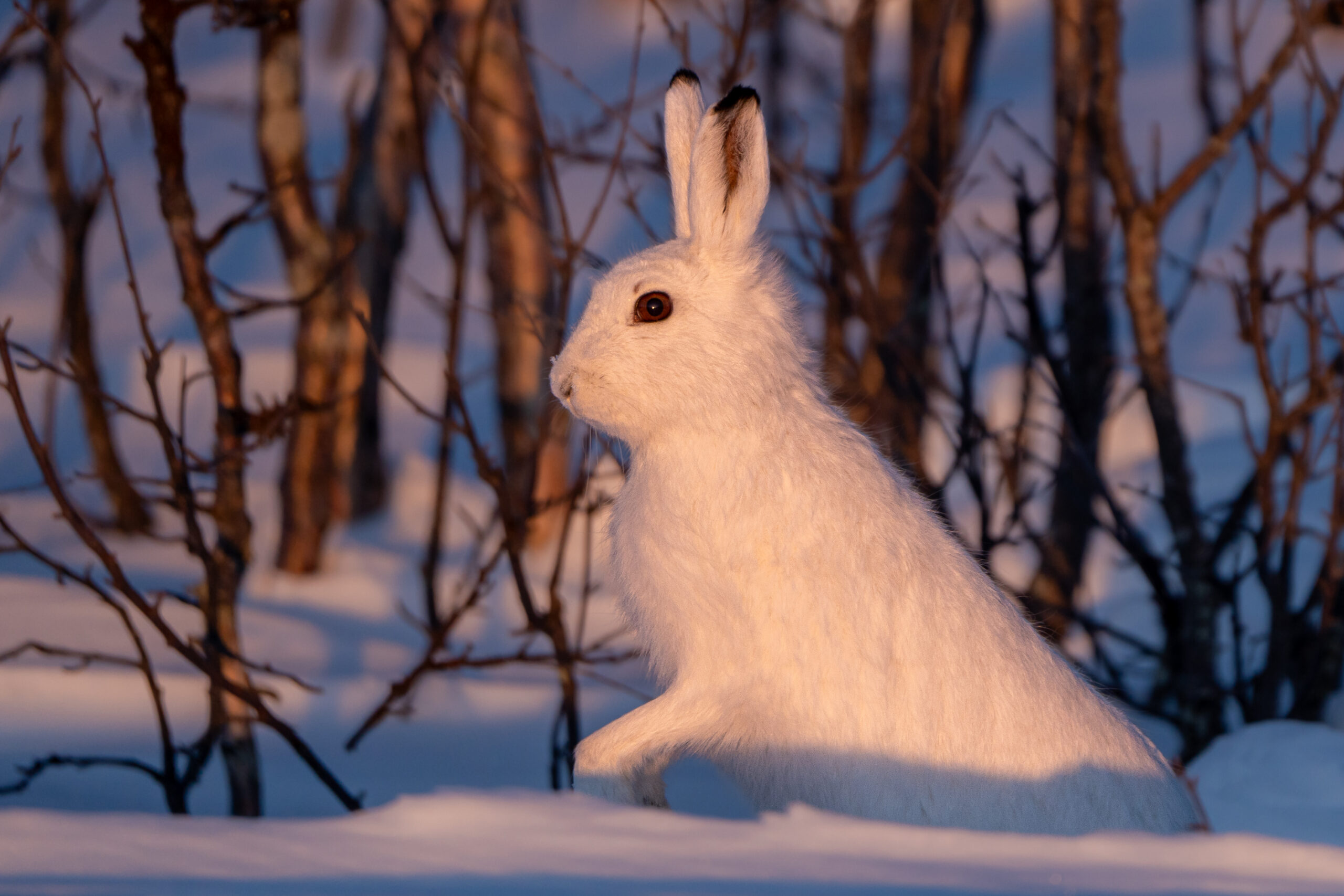
As with all the photos this evening, the ISO values are mostly 4000 – rarely below 1000 – due to the dense clouds, which let little light through. But before the sun finally disappears behind the mountains, it breaks through the cloud cover once more and bathes the field in beautiful evening light. One of the hares seems almost to glow in the golden light.
As if that were not enough, it suddenly stands up on its hind legs and poses one last time before slowly disappearing into the twilight. Experiences like this are unforgettable – and being able to capture them with my camera is priceless to me.
Leave a Reply