Aperture
Perhaps you have already noticed when taking photos that some pictures have a beautifully blurred background, while in others everything is sharp from front to back. The reason for this often lies in the aperture, a small but rather decisive part of your camera.
What is the f-number (f/…)?
The aperture is an opening in the lens. Light falls into the camera through this opening. How wide it is open is determined by the so-called f-number. The smaller this number, the wider the aperture is open – and the more light comes through. The larger the number, the smaller the opening – and the less light comes in.
At first this seems a little back to front. But if you remember that a small number stands for a large opening, you have already understood the most important part. A value like f/2 means a very wide aperture. A value like f/11 is already fairly closed. You can easily try this out by simply setting different apertures and seeing how the picture changes. [1]
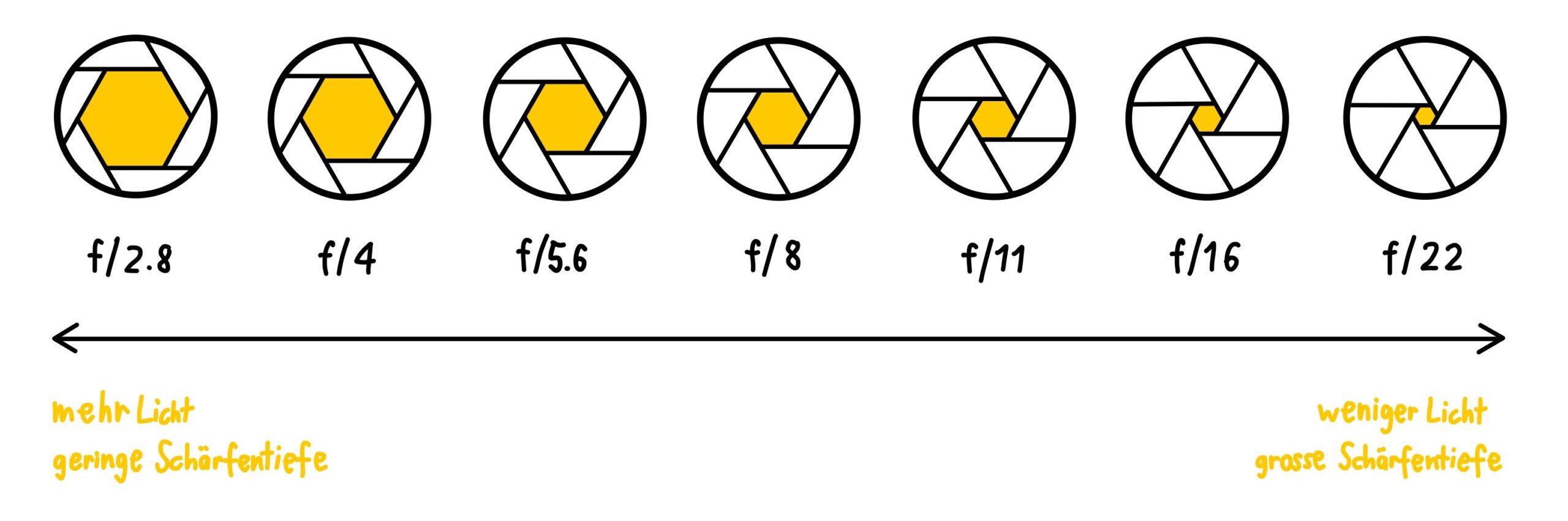
Apertures from f/2.8 to f/22: the smaller the f-number (f-stop), the wider the aperture is open.
Wide vs. closed aperture
With a wide aperture your picture becomes brighter because a lot of light hits the sensor. At the same time you get that beautiful blurred background you probably know from portraits. Your subject is sharp, everything around it looks soft and calm.
If the aperture is more closed, your picture becomes darker overall. In return, more of the picture is sharp. This is useful when you photograph a landscape or a scene in which the foreground and background should be clearly recognisable. [2] [3]
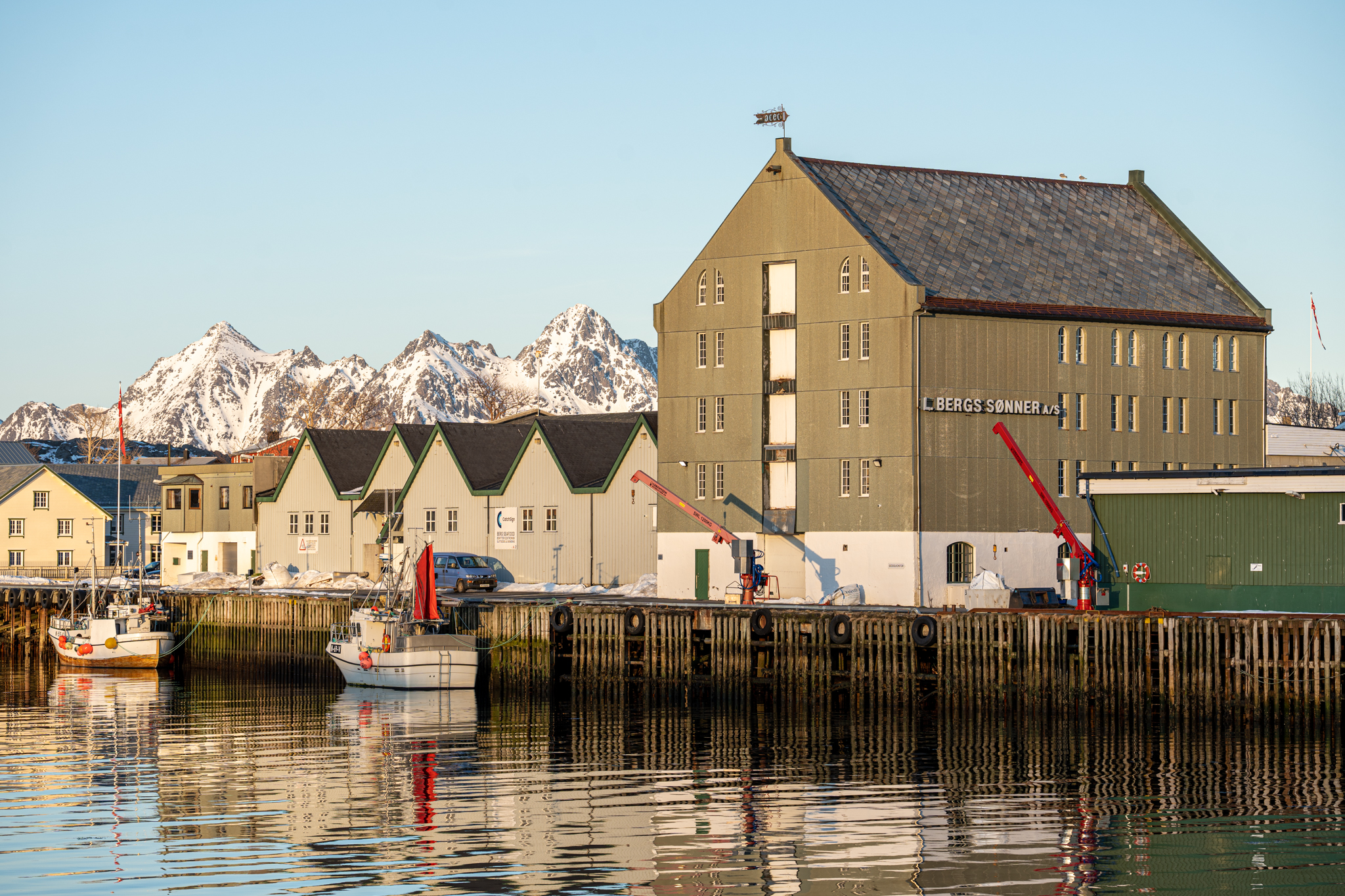
Landscape: with a rather closed aperture everything stays sharp.
f/6.3 | 1/125 sec | ISO 100 | 105 mm
Sony a7 IV | Sigma 105/2.8 DG DN Macro Art
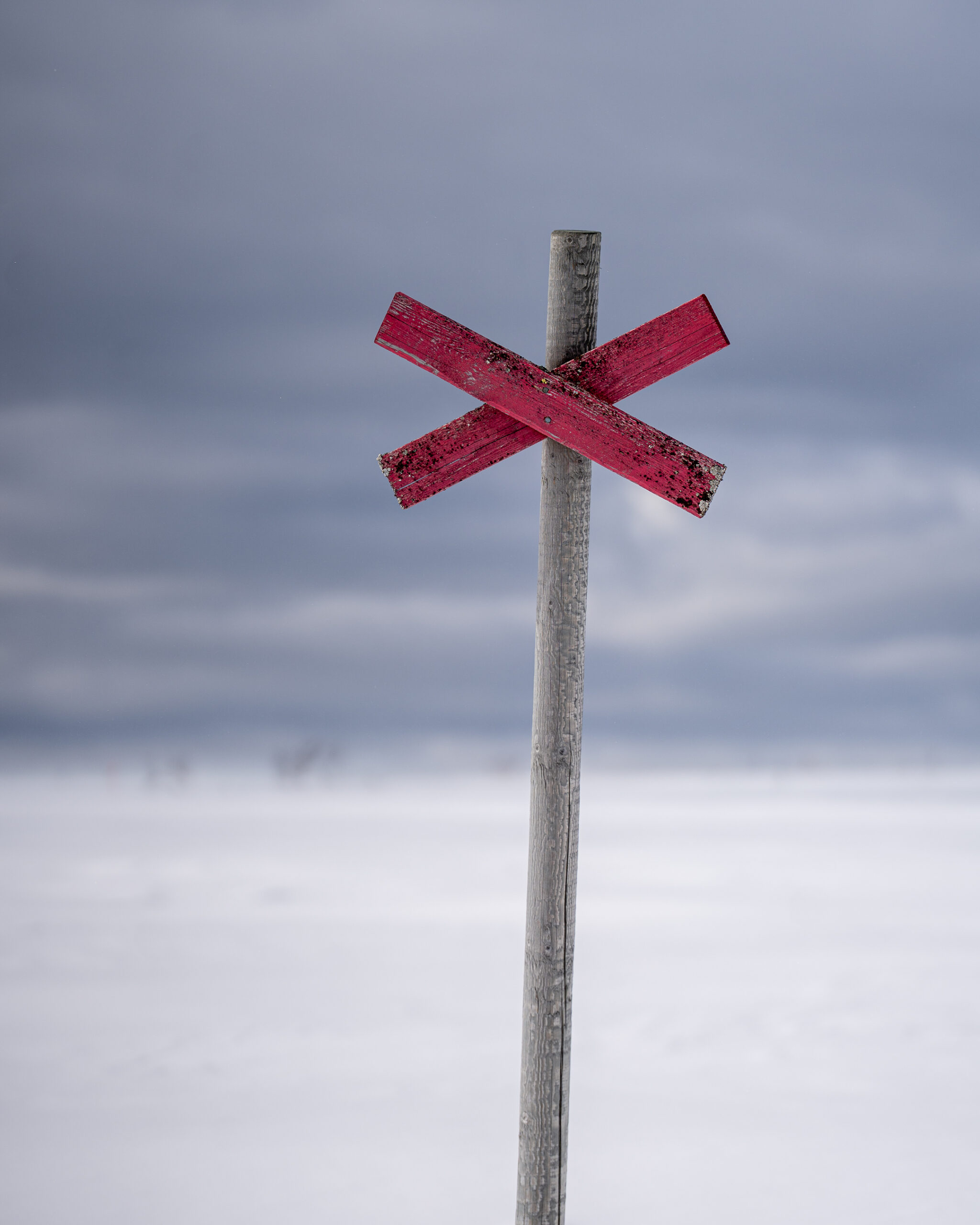
Portrait: with a wide-open aperture the background becomes blurred.
f/2.8 | 1/5000 sec | ISO 100 | 105 mm
Sony a7 IV | Sigma 105/2.8 DG DN Macro Art
How the aperture affects depth of field
The wider the aperture is open, the smaller the area of the picture that really appears sharp. This is called depth of field. If, for example, you photograph with an aperture of f/2, only a very small part will be sharp, usually exactly where you focus. The rest gently dissolves into blur. This can look very atmospheric, especially with people or details.
If you close the aperture, i.e. photograph with values such as f/8 or f/11, the area that is sharp becomes larger. This gives you a picture that is clear from front to back. Ideal if you want to show lots of detail or work with a wide angle. [2] [3]
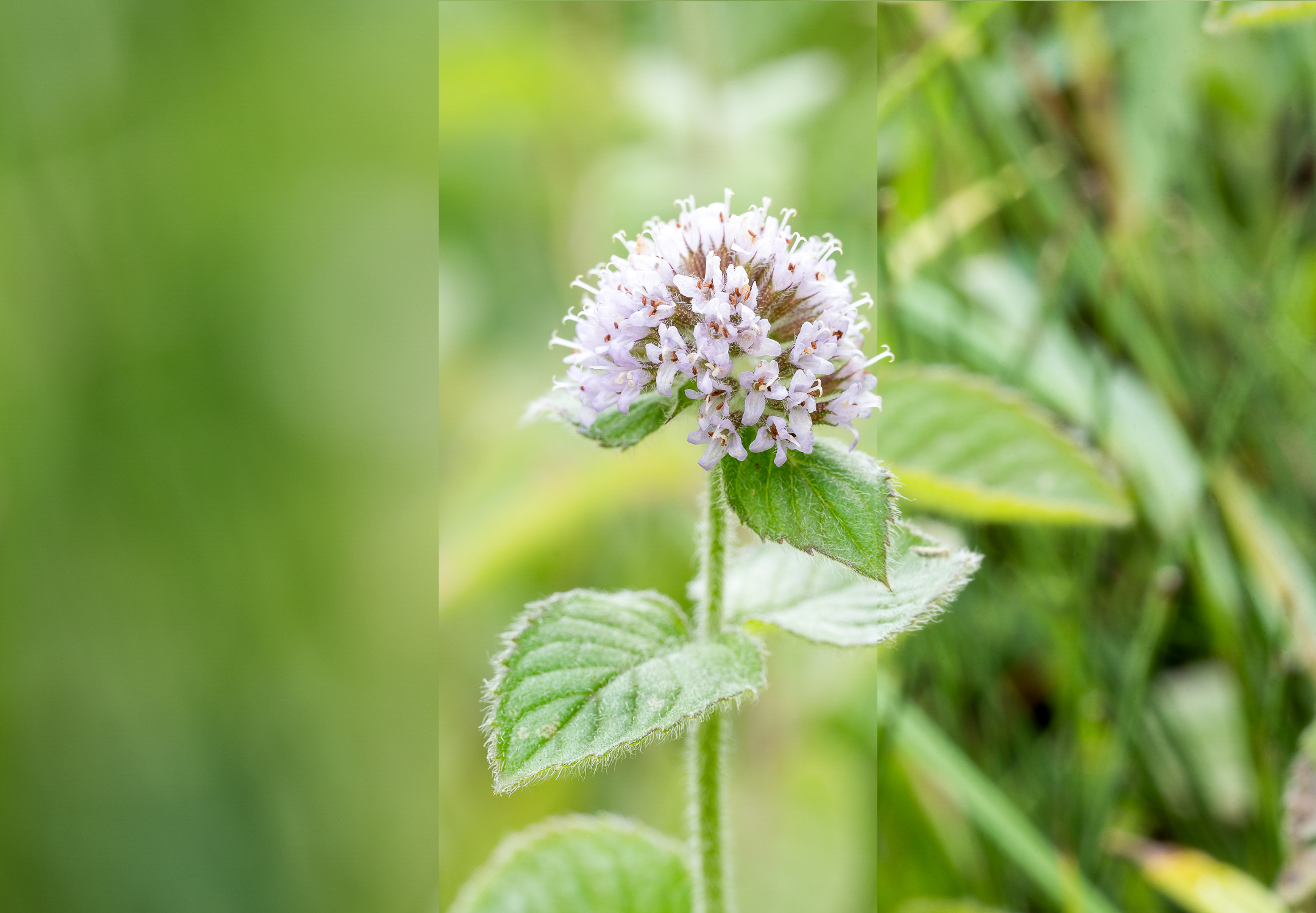
A direct comparison of a flower photographed at apertures of f/2.8 (left), f/9.0 (centre) and f/22 (right).

Aperture f/2.8: shallow depth of field → the background is blurred
f/2.8 | 1/100 sec | ISO 100 | 105 mm
Sony a7 IV | Sigma 105/2.8 DG DN Macro Art
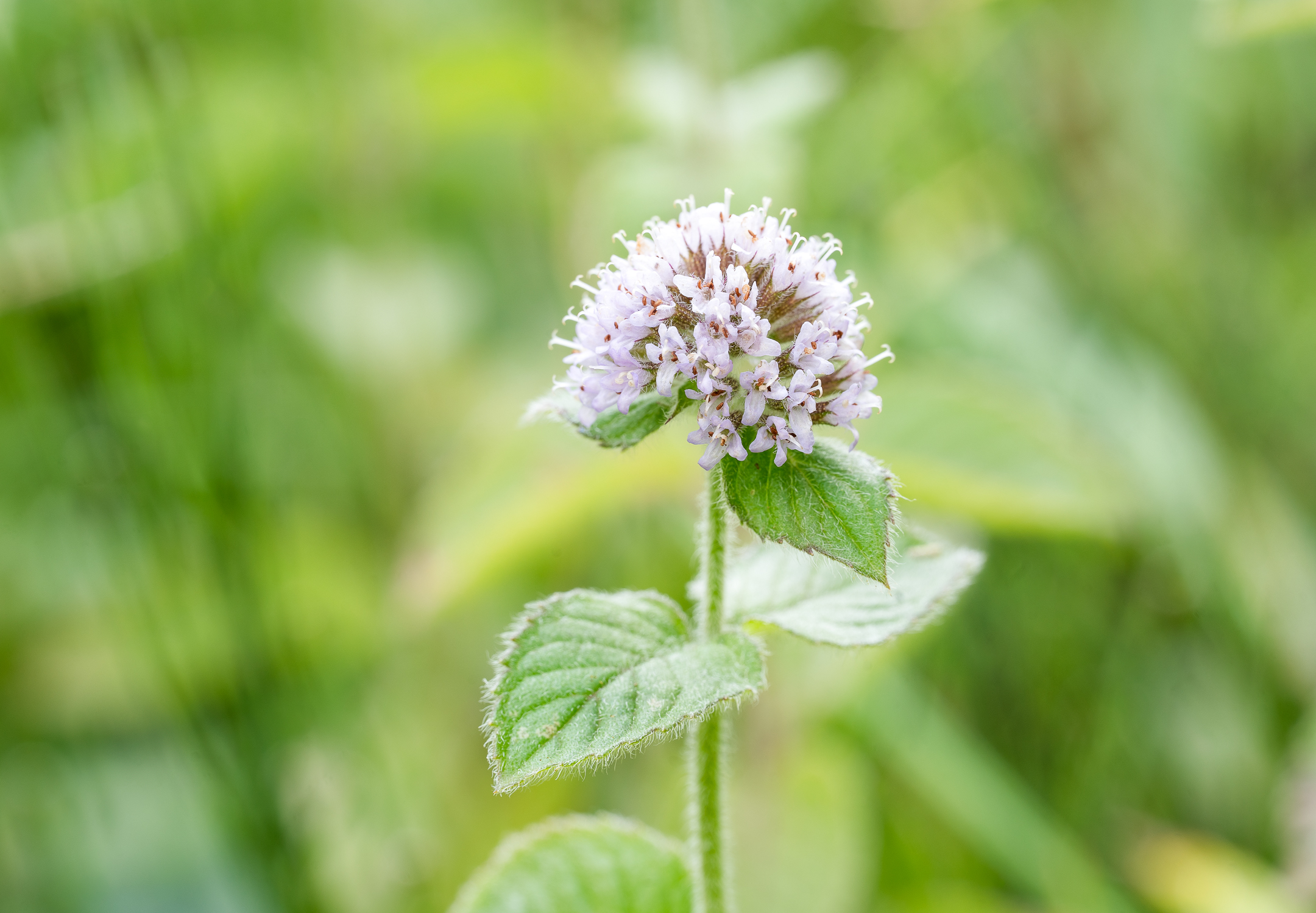
Aperture f/9.0: greater depth of field → the background looks sharper
f/9.0 | 1/10 sec | ISO 100 | 105 mm
Sony a7 IV | Sigma 105/2.8 DG DN Macro Art
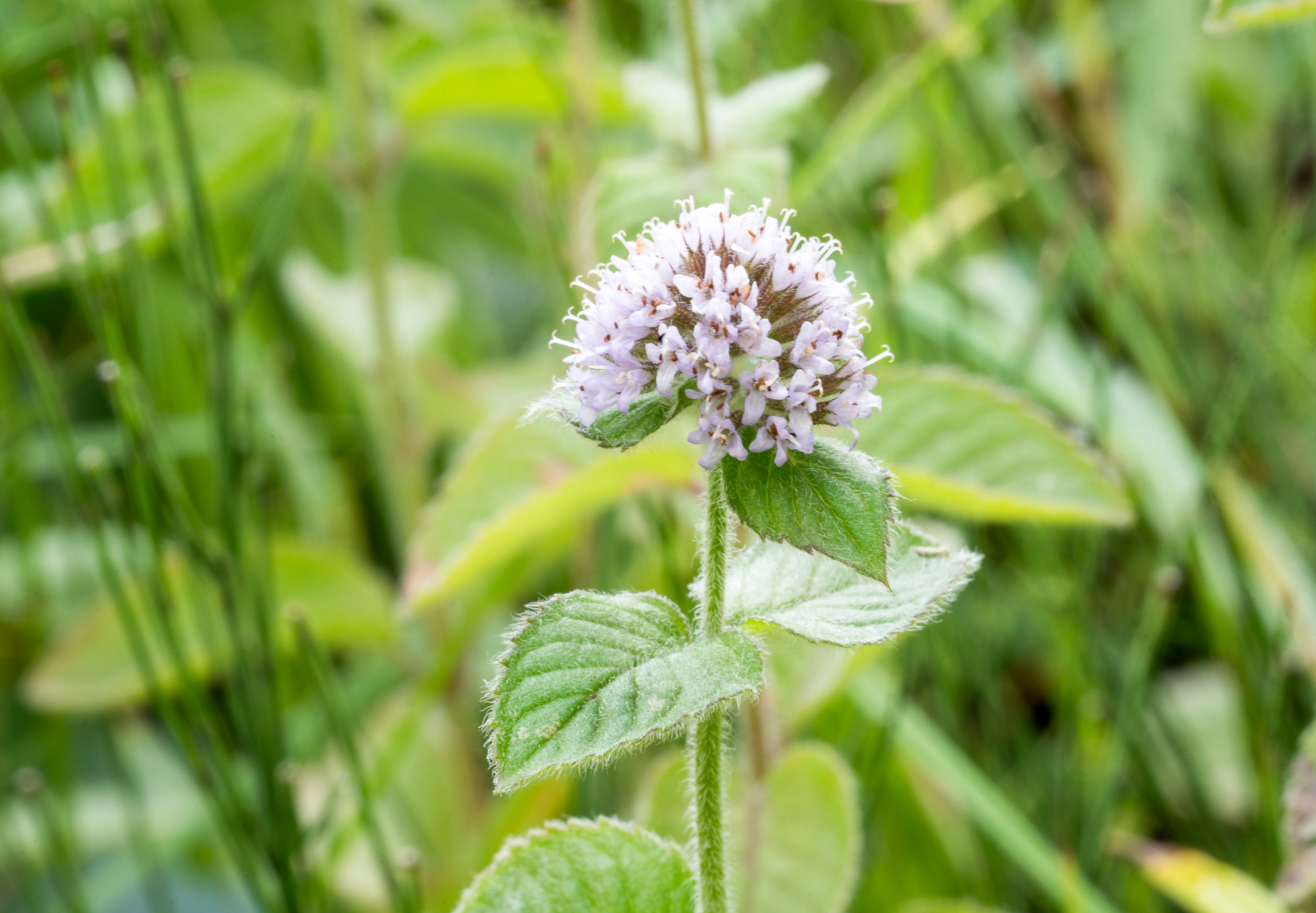
Aperture f/22: very large depth of field → the background is even a little sharper.
f/22 | 0.6 sec | ISO 100 | 105 mm
Sony a7 IV | Sigma 105/2.8 DG DN Macro Art
Differences between short and long focal lengths
With a long focal length, for example 200 millimetres, the background blurs strongly and the depth of field appears very shallow. Even with a closed aperture, only a small area stays really sharp. With a short focal length, around 24 millimetres, it is exactly the other way round: even with a wide aperture much of the picture stays sharp and the background is only slightly blurred.
You can easily see this for yourself. Photograph the same subject once with a short and once with a long focal length – ideally at the same aperture. Compare the pictures and pay attention to how the background changes and how much of the subject stays sharp. [2] [3]

At 28 millimetres the background is only slightly blurred at f/8.0.
f/8.0 | 1/400 sec | ISO 4000 | 28 mm
Sony a7 IV | Tamron AF 28-200mm f/2.8-5.6 Di III RXD

At 600 millimetres the background is strongly blurred at f/8.0.
f/8.0 | 1/1600 sec | ISO 1000 | 600 mm
Sony a7 IV | Sony FE 200-600mm F5.6-6.3 G OSS
Further resources
Apalapse. (2017, March 22). Camera Basics – Aperture [Video]. YouTube. https://www.youtube.com/watch?v=YojL7UQTVhc
Sources
- Wofür steht das F bei der Blende? [in German] (2020, September 13). https://ivent.de/F-Blenden
- Thomas. (2021, May 10). Die Blende in der Fotografie verständlich erklärt. Richtig Fotografiert [in German]. https://www.richtig-fotografiert.de/technische-grundlagen-der-fotografie/blende/
- Tommi, H. (2025b, May 26). Wie funktioniert das mit Blende, Brennweite und Schärfentiefe? Jansens Pott [in German]. https://www.jansens-pott.de/blende-brennweite-schaerfentiefe/